The CEO of Audi AG expressed optimism about expanding the brand's presence in China, a market brimming with opportunities, and called for a global automotive market free from unfair restrictions.
Audi, together with other two subsidiaries of the Volkswagen Group (China) -- Volkswagen and Porsche -- is showcasing a strong product lineup at the ongoing seventh China International Import Expo in Shanghai, with its largest-ever industrial landscape in the Chinese market.
Gernot Dollner, chairman of the Board of Management and technical development member at Audi who is on his first CIIE trip, said the impressive expo makes him feel that China is a "driver of trade and innovation" during an interview with China Global Television Network (CGTN).
As one of the largest auto markets globally, China has a strong preference for new energy vehicles (NEVs). Audi has demonstrated the German brand's determination to accelerate the pace of electrification transformation in the Chinese market with two pure electric models at the seventh CIIE - Q6L e-tron and e-tron GT.
Dollner noted that Audi is a strategic fit with China's NEV market transformation.
"The market in China is rapidly transforming into new energy vehicles, and that fits perfectly to our strategy. With the Audi agenda, that's our plan -- how we transform Audi to new energy vehicles worldwide and especially in China. So, our strategy fits perfectly to the market development in China," he said.
Confident of Audi's success in the highly competitive Chinese auto market, the CEO said the brand will further improve its market presence in China through China-specific models and strong local partners.
"There's strong competition in the market and there are really new challenges in the market. And we believe that strong competition is good because it's good for the customer, it brings innovation to the customer, and we are part of that competition. Audi has been a pioneer in the Chinese market. Thirty-six years ago, we were the first premium brand to come to China and to produce in China. And now we are pioneers again and finding new ways of cooperation and new ways to become and stay a part of the Chinese market," said Dollner.
The Q6L e-tron shows Audi's ambition for the Chinese market. The car, based on the Volkswagen Group's Premium Platform Electric (PPE), is designed with China-specific modifications and adaption, such as a specific automated driving system and in-cabin experience.
Audi's all-electric models tailored for the Chinese market will be produced in cooperation with China's First Automotive Works (FAW) Group headquartered in Changchun City of northeast China's Jilin Province.
In addition, the German automotive manufacturer has also signed an agreement with China's leading automaker SAIC to jointly develop new models built on China-specific platform named "Advanced Digitized Platform" for the next generations of premium intelligent, connected vehicles (ICV) to extend and complement Audi's current product portfolio.
While Audi continues tapping deeper into the Chinese auto market, the European Commission, the executive arm of the 27-nation European Union, announced on October 29 that it had concluded its anti-subsidy investigation and decided to impose a definitive countervailing duty on imports of new battery EVs from China for a period of five years.
Dollner emphasized Audi's support for free trade and open markets, calling for healthy competition to promote the improvement of product quality.
"With Audi being in China for more than 30 years, we deeply believe that free trade and open markets are the basis for innovation and for good competition. We believe that tariffs are the wrong way. We believe that in Europe and in China that free trade and competition is the right way and the right strategy to bring innovations to our customers," he said.
Speaking about the goals and expectations for Audi's development in the Chinese market, the CEO said China is a strategic pillar for the brand to dominate the high-end auto market.
"We believe that China -- and that's also part of our agenda --- that China is one of our main pillars for the future. With our strategy with FAW in the north and with SAIC in the south partnering, bringing cars developed in China, for China, we believe that we have the perfect strategy to stay ahead in the premium segment," said Dollner.
Running from Tuesday to Sunday, this year's CIIE has gathered nearly 40 companies in the auto-related sector from 11 countries and regions, with more than 70 percent of them ranking among Fortune Global 500 companies. Nearly all the exhibitors are presenting cutting-edge products and solutions related to renewable energy.
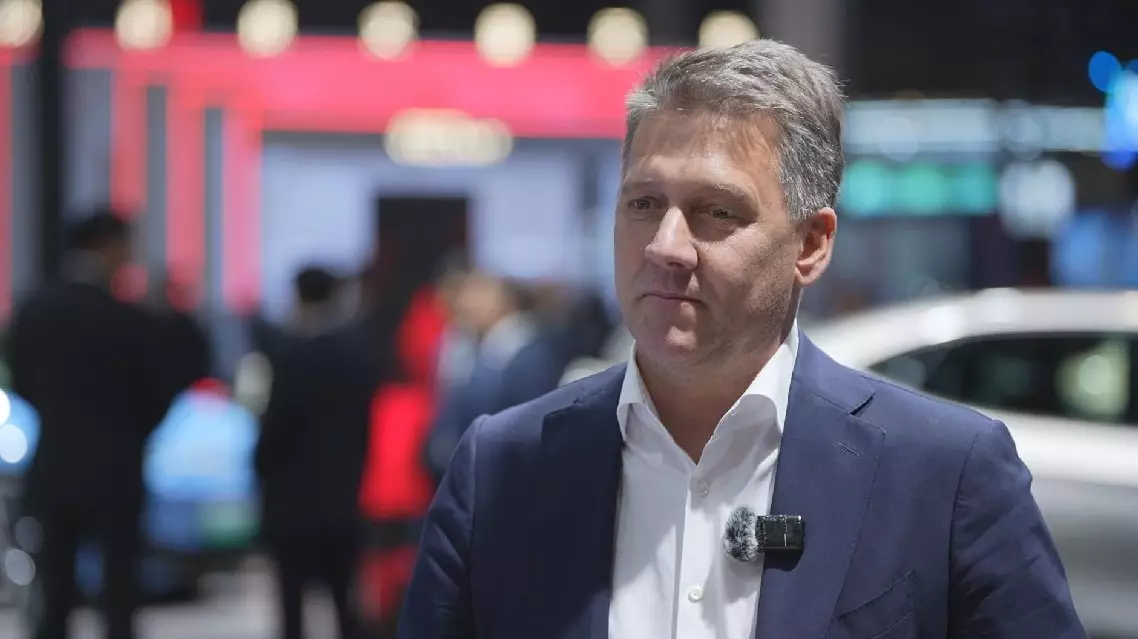
Audi CEO elaborates on strategies in Chinese market