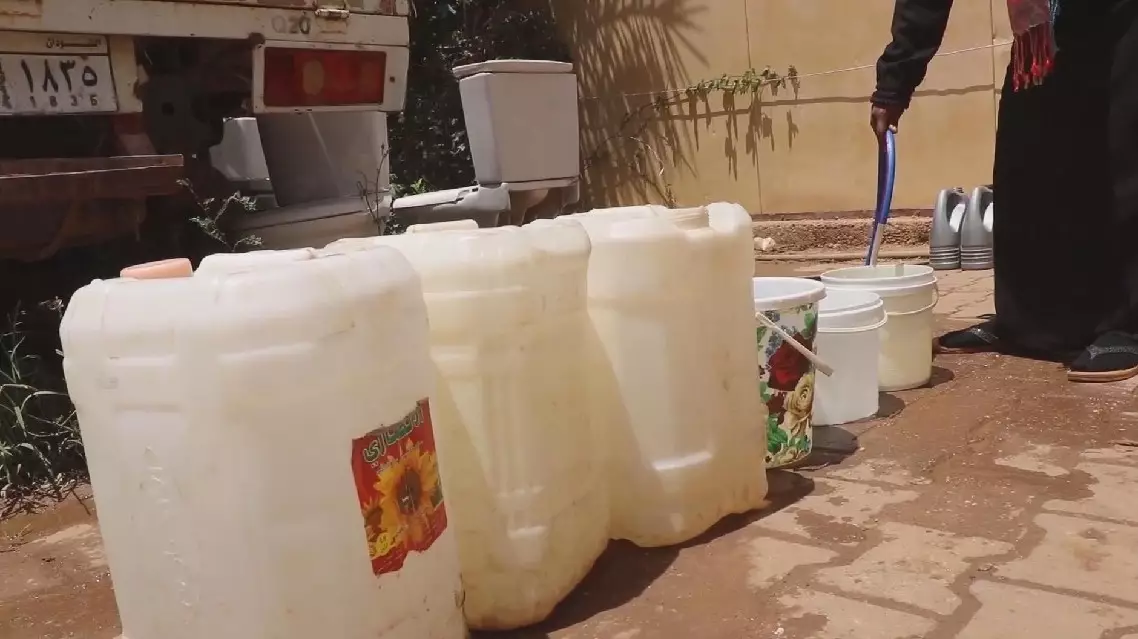
The ongoing armed conflict in Sudan, which erupted in mid-April 2023, has caused severe damage to the country's infrastructure, particularly its water infrastructure, posing great threats to the health and well-being of millions of people.
The conflict has disrupted water, power and gas supplies, and communication services. There are also shortages of food, medicine and fuel, while access to clean drinking water is critically limited.
The Metropolitan Area of Khartoum, consisting of the capital city Khartoum and the neighboring cities of Khartoum North and Omdurman, is the epicenter of the armed conflict in Sudan and the region with the most intense fighting.
Since the conflict erupted, essential infrastructures such as water treatment plants, water supply stations, and pipelines have suffered severe damage.
Moreover, a shortage of management personnel and maintenance parts has led to the prolonged disruption of the water supply network in various regions of the capital area, leaving hundreds of thousands of households without water for several months.
"We are suffering from a lack of water that almost all residents face. There was no electricity as well. This electricity we have here came back three days ago. We used to live in the dark at night. There were no water, nor electricity," said local resident Abdullah Mohammed.
Currently, 15 out of the 18 states in Sudan are affected by the conflict. Areas which were not directly affected by the violence also face shortages of water and electricity.
Following the outbreak of conflict, the coastal city of Port Sudan in eastern Sudan has received about 200,000 people fleeing from conflict zones. The influx of a large population has further strained the water and electricity resources in the city.
"The area became highly populated, I suppose the city's water is insufficient for a month's worth of usage," said Essam Ali, a local resident.
Apart from the water supply, many regions in Sudan have faced severe damage to their sewage treatment systems, with sewage flowing everywhere that lead to the widespread transmission of infectious diseases.
Since July this year, multiple areas in Sudan have witnessed a new wave of cholera outbreaks, marking the country's second round of cholera outbreaks since the onset of the armed conflict in 2023. According to statistics, Sudan has recorded over 30,000 confirmed cases of cholera nationwide, with over 900 reported deaths.
Conflict in Sudan worsens water crisis, putting millions at risk
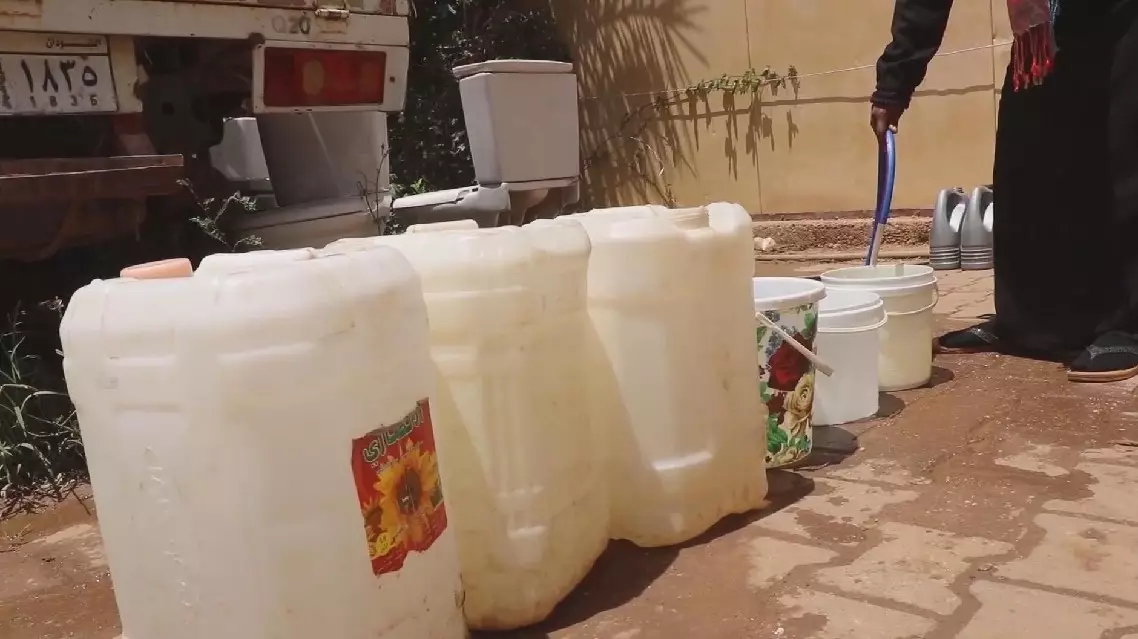
Conflict in Sudan worsens water crisis, putting millions at risk
The Guangdong–Hong Kong–Macao Greater Bay Area (GBA) is emerging as a key engine for China's fast-growing low-altitude economy by leveraging its dense industrial networks, efficient logistics systems, and rapid innovation capacity.
From logistics and manufacturing to urban services, the region is building an integrated industrial chain that allows low-altitude industries to scale up at unprecedented speed, thus turning drone-based applications from isolated trials into large-scale, commercial operations.
China's 15th Five-Year Plan, covering 2026 to 2030, calls for the cultivation of new pillar industries and the accelerated development of strategic emerging industrial clusters, including the low-altitude economy.
At a drone operations center in Bao'an District, Shenzhen City in south China's Guangdong Province, a dozen logistics drones take off and land within minutes. Urgently needed production parts, documents, and small parcels are dispatched from here to cities in the province including Dongguan, Zhongshan, and Zhuhai.
Behind these high-flying aircraft lies what observers describe as an "invisible industrial chain", built on speed and efficiency.
"Look at this aircraft. About 90 percent of its components come from nearby areas. Relying on Shenzhen's strong logistics capabilities and its complete supply chain, these parts can be delivered to our factory within half an hour for assembly, processing, and production," said Li Kunhuang, person-in-charge of Shenzhen GODO Innovation Technology Co., Ltd.
Once a new product is unveiled, testing and calibration begin immediately at the drone testing field. As soon as the process is completed, the new models can be put into real-world operation, realizing almost “zero delay” from research and development to application.
Supported by a robust industrial chain, low-altitude routes in Shenzhen are effectively connecting the urban landscape. From its Bao'an District to Songshan Lake in Dongguan City, production components can be delivered within one hour. Supplies are transported between Zhuhai City's Xiangzhou Port to Dong'ao Island in just 25 minutes. And light industrial goods can travel round-trip within a single day between Guzhen Town in Zhongshan City and Xinhui District in Jiangmen City.
More low-altitude application scenarios are expected to be implemented in the near future.
In Qianhai District, Shenzhen is accelerating the construction of a pilot demonstration zone of low-altitude integrated three-dimensional transportation hub.
"We have built the country's first low-altitude integrated three-dimensional transportation hub, and are gradually developing a pilot flight zone that integrates multiple scenarios such as inspection, logistics, and cultural tourism. This will provide technical support for the next step of commercializing cross-border logistics and emergency rescue services across the Guangdong–Hong Kong–Macao Greater Bay Area," said Wu Xuemin, head of the Shenzhen Qianhai Low-Altitude Integrated Three-Dimensional Transportation Hub Pilot Demonstration Zone.
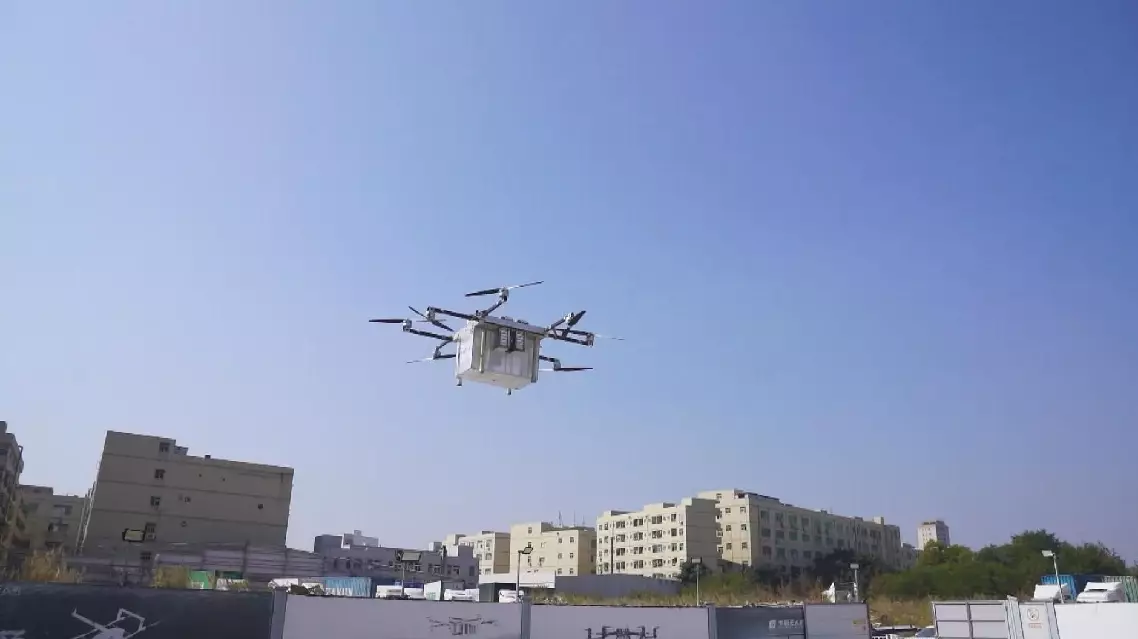
Integrated supply chains propel Greater Bay Area's low-altitude economy growth
Integrated supply chains propel Greater Bay Area's low-altitude economy growth