GUWAHATI, India (AP) — Ethnic organizations in parts of India’s violence-wracked northeastern state shut schools and businesses Tuesday, protesting the killings of 10 people by paramilitary soldiers.
They called for an 11-hour shutdown in the hill districts of Manipur from 5 a.m. Tuesday. Heavy gunfire was reported overnight in the periphery of the hills and the Imphal Valley.
Life was paralyzed in the area, with schools and businesses closed and people staying indoors. There were no vehicles on the road.
The Manipur state police said those killed Monday were “armed militants” and the soldiers fired at them after they attacked their post near the district town of Jiribam on Monday.
One soldier with a bullet injury was evacuated to a hospital for treatment, the police said in a statement.
However, the Tribal Leaders’ Forum said all those killed were local village volunteers belonging to the Hmar ethnic group who were patrolling the area to protect tribal villages following a recent armed attack that killed a woman.
A police statement said the paramilitary soldiers fiercely retaliated against the militants’ attack, and a heavy exchange of heavy gunfire lasted 45 minutes.
"A search of the area resulted in the recovery of 10 bodies of armed militants as well as sophisticated automatic weapons,″ the statement said.
Manipur state has been bristling with ethnic violence since May last year between the majority Meiteis and the minority Kuki-Zo ethnic group. The Meiteis, who are predominantly Hindus, live in the capital Imphal region of the state and the nearby districts, while the Kuki-Zos live in the hilly areas.
Around 250 people have been killed and 60,000 displaced since the ethnic violence started last year.
The Meiteis demand that they be listed as a Scheduled Tribe, which would bring them more benefits, such as quotas in jobs and educational institutions. That categorization would also bar non-Meiteis from buying land in the Meiteis strongholds in the Imphal Valley.
The Kukis oppose this, saying benefits like reservation are given only to tribal groups because they are considered backward economically and in the field of education. The Kukis said the Meiteis are a developed community and, therefore, should not be listed as a Scheduled Tribe.

FILE -Tangkhul Nagas stand in a queue to cast their votes in Shangshak village, in the northeastern Indian state of Manipur, April 26, 2024. (AP Photo/Yirmiyan Arthur, File)
The Detroit Pistons can complete another historic comeback against the Orlando Magic. The Cleveland Cavaliers will settle for one more home victory over the Toronto Raptors.
The Pistons host the Magic in their Game 7 on Sunday in a late-afternoon contest, while the Cavaliers and Raptors wrap up the first round in primetime.
The winners move on to meet in an Eastern Conference semifinal series, which begins Tuesday in either Detroit, Cleveland or Toronto.
Detroit faced a 3-1 deficit to Orlando in its first-round series in 2003 before winning the final three games. The Pistons are the only top seed to do so against the No. 8 seed since the first round was expanded to a best-of-seven series the same year.
They are hoping to do it again.
After a 116-109 win in Game 5, the Pistons rallied from a 24-point second-half deficit to defeat the Magic 93-79 on Friday and send the series back to Detroit.
Orlando missed 23 straight shots from the field, including 13 from 3-point range, the most by any team in a playoff game during the play-by-play era that started in 1996-97. This was part of a 35-5 Pistons run.
“Having your back against the wall really shows who you are,” said Detroit point guard Cade Cunningham, who is averaging 32.5 points in the series. “There has been a lot of adversity so far in this series. I think we have learned a lot about who we are as a team and individually, and what we are made of. It has been a fun series. We want to get back to the crib and handle our business back home.”
The Magic still hope to become the seventh No. 8 seed to eliminate the conference’s top seed in the first round, but they need to bounce back quickly.
“The series ain’t over. I know they’ve clawed their way to tie it up 3-3. We won a game to start the series, and we’ve just got to go do it again,” forward Paolo Banchero said.
In a first round where the road team has won 17 games in seven other first-round series, the Cavaliers and Raptors have maintained serve, with the home team winning each game.
The Cavaliers’ 2024 first-round series against the Magic went the same way, with Cleveland winning 106-94 in Game 7 to advance.
“Protect home court. It doesn’t matter if we lost by 30 or two, protect home court. That’s all you can do,” point guard Donovan Mitchell said.
Toronto’s RJ Barrett sent it back to Cleveland for a deciding game when his 3-pointer from the top of the key with 1.2 seconds remaining in overtime hit off the back rim and bounced high above the backboard before going through the net to give the Raptors a 112-110 victory.
For many fans, the shot brought back memories of Kawhi Leonard’s four-bounce buzzer-beating winner in Game 7 of the 2019 East semifinals against Philadelphia. The Raptors would go on to win the NBA championship.
Barrett noted that the focus quickly shifted to Sunday night.
“Kind of forget everything that’s happened so far. Got one game to decide it all,” he said. “I think this group has been tough and resilient, and we’ve fought through the toughest of tasks all year long. So going to Cleveland is going to be a tough task, but that’s what we’re built for.”
The Raptors are trying to become the first team since Dallas in the 2022 Western Conference semifinals to win a Game 7 on the road after the first six were won by the home team.
When/Where to watch: Game 7, 3:30 p.m. EDT (ABC)
Series: Series tied 3-3
Betting line: Pistons by 8.5
What to Know: Whoever wins will end a long playoff drought. The Pistons haven’t made it past the first round since 2008, while the Magic haven’t won a playoff series since 2010. Detroit is 5-5 in Game 7s and unbeaten in four home games. Orlando is 2-2 and 1-2 on the road. Cunningham has scored at least 25 points in all six playoff games, including a team-record 45 in Game 5. Orlando forward Franz Wagner, who averaged 16.8 points in the first four games, is expected to miss a third straight game with a right calf strain.
When/Where to watch: Game 7, 7:30 p.m. EDT (NBC/Peacock)
Series: Series tied 3-3
Betting line: Cavaliers by 8.5
What to Know: Cleveland is looking to advance past the first round for the third straight year. It is 6-2 in Game 7s, including 4-0 at home. So far in the 2026 playoffs, James Harden is averaging 21.0 points and 6.7 assists, but he is also committing 5.7 turnovers per game. Toronto is 3-3 in Game 7s and is playing its first one on the road since the 2021 conference semifinals against Philadelphia, which it lost 88-87. Forward Brandon Ingram is questionable after missing Friday’s game due to right heel inflammation.
AP NBA: https://apnews.com/NBA
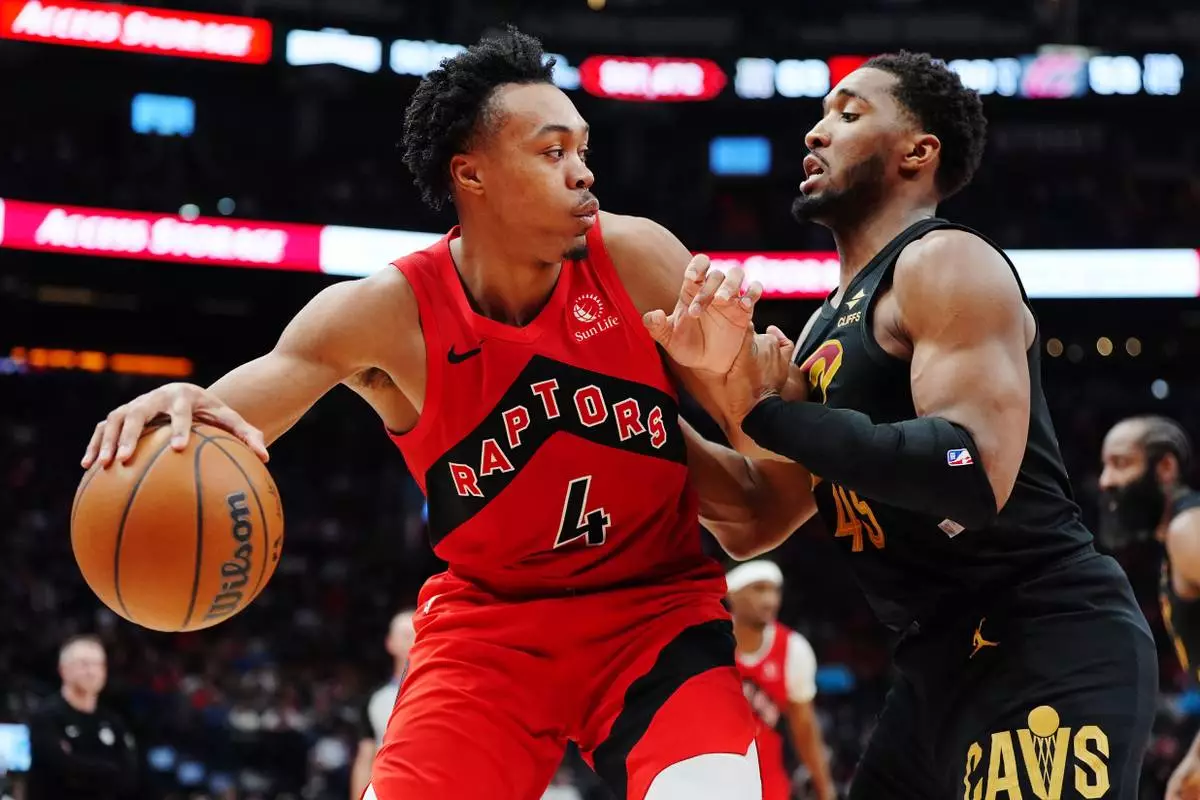
Toronto Raptors' Scottie Barnes (4) protects the ball from Cleveland Cavaliers' Donovan Mitchell (45) during the second half of Game 6 in the first round of an NBA basketball playoffs series in Toronto, Friday, May 1, 2026. (Frank Gunn/The Canadian Press via AP)

Toronto Raptors' RJ Barrett (9) celebrates after defeating the Cleveland Cavaliers in overtime of Game 6 in the first round of an NBA basketball playoffs series in Toronto on Friday, May 1, 2026. (Frank Gunn/The Canadian Press via AP)

Orlando Magic forward Jamal Cain, center, struggles to get off a shot between Detroit Pistons forward Paul Reed, left, and guard Cade Cunningham during the second half in Game 6 of a first-round NBA basketball playoffs series, Friday, May 1, 2026, in Orlando, Fla. (AP Photo/John Raoux)
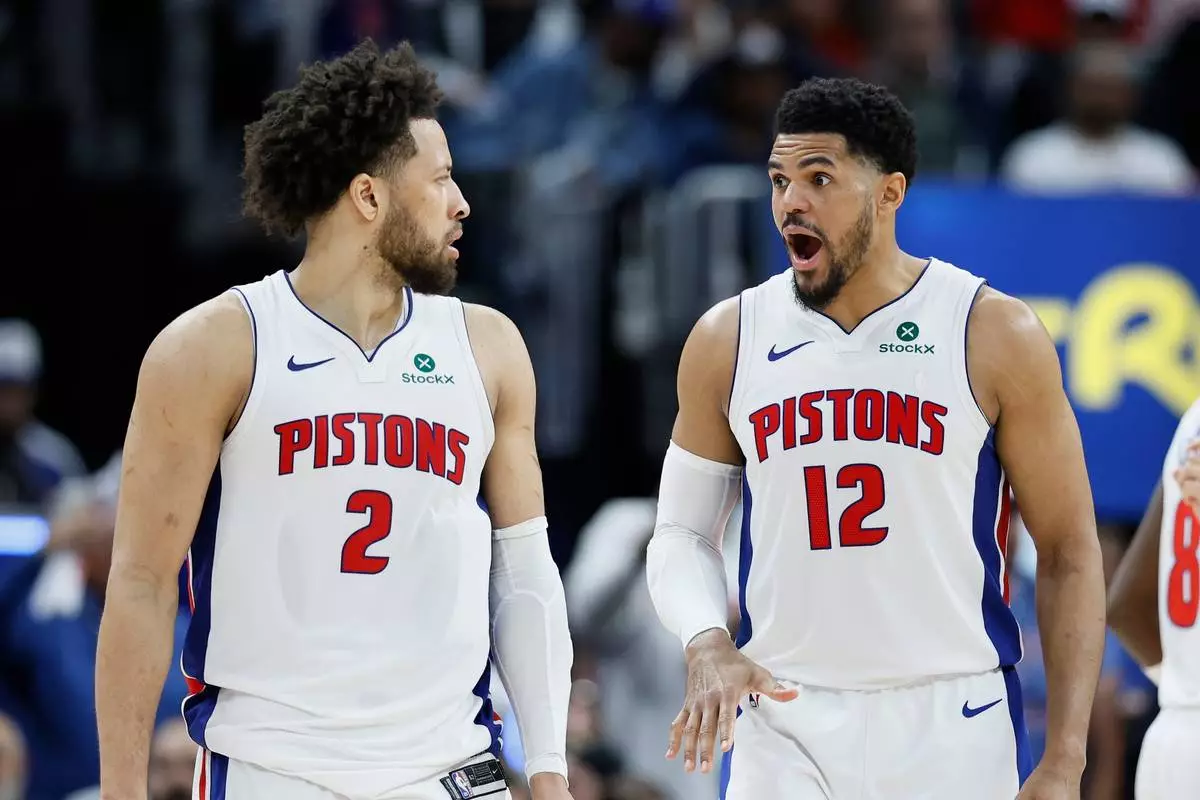
Detroit Pistons forward Tobias Harris (12) reads to a basket scored against the Orlando Magic by guard Cade Cunningham (2) during the second half in Game 5 of a first-round NBA basketball playoffs series Wednesday, April 29, 2026, in Detroit. (AP Photo/Duane Burleson)