Skip to Content Facebook Feature Image

Peru's Chancay mega-port to help deepen trade between South America, Asia

China

China

China

Peru's Chancay mega-port to help deepen trade between South America, Asia

2024-11-13 18:00 Last Updated At:20:27

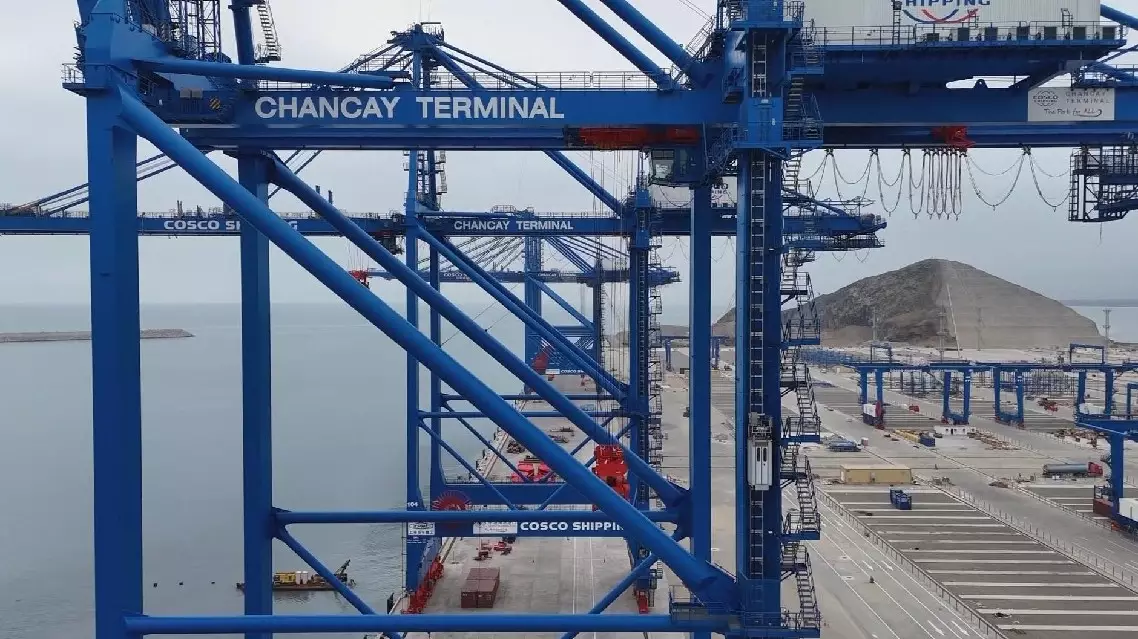
A Chinese-invested mega-port just north of the Peruvian capital Lima is set to commence operation this November, with businesses in the Latin American country expecting closer trade ties with China to benefit the entire continent.

Built by the Chinese state-owned conglomerate COSCO Shipping, the multi-purpose port in Chancay is poised to become the most important logistics hub in South America and be a new trade hub that could transform Peru's fortunes and radically change the lives of the people living in and around this sleepy fishing town.

It is a new flagship project under the China-proposed Belt and Road Initiative across the Pacific Ocean, which will not only help deepen the relationship between China and Peru, but also open up a new "maritime expressway" for the integration of the Asia-Pacific economy.

With the opening of Chancay Port, Peru will gain new export channels for both agricultural products and manufactured goods. The most significant advantage is that goods will be able to move directly from Chancay to Asia, specifically to Shanghai. Currently, shipments must take a more circuitous route, often passing through ports in Mexico or the U.S. before reaching their final destination.

Peru is currently the world's leading exporter of blueberries, and in 2024, international shipments of blueberries and other Peruvian fruits surpassed 10 billion U.S. dollars. Chancay Port is expected to further boost the competitiveness of Peru's agricultural exports.

The alpaca, a species native to South America, has become a symbol of Peru. Along with other Peruvian products, alpaca dolls have gained immense popularity in China, which is now the most prominent market for these goods.

With Chancay Port opening in November 2024, the shipping time from Chancay to Shanghai will be reduced to just 35 days, which will dramatically shorten the preparation cycle and significantly reduce transportation costs.

Several business representatives emphasized that this project presents a significant opportunity for the Latin American region while attending the just concluded 7th China International Import Expo (CIIE) in Shanghai.

"It brings us more together with China because we will have the port. The transit time will be shorter in that case," said Francisco Vega, general manager of Oceánica Internacional, a major freight forwarder and logistics provider headquartered in San Jose, Costa Rica.

"I think it's a really good opportunity for Latin America to have a better transit time to China, to the Chinese market. This port is one of the biggest ports in South America and it's located in Peru, which is a location that is more central within South America for delivery to China. And the transit time should go down usually, for instance, from Chile, the transit time is 30 days to 35 days. With this port, we hope that we'll be (delivering) from Chile, Latin America (in) around 28 days," said Christian Chamorro, market manager of BDP Foods, an international business platform headquartered in Santiago, Chile.
Peru's Chancay mega-port to help deepen trade between South America, Asia
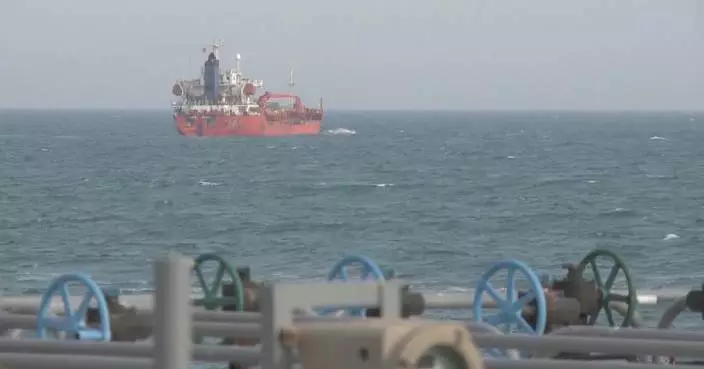
Peru's Chancay mega-port to help deepen trade between South America, Asia
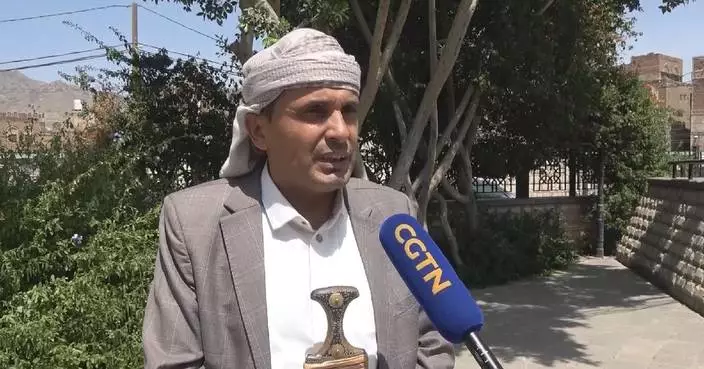
A former television host from Taiwan, Zhai Xuan, has made a pivotal decision to leave mainstream broadcasting in order to create content that provides a better understanding of the Chinese mainland and cross-strait relations.

Zhai, a seasoned television host with over a decade of experience in Taiwan's media landscape, recently addressed an audience at an event in Beijing, where she revealed her complete transition into independent online media.

In her remarks, she articulated her aspiration to bridge what she perceives as a significant information gap between audiences on both sides of the Strait, highlighting her commitment to fostering a deeper understanding and connection through her new endeavors.

"I was really surprised by all the fake news. There were stories saying people on the mainland can't afford tea eggs or that they live in mud houses and in Taiwan, this was the main information many people received," said Zhai.

Zhai said she initially began producing online videos to challenge such perceptions while continuing her work as a television host.

In April 2025, she travelled to the mainland with her father to fulfill her late grandfather's wish to return to his hometown. The trip, which reunited family members separated since 1949, was recorded in a video series titled "Journey to Find Our Roots", drawing attention from viewers in both Taiwan and the mainland.

"Many people in Taiwan told me that after watching, they wanted to apply for a mainland travel permit immediately and go looking for their relatives. Some had long forgotten these things, but after seeing my story, they began thinking about their hometowns and family members they had never met and decided to search for their roots," Zhai shared her story at the event.

By mid-2025, Zhai said she began to feel increasing pressure amid rising political tensions and a tightening atmosphere around cross-Strait exchanges in Taiwan.

After more than 12 years in the industry, Zhai resigned from her position, believing it was the right thing to do.

"At that moment, I felt this was a major issue,not just for me, but for Chinese people on both sides of the Strait. If I backed down then, I wouldn’t be standing on the right side," said Zhai.

Since leaving television, Zhai has broadened her online programming to encompass a range of daily-life topics, including practical guidance on applying for a mainland travel permit and using commonly employed mobile applications, in addition to content that delves into historical memory and cultural connections across the Strait.

As the debate over cross-Strait relations continues in Taiwan, Zhai said she remains committed to her current path.

Former Taiwan TV host bridges cross-Strait divide via online media

Former Taiwan TV host bridges cross-Strait divide via online media

Recommended Articles