Cutting-edge aviation technology for civilian and consumer use is taking center stage at Airshow China, with an array of "flying car" and aircraft models reshaping the country's low-altitude economy.
At the 15th China International Aviation and Aerospace Exhibition, which kicked off in the southern coastal city of Zhuhai on Tuesday, onlookers are getting a taste of the future of transportation.
"The 'Land Aircraft Carrier' is a groundbreaking innovation by the Chinese -- the first product in the world that can fit an aircraft in a car's trunk, so it is worth looking forward to. In the future, road trips could mean driving this vehicle to scenic destinations and enjoying stunning aerial views of the landscape," said Zhao Deli, the founder and president of Chinese flying car company XPeng AeroHT.
Other exhibitors presented new drones and manned aircraft that may transform the way people envision low-altitude transit.
"This product's major breakthrough is the integration of quantum-secure encryption technology into drones," said Zhou Lei, an exhibitor of Qshine.
"We are introducing an industry-first amphibious design to the product, enabling it to operate seamlessly across three modes -- ground travel, aerial flight, and efficient air-to-ground docking," said Lyu Shengliang, an engineer of GAC Group.
Last year, China's low-altitude economy exceeded 500 billion yuan (about 71 billion U.S. dollars), and is projected to surpass one trillion yuan by 2026.
Experts said China's three main city clusters are taking different paths in the low-altitude economy. South China's Guangdong-Hong Kong-Macao Greater Bay Area focuses on innovation and commercialization, while the eastern region of the Yangtze River Delta, which includes Shanghai, specializes in high-end manufacturing and smart development, while the Chengdu-Chongqing economic circle in southwestern China on affordable and efficient solutions.
The airshow is scheduled to last through Sunday.
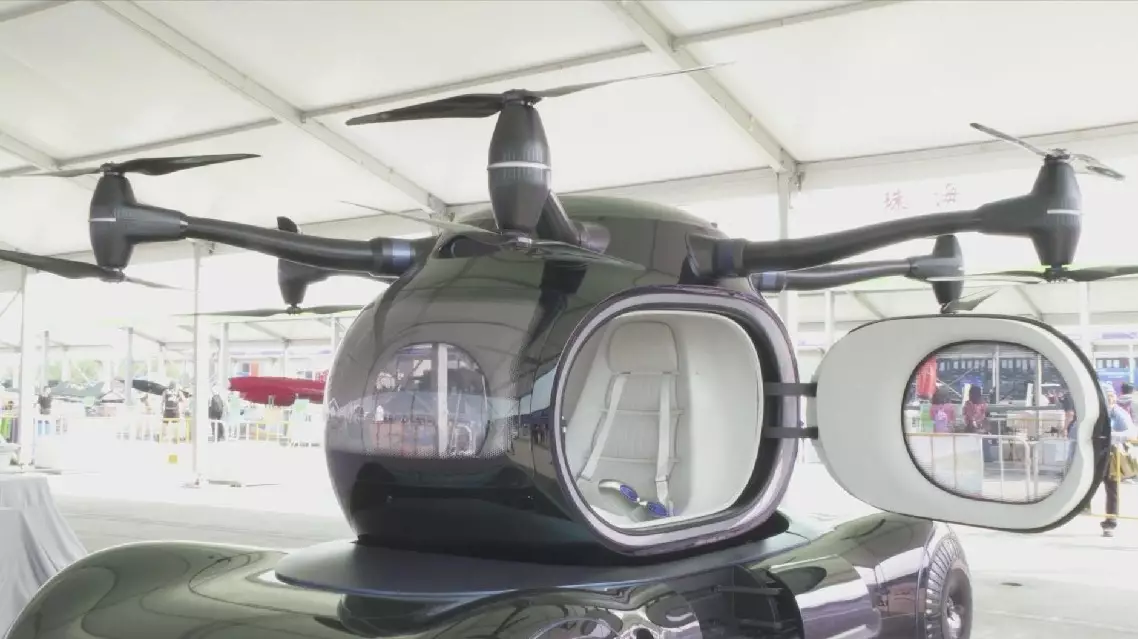
"Flying car" debuts at Airshow China unveil diverse tech paths of low-altitude economy
China's Minister of Commerce Wang Wentao outlined the key priorities of the 32nd Asia-Pacific Economic Cooperation (APEC) Ministers Responsible for Trade Meeting, which opened on Friday in Suzhou, East China's Jiangsu province.
In an interview with CGTN ahead of the two-day meeting, Wang said free trade, digital cooperation and green economy are high on the agenda of the meeting.
"The key areas include advancing regional economic integration and the Free Trade Area of the Asia-Pacific, supporting the World Trade Organization (WTO) in strengthening digital cooperation and developing green economy. At present, the international situation is marked by intertwined turbulence and chaos, with intensified geopolitical instability. The rise of unilateralism and protectionism poses serious challenges to the international economic and trade order, disrupting global and Asia-Pacific development. Against this backdrop, all parties have higher expectations for this trade ministers' meeting, hoping that it can build consensus and deliver outcomes," Wang said.
This year marks China's third time hosting the APEC meetings and the 35th anniversary of its membership.
By 2025, China had become the largest trading partner of 13 APEC economies. Trade between China and APEC economies reached 3.7 trillion U.S. dollars, accounting for 57.8 percent of China's total foreign trade.
China has signed 24 free trade agreements or economic and trade arrangements with 31 countries and regions, including 15 APEC economies. In recent years, China has also completed upgrades of free trade agreements with APEC economies such as Singapore and Peru.
The minister said that China has always been a firm supporter and an important contributor to APEC.
"We have actively shared our vast market and development opportunities with all parties. China's door to the world will only open wider and wider. Facing the common challenges, China will continue to fulfill its responsibilities as a major country, further deepen reform, expand high-standard opening-up, and continue to provide new opportunities for the Asia-Pacific region and the world with its new achievements in Chinese modernization," the minister said.
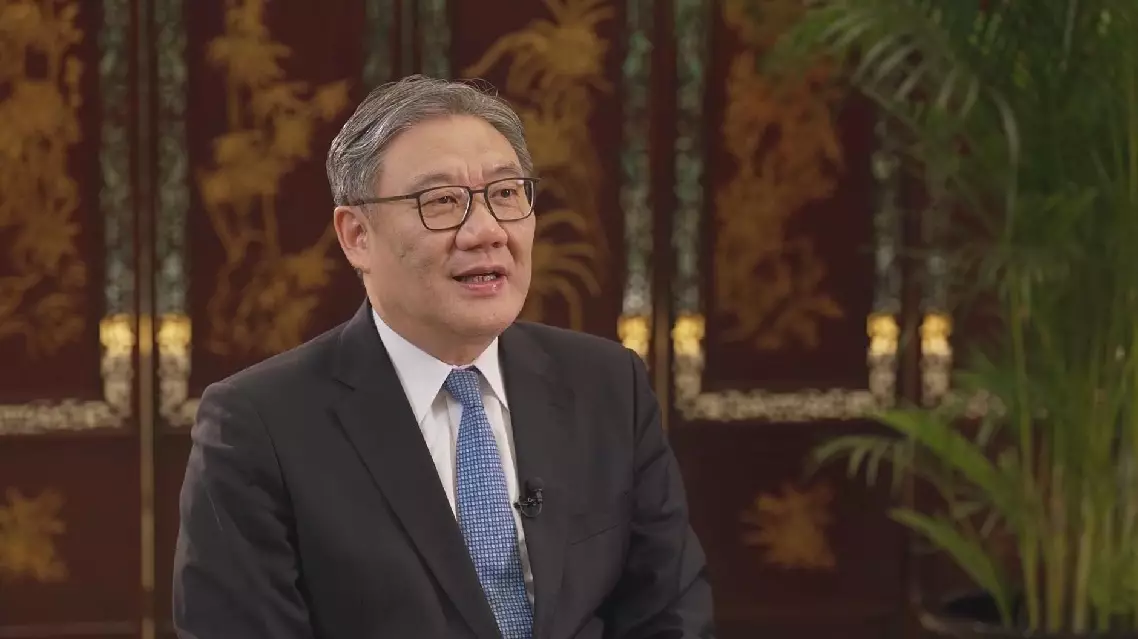
China's Commerce Minister outlines priorities for 32nd APEC trade ministers' meeting