Skip to Content Facebook Feature Image

Chinese-Peruvian community helps weave ties of friendship between China, Peru

China

China

China

Chinese-Peruvian community helps weave ties of friendship between China, Peru

2024-11-14 17:06 Last Updated At:18:47

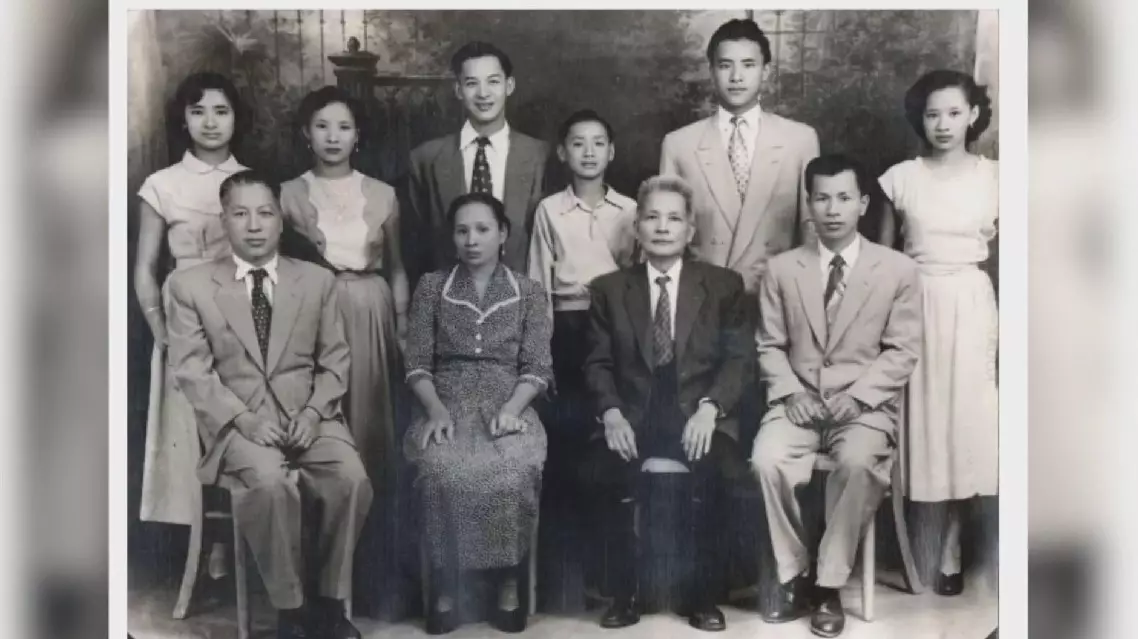
The long-standing friendship between China and Peru has been greatly enriched thanks to the considerable contributions made by the Chinese-Peruvian community, who have played a vital role in fostering cultural exchanges and enhancing mutual understanding over the years.

The first Chinese immigrants arrived in Peru in 1849, and today, Peru is home to the largest Chinese population in Latin America. The impact of Chinese culture is evident throughout the country, where Chinese-Peruvians have become an integral part of society.

Ruben Tang, a third-generation Chinese-Peruvian and former director of the Confucius Institute at the Pontifical Catholic University of Peru, reflected on the unique experience of embodying both Peruvian and Chinese identities.

Tang, whose grandparents immigrated to Peru in the 1930s, expressed pride in his dual heritage and said he remains committed to deepening cultural exchanges between the two nations.

"I remember for example, when I went to Xi'an, and visited the Terracotta warriors - when you visit, for example, those places, it's a kind of motivation to know more about each other, [and make] the connection. For example, in the case of the Chinese descendants, for me in particular, I'm very eager to continue to know more about Chinese history, Chinese culture and at the same time continue promoting also the rich Peruvian culture to the world," he said.

Meanwhile, Rodrigo Campos, a fourth-generation Chinese-Peruvian, also highlighted the intricate cultural blend that defines his identity.

With a Peruvian father and a mother who came from a Hakka family in south China's Guangdong Province, Campos has sought to delve deeper into the history of the Chinese-Peruvian community, who are referred to as "Tusan", a term derived from the Cantonese pronunciation of the Mandarin word for "Tusheng," meaning "born and raised in this place."

Campos founded the Tusanaje Project, an initiative which aims to promote and investigate the history, memory, and identity of the Tusan community, which also strives for a more integrated society that embraces cultural diversity.

"I come from a Tusan family, that is how we call Chinese Peruvian people here. So I grew up in an environment where they speak Hakka language and Cantonese and Spanish and having different meals and combinations of Peruvian and Chinese every day. So not only for us we are Chinese descendants, but for all the Peruvians is a very natural combination between Chinese and Peruvian cultural elements here in Peru," Campos said.

Ties between China and Peru are in the spotlight this week as Chinese President Xi Jinping heads to Peru for a state visit at the invitation of his Peruvian counterpart Dina Boluarte. Xi will also attend the 31st Asia-Pacific Economic Cooperation (APEC) Economic Leaders' Meeting in Lima.
Chinese-Peruvian community helps weave ties of friendship between China, Peru

Chinese-Peruvian community helps weave ties of friendship between China, Peru
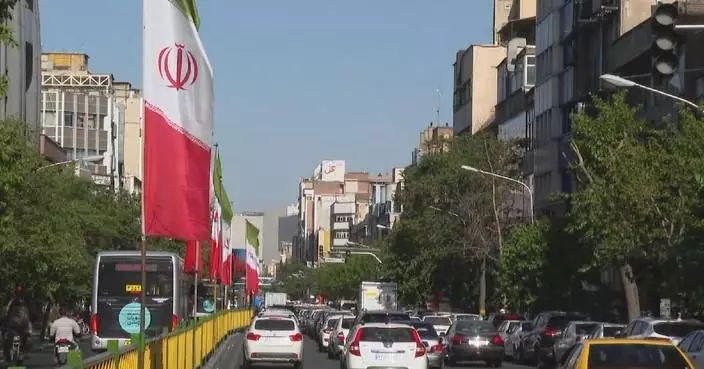
The Iranian government is focusing on public concerns and maintaining stable supplies of essential goods amid recent protests, Iranian President Masoud Pezeshkian said in a televised interview on Sunday.

In the city of Karaj, northwest of the capital Tehran, daily life has largely continued as normal. A video filmed by a local resident on Sunday shows food stores open and grocery shelves fully stocked.

"This is the block near my home, and there are some food stores here. Daily life continues here. Last night we did not see many protests in Karaj. Right now the city is very safe. This is a grocery store close to my home. All the food is available; nothing is in shortage. Here are noodles and different types of beans. Here are dairy products, cheese, and yogurt. I also checked other grocery stores and didn't see any shortages. Everything is available," said local resident Ali Reza.

Iranian officials have described recent disturbances as acts orchestrated by the "enemy," including some carried out by well-trained and armed "terrorists." The incidents have caused casualties among security personnel and civilians, as well as property damage.

The Secretary of Iran's Supreme National Security Council Ali Larijani has directed authorities to severely punish the "terrorists."

Meanwhile, Iran's police chief Ahmad-Reza Radan said on Sunday that the police had raised alert levels and arrested several leaders of the troublemakers during the operations on Saturday.

President Pezeshkian noted in the interview that the normal demands of the Iranian people are reasonable and justified, but they must realize that triggering riots and carrying out terrorist acts are the enemy's attempts to undermine the country. He urged the public to remain vigilant.

Also on Sunday, Iranian Parliament Speaker Mohammad Baqer Qalibaf warned that Tehran would regard U.S. and Israeli bases and facilities in the Middle East as "legitimate targets" if Washington takes military action against Iran. His remarks followed media reports saying U.S. President Donald Trump is "seriously considering authorizing a strike" against Iran.

Iranian state media reported that at least 109 members of Iran's security forces have been killed in clashes since the protests began 14 days ago. Meanwhile, human rights groups based outside the country said the number of protesters killed has exceeded 200, though the figure could not be independently verified.

The protests initially erupted over a sharp depreciation of the rial and sweeping subsidy reforms. Iranian authorities have blamed the unrest on foreign-linked agents and sanctions imposed by the United States.

Iranian president says government focusing on ensuring supplies amid protests

Iranian president says government focusing on ensuring supplies amid protests

Recommended Articles