A set of Chinese integrated electronic countermeasure system made its debut at the ongoing 15th China International Aviation and Aerospace Exhibition, also known as Airshow China, in the southern coastal city of Zhuhai.
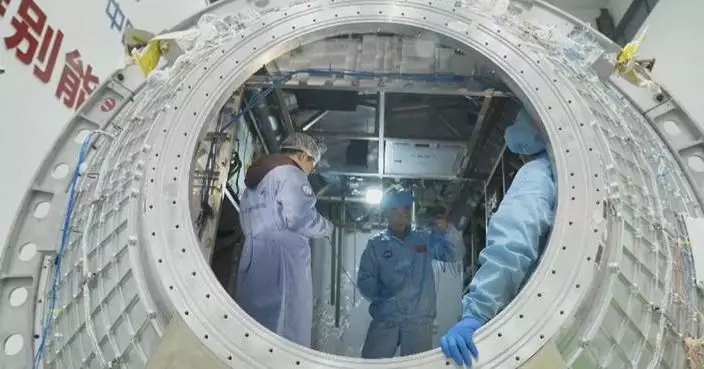
The sand table of the electronic countermeasure system integrating various means to combat and interfere, such as communication countermeasure, radar countermeasure, and optoelectronic countermeasure, is on display at the booth of China Electronics Corporation (CEC).
"The sand table is also called electronic air defense system. This device is a jamming station against the radar of airborne early warning aircraft. It can reduce the detection capability of early warning aircraft by 70 to 80 percent. This is a jammer for the command, navigation and jamming groups, which mainly destroys the enemy's command link, communication link and data link," said Pan Shilong, vice general manager at sales support department of the ELINC China Co. Ltd., a subsidiary of CEC.
The sand table showcases a regional integrated electronic information system composed of 35 types of equipment, which simulates and restores the combat scenario of ground-to-air electronic countermeasures, according to Pan.
Multiple devices such as jamming stations and jammers in the sand table formed a joint operating group to detect the enemy's position in advance, after which jamming equipment can interfere with the targets, thereby weakening or destroying the effectiveness of the enemy's electronic equipment, said Pan.
"Different from the previous air defense systems that were mainly based on hard kill, we are now mainly focusing on soft kill. With two years of development, we have got the ability to systematize these equipment and have achieved remarkable results in the international market. The level of our equipment can meet the needs of international users," said Pan.
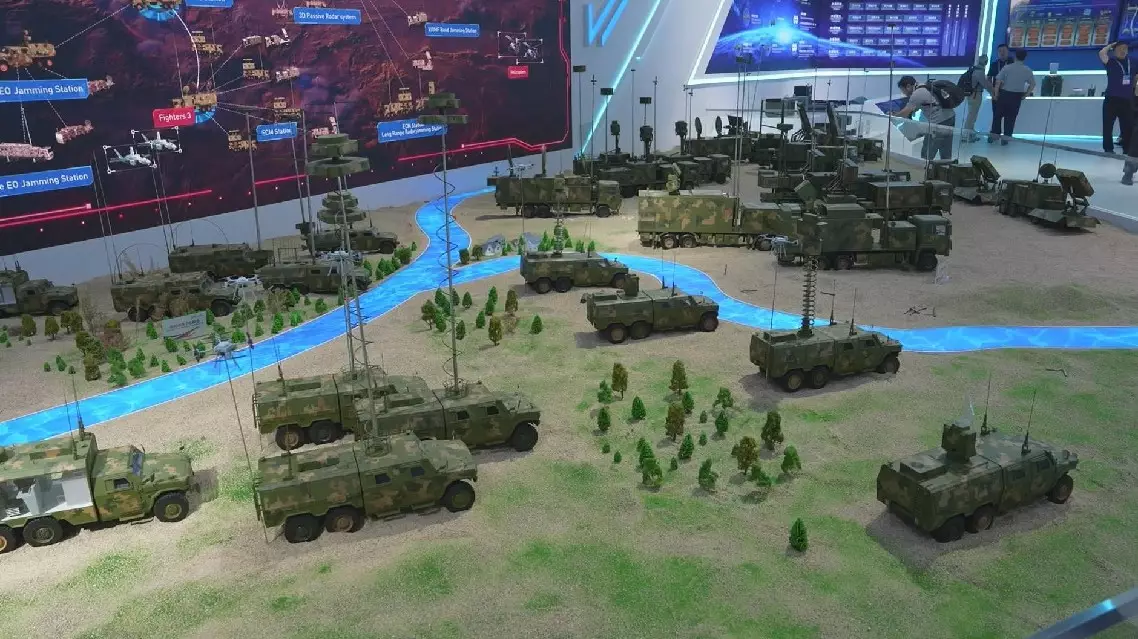
China's electronic countermeasure system makes debut at Airshow China
The U.S. push for influence in Greenland reflects rising strategic tensions in the Arctic and adds new uncertainty to regional security and transatlantic ties, said Danish scholar Dr. Steen Bjerre in an interview.
As a self-governing territory of Denmark, Greenland has once again drawn global attention following recent remarks by U.S. President Donald Trump, who reiterated on December 22 his desire to make the island "part of the United States," a move strongly opposed by Denmark and the European Union.
"Now we are seeing possibilities to shorten the routes from Asia to Europe and North America. And together with this development, it has also been realized that there are many unexplored resources on the Arctic region, [including] Greenland. And we are talking about oil, we are talking about gas, we are talking about rare kinds of earth, we are talking about minerals we need for a way to strengthen our industry and our societies. So together with this development, we have seen an increasing interest. Then you ask, what could the concentration behind this interest be? Of course money, of course our economy, but also military interests," said Bjerre.
Bjerre pointed out that Greenland holds significant value in terms of geopolitical strategy, resource reserves, and Arctic shipping routes, and has long been a focal point of U.S. attention. As environmental changes and improved navigability reshape the Arctic, Greenland's strategic position on the global stage continues to rise.
The U.S. interest in the island is far from accidental, driven by a complex mix of economic, resource-related, security, and strategic considerations, said the scholar.
"Of course, the Americans have no right to take Greenland. And the consequence if you take it to an extreme is that there will be a conflict between the United States and Europe, the rest of NATO. The United States has the ambition and they are actually a bit in the conflict with what Europeans they want. So geopolitically, I see from the relationship between European Union and the United States, that it could be also a difficult situation for NATO and for the stability in the Western Hemisphere," said Bjerre.
US push for Greenland adds uncertainty to transatlantic ties: Danish scholar