STAMFORD, Conn.--(BUSINESS WIRE)--Nov 14, 2024--
SwiftConnect today announced the closing of a $37 million Series B financing to expand its access network for connecting people to the right place at the right time. The company’s latest investment round is led by Quadri Ventures, with participation from new investors HID (part of ASSA ABLOY), Egis Capital Partners, and Klingenstein Fields Advisors. Returning investors include Crow Holdings, JLL Spark, Navitas Capital, Tanzola Corp., and Spring Rock Capital. In addition to expanding the company’s access network, the funding will be used to scale operations, drive geographic expansion, and support new product initiatives. SwiftConnect has raised $74 million in total funding to date.
This press release features multimedia. View the full release here: https://www.businesswire.com/news/home/20241114122246/en/
“We are thrilled to make a significant further investment in SwiftConnect, recognizing the company’s innovative solution for physical access, driven management team, and viral market adoption with major enterprise brands and real estate customers,” said Chris James, Managing Partner atQuadri Ventures, a venture capital firm focused on enterprise software. “We are fully committed to supporting SwiftConnect’s next phase of growth as we embrace its transformative vision of being the global network for access to everything people need, when they need it.”
SwiftConnect’s success is grounded in its ability to automate, centralize and digitize access management, user provisioning, and credential lifecycle management. This gives people the freedom to use their mobile access pass in NFC wallets and any other credentials to conveniently access buildings, offices and enterprise resources, amenities, and much more–regardless of the existing access control, identity management and building systems in place.
“Our Series B fundraise signals strong and ongoing investor confidence in SwiftConnect as we continue to reshape the physical access paradigm,” said Co-CEOs Chip Kruger and Matt Kopel of SwiftConnect. “As the network that powers a hassle-free experience for accessing places, spaces and things, SwiftConnect combines our vast partner ecosystem and vendor-neutral SaaS platform with our customer base of multinational organizations, iconic commercial real estate properties and portfolios, and other organizations to deliver the future of truly connected access and identity management. The new funding will continue to drive our leadership position in making seamless and secure access to anywhere possible so people can more easily access the most important things in their lives.”
SwiftConnect is live in hundreds of millions of square feet across multiple types of customers and vertical markets, globally. The company’s current customer base represents a potential opportunity of over a billion square feet of office space and more than two million users. SwiftConnect’s market traction includes:
Following on from SwiftConnect’s acquisition of Detrios, the company recently purchased UK-based FlitchTech to expand its ability to provide highly complex access control integration services across multiple continents, while increasing its footprint in the higher education vertical. SwiftConnect has also extended its expertise into the high-end multifamily rental market and has completed deployments in North America.
Supporting Quotes
The company’s momentum is powered by its AccessCloud platform, the backbone of the SwiftConnect access network. Built for interoperability, the SaaS platform integrates mobile wallets, credential technologies, readers, locks and devices, access control systems, identity providers, and other business systems that govern physical access across multiple locations worldwide.
About SwiftConnect
SwiftConnect is the access network for connecting people to the right place at the right time. We delight users with elegant ways to interact with places, spaces and things by ensuring your digital pass is on your phone, watch or anywhere it needs to be. Powering connected access experiences for commercial real estate owners and enterprises across financial and professional services, life sciences, technology, and other leading organizations, our platform integrates with existing mobile platforms, credential technologies, and business systems to provide authorized access to everything, everywhere through centralized access management. We provide a street-to-seat journey that users love, automation that redefines operational efficiency, and a foundation of security and privacy that administrators trust so you can navigate your world better For more information, visit. www.swiftconnect.com and follow us on LinkedIn.

SwiftConnect Raises $37 Million of Financing in Series B Round
Russia’s nuclear-capable Oreshnik missile system has entered active service in Belarus, Russia’s Defense Ministry said Tuesday, as the U.S. efforts to broker a deal to end the nearly four-year war in Ukraine have entered a pivotal stage.
The ministry released a video showing combat vehicles that are part of the mobile intermediate range ballistic missile system driving across a forest as part of combat training. The ministry’s announcement followed a statement from Belarusian President Alexander Lukashenko, who said earlier this month that the Oreshnik had arrived in the country. Lukashenko said that up to 10 such missile systems will be stationed in Belarus.
Russian President Vladimir Putin said earlier this month that the Oreshnik would enter combat duty before the year's end. He made the statement at a meeting with top Russian military officers, where he warned that Moscow will seek to extend its gains in Ukraine if Kyiv and its Western allies reject the Kremlin’s demands in peace talks.
The announcement comes at a critical time for Russia-Ukraine peace talks. U.S. President Donald Trump hosted Ukrainian President Volodymyr Zelenskyy at his Florida resort Sunday and insisted that Kyiv and Moscow were “closer than ever before” to a peace settlement.
However, Moscow and Kyiv remain deeply divided on key issues, including whose forces withdraw from where in Ukraine and the fate of Ukraine’s Russian-occupied Zaporizhzhia nuclear power plant, one of the 10 biggest in the world. Trump noted that the monthslong U.S.-led negotiations could still collapse.
Putin has sought to portray himself as negotiating from a position of strength as Ukrainian forces strain to keep back the bigger Russian army.
Russia first tested a conventionally armed version of the Oreshnik — Russian for hazelnut tree — to strike a Ukrainian factory in November 2024. Putin has bragged that Oreshnik’s multiple warheads plunge at speeds of up to Mach 10 and can’t be intercepted, and that several of them used in a conventional strike could be as devastating as a nuclear attack.
The Russian leader has warned the West that Russia could use the Oreshnik next against allies of Kyiv that allowed it to strike inside Russia with their longer-range missiles.
The Belarusian Defense Ministry said Tuesday that the Oreshnik has a range of up to 5,000 kilometers (3,100 miles).
Russian state media boasted that it would take the missile only 11 minutes to reach an air base in Poland and 17 minutes to reach NATO headquarters in Brussels. There’s no way to know whether it’s carrying a nuclear or a conventional warhead before it hits the target.
Intermediate-range missiles can fly between 500 to 5,500 kilometers (310 to 3,400 miles). Such weapons were banned under a Soviet-era treaty that Washington and Moscow abandoned in 2019.
Russia previously has deployed tactical nuclear weapons to the territory of its Belarus, whose territory it used to launch a full-scale invasion of Ukraine in February 2022. Lukashenko has said that his country has several dozen Russian tactical nuclear weapons.
While signing a security pact with Lukashenko in December 2024, Putin said that even with Russia controlling the Oreshniks, Moscow would allow Minsk to select the targets. He noted that if the missiles are used against targets closer to Belarus, they could carry a significantly heavier payload.
In 2024, the Kremlin released a revised nuclear doctrine, noting that any nation’s conventional attack on Russia that is supported by a nuclear power will be considered a joint attack on his country. The threat was clearly aimed at discouraging the West from allowing Ukraine to strike Russia with longer-range weapons and appears to significantly lower the threshold for the possible use of Russia’s nuclear arsenal.
The revised Russian doctrine also placed Belarus under the Russian nuclear umbrella.
Lukashenko has ruled the nation of 9.5 million with an iron fist for more than three decades. His government has been repeatedly sanctioned by the West for its crackdown on human rights and for allowing Moscow to use its territory for the invasion of Ukraine. Belarusian opposition leader Sviatlana Tsikhanouskaya has said that the deployment of Oreshnik to Belarus deepens the country’s military and political dependence on Russia.
Follow AP’s coverage of the war in Ukraine at https://apnews.com/hub/russia-ukraine

In this image made from video provided by Russian Defense Ministry Press Service on Monday, Dec. 29, 2025, Russian troops line up at a base in Belarus where the Oreshnik missile system was deployed in Belarus. (Russian Defense Ministry Press Service via AP)

In this image made from video provided by Russian Defense Ministry Press Service on Monday, Dec. 29, 2025, Russian solders camouflage one of the trucks of the Russia's Oreshnik missile system with a net during training in an undisclosed location in Belarus. (Russian Defense Ministry Press Service via AP)
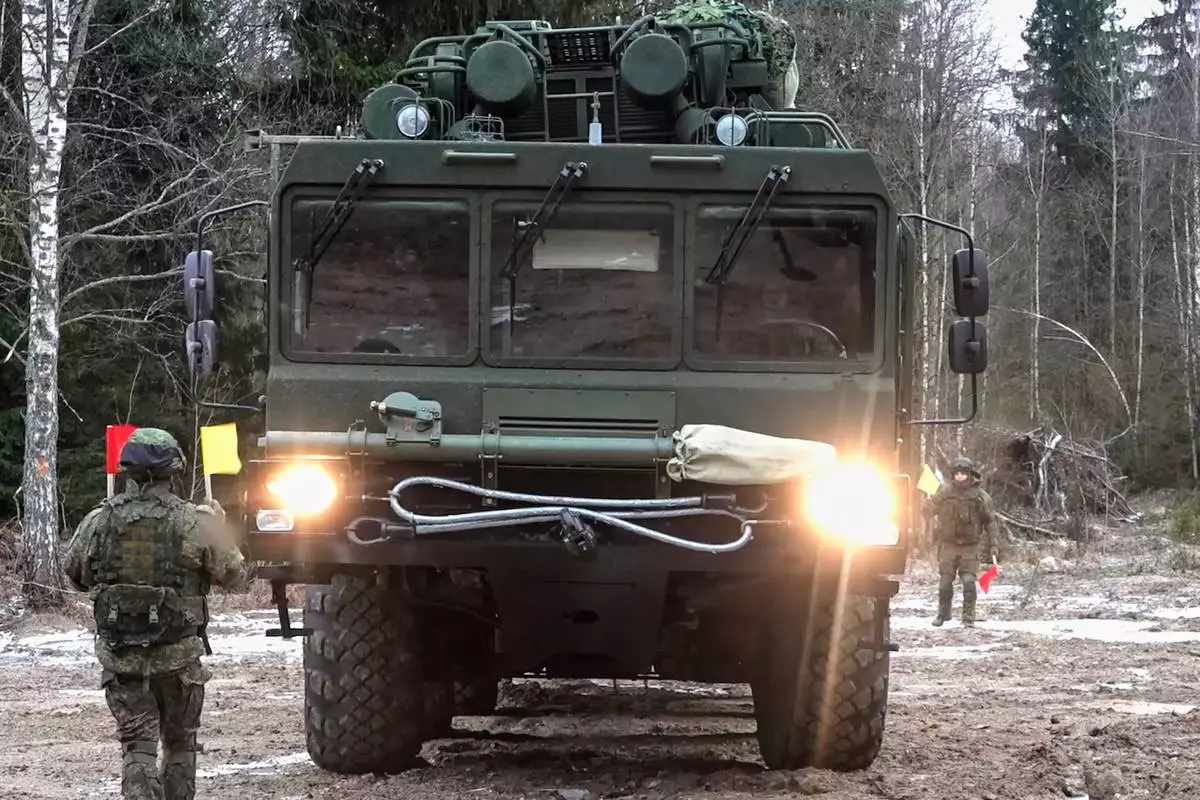
In this image made from video provided by Russian Defense Ministry Press Service on Monday, Dec. 29, 2025, A Russia's Oreshnik missile system is seen during a training in an undisclosed location in Belarus. (Russian Defense Ministry Press Service via AP)
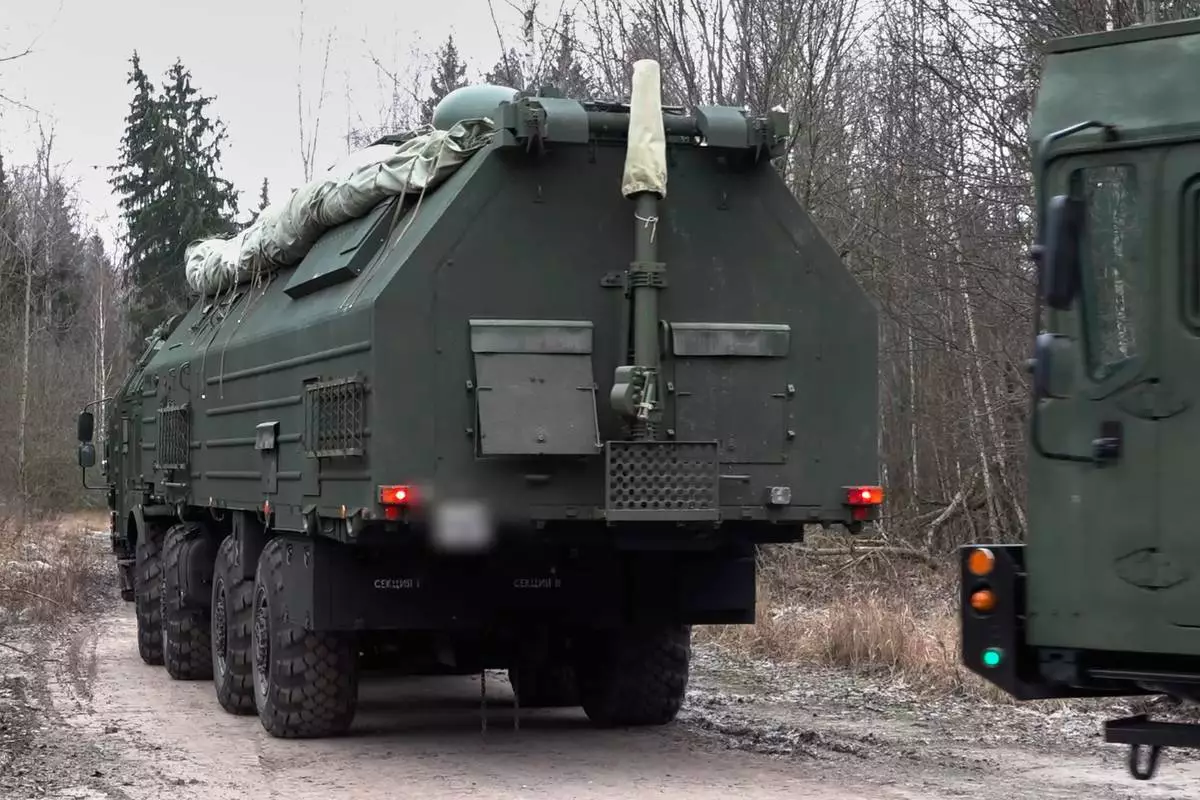
In this image made from video provided by Russian Defense Ministry Press Service on Monday, Dec. 29, 2025, A Russia's Oreshnik missile system is seen during a training in an undisclosed location in Belarus. (Russian Defense Ministry Press Service via AP)
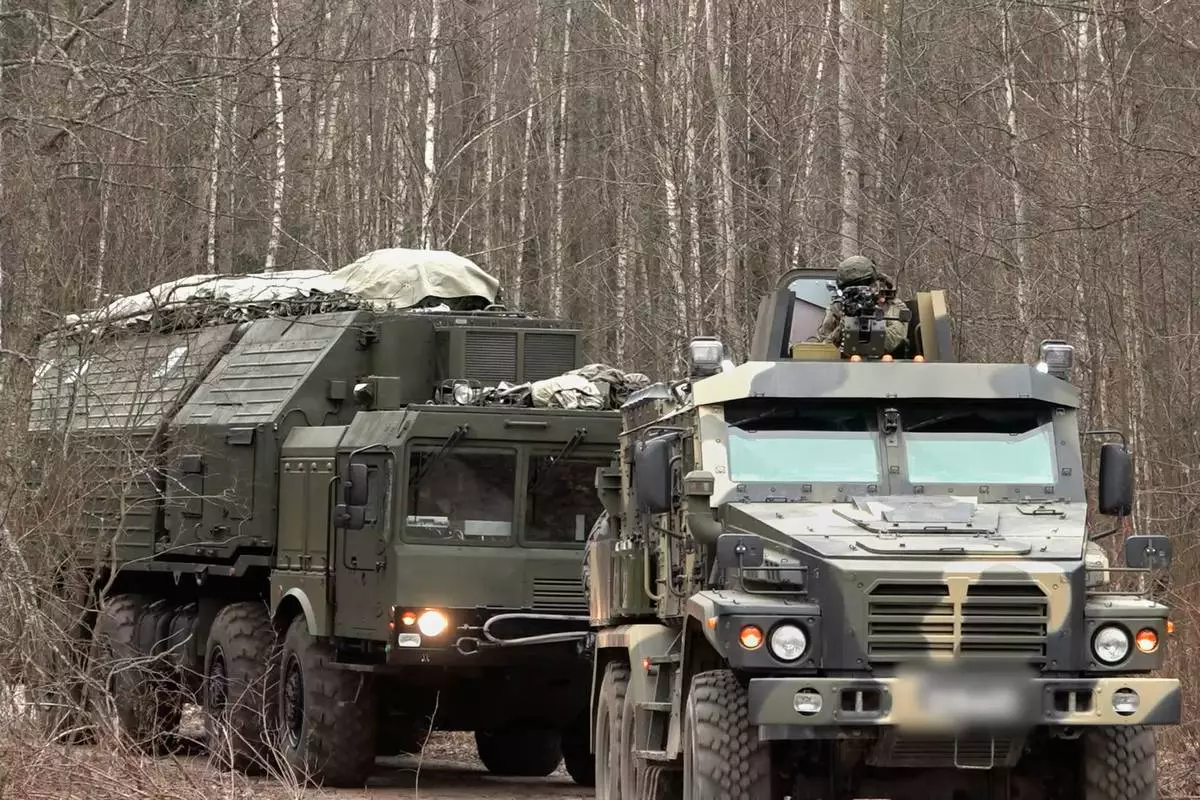
In this image made from video provided by Russian Defense Ministry Press Service on Monday, Dec. 29, 2025, A Russia's Oreshnik missile system is seen during a training in an undisclosed location in Belarus. (Russian Defense Ministry Press Service via AP)