Over the past two centuries, large numbers of Chinese immigrants have crossed the oceans to settle in Peru, blending their heritage with local traditions. Today, Chinese-Peruvian cuisine, known as "Chifa", is celebrated as a unique culinary fusion and a beloved part of Peru's cultural identity.
Studies have shown that an estimated 2.5 to 3.1 million people in Peru have Chinese ancestry, accounting for about 10 percent of the country's total population. Over time, Chinese immigrants and Peruvians have blended Chinese and Peruvian cultures, creating a uniquely Peruvian style of Chinese cuisine.
In the heart of Lima's historical district lies one of the Western Hemisphere's oldest Chinatowns. The streets are dotted with restaurants proudly displaying "Chifa" signs -- a term derived from the Chinese phrase for "having a meal" but now synonymous with Peruvian-Chinese cuisine.
Fried rice is a standout favorite in Chifa cuisine, complemented by popular dishes like rice with stir-fried toppings, chow mein, fish-flavored shredded pork, vinegar-sauteed shredded potatoes, stir-fried tenderloin, dumplings, and wontons. Many food enthusiasts regard Peruvian-Chinese cuisine as the pinnacle of Latin American Chinese food, thanks to its masterful blend of culinary traditions and flavors.
"(Local people like) teppanyaki-style stir-fried vegetables with lots of meat in them. Another popular dish is Peking Duck. And we have this (specialty dish) -- fried wontons. In China, wontons are not fried; they are served in soup. But in Peru, people love making fried wontons, paired with a sweet and sour sauce," said Luo Huantian, manager of a Chinese restaurant in Lima.
"We receive about 300 to 500 customers every day. We are grateful for the support of so many customers. Our food is incredibly delicious and diverse," said Joseph, another restaurant manager.
Many Peruvians say they have been accustomed to dining at Chinese restaurants for as long as they can remember, with Chinese cuisine becoming an integral part of their diet. According to local media estimates, there are approximately 50,000 Chinese restaurants in Peru. Today, Chinese cuisine not only enriches Peru's culinary culture but also serves as a bridge for cultural exchange between China and Peru.
"The dishes here are all excellent. My favorite is the noodles, and the pork here is also very delicious," said a diner at a Chinese restaurant.
"I really enjoy Chinese snacks, such as shrimp dumplings, shumai, and the wide variety of dim sum," said another local diner.
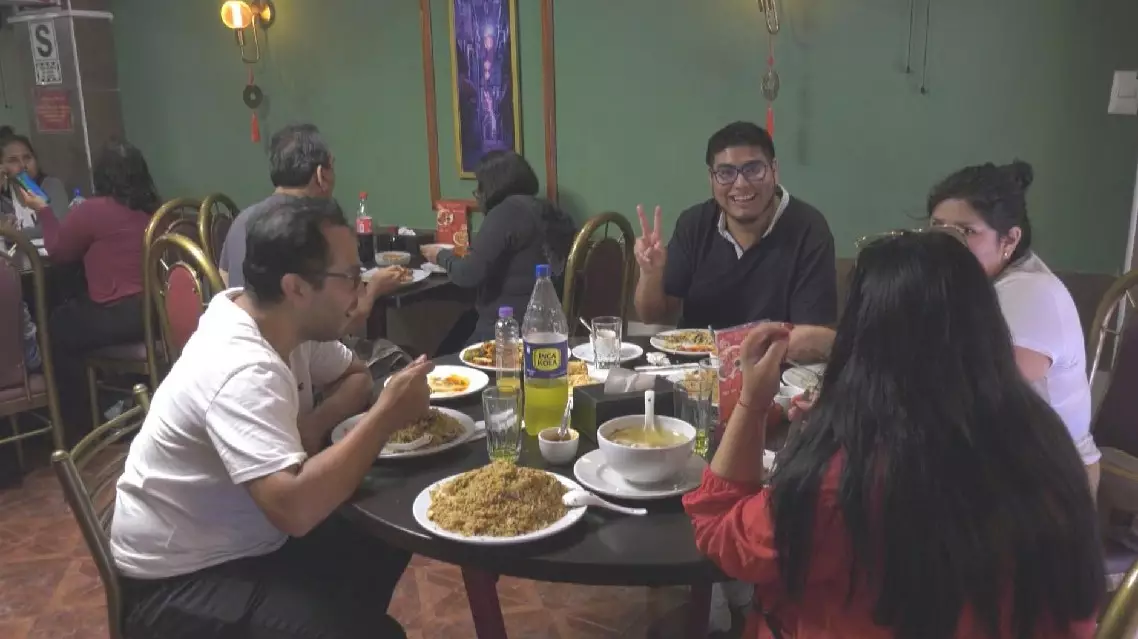
Fusion culinary traditions amplify cultural exchanges between China, Peru