Footage recorded by multiple ultra-high-definition cameras installed by China Central Television (CCTV) on performing aircraft of China's Red Falcon Aerobatic Team show breathtaking air stunts performed the Red Falcon pilots from the cockpit view at the ongoing ZhaiHai Airshow in Zhuhai City of south China's Guangdong Province.
The footage showed that eight aircraft of China's Red Falcon Aerobatic Team flew high in the sky, trailing spectacular colored smoke to pay tribute to visitors with unique etiquette.
Click to Gallery
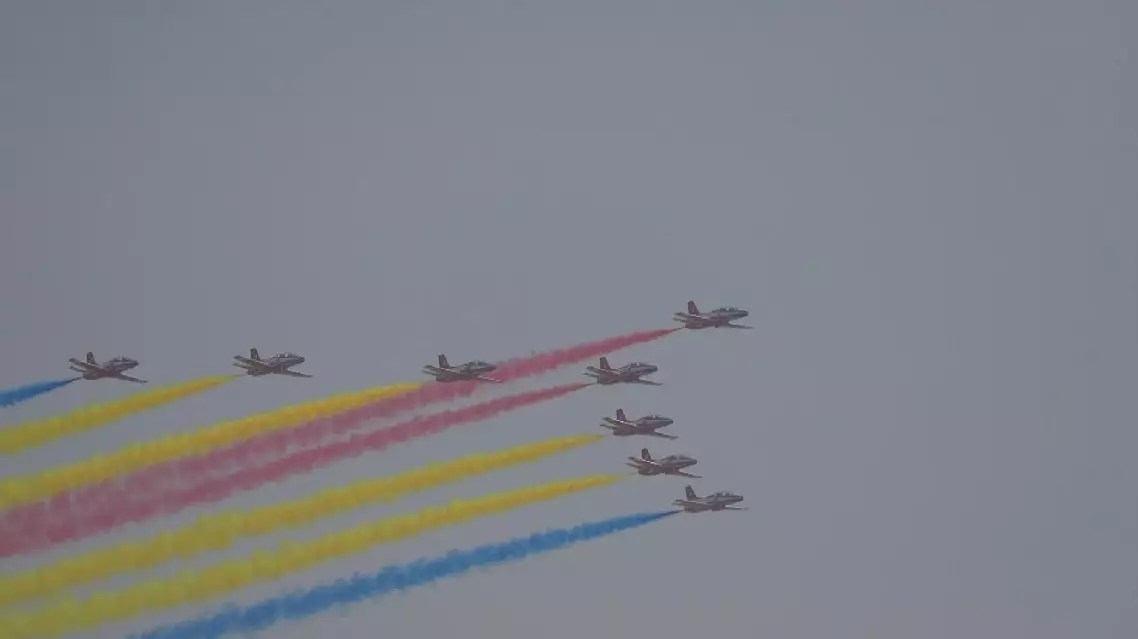
Cockpit view showing breathtaking air stunts of China's aerobatic team at air show
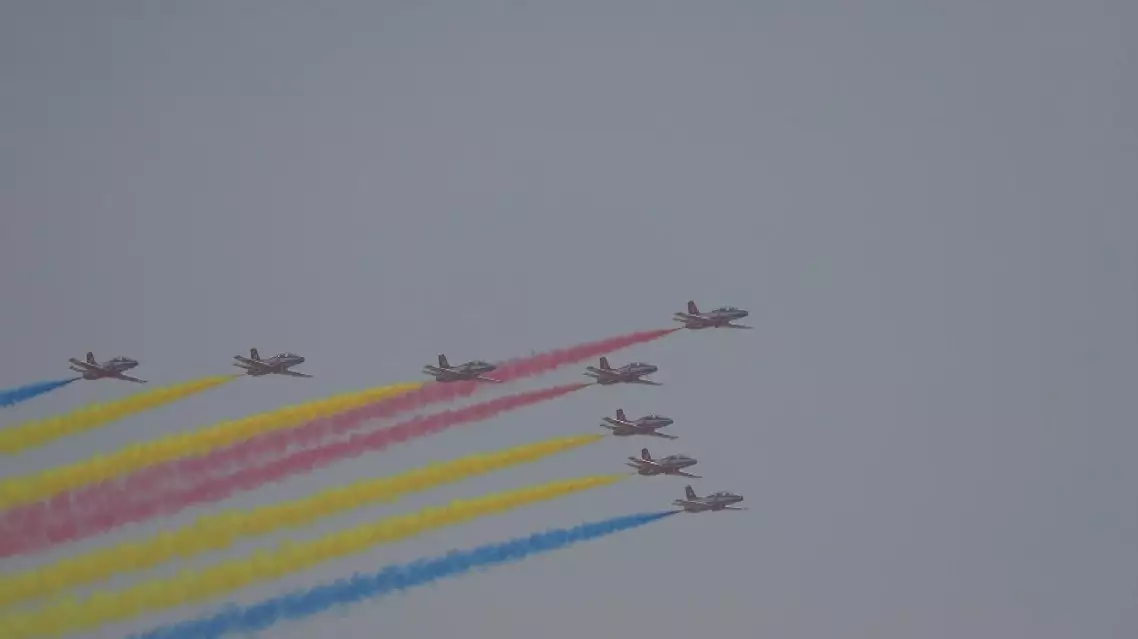
Cockpit view showing breathtaking air stunts of China's aerobatic team at air show
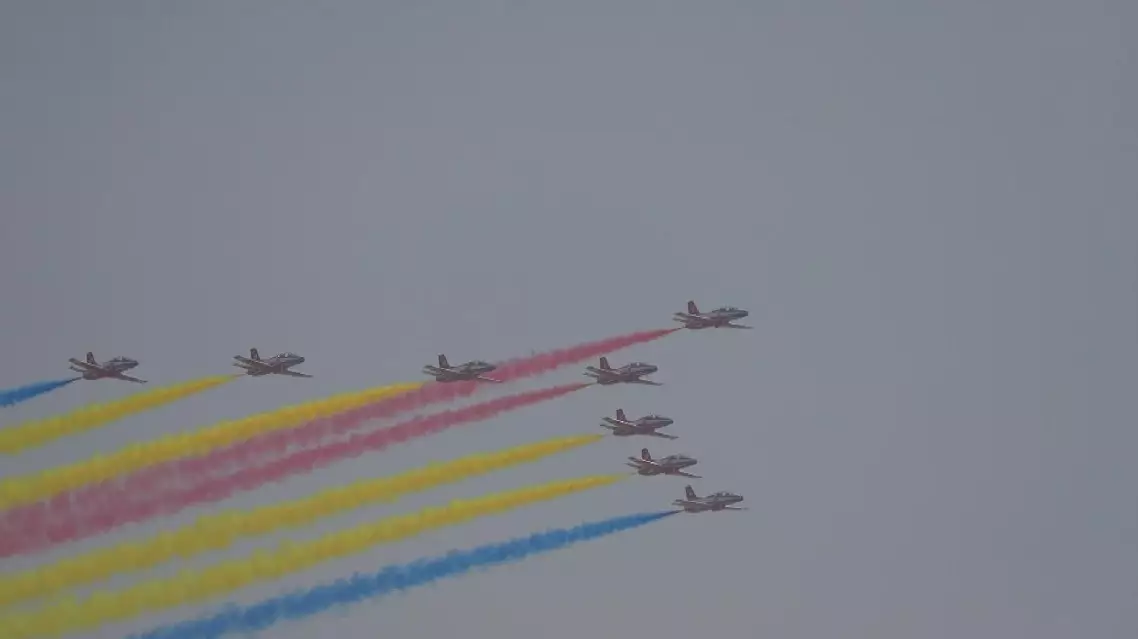
Cockpit view showing breathtaking air stunts of China's aerobatic team at air show
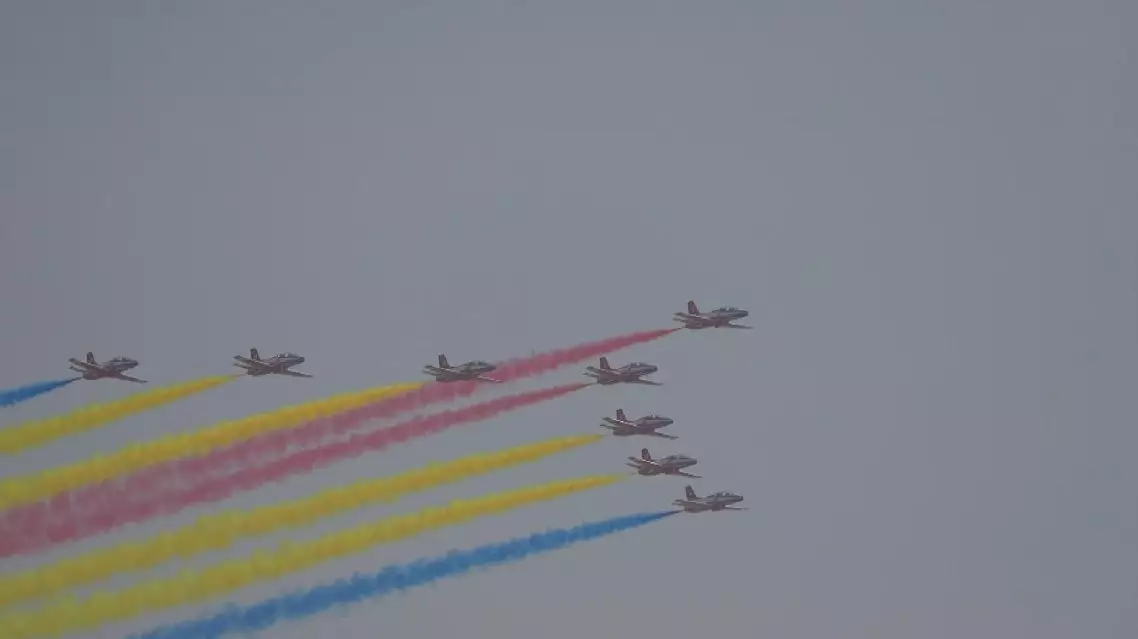
Cockpit view showing breathtaking air stunts of China's aerobatic team at air show
In their excellent aerobatic display, the Red Falcon pilots performed eight-aircraft flying in formation and thrilling eight-aircraft spiraling diamond maneuver in which the distance between the aircraft is only two meters.
"We have to keep aligning with the aircraft in front to maintain the formation. If the aircraft in front makes a change, those behind it must keep pace with it. If the aircraft in front runs wild, those behind it will also not be flying in an orderly way. So the degree of difficulty for those behind increases exponentially," said Zhang Li, pilot of China's Red Falcon Aerobatic Team.
"This year's Zhuhai Airshow is particularly shocking to me. I am deeply impressed by so many high-tech aircraft of China and their wonderful performances. The pilots are all very smart. I also want to be a pilot in the future and contribute my own strength to our country," said a visit at the Zhuhai Airshow.
The team also displayed famous fancy move which requires four-aircraft formation quickly crossing the vertical runway. The relative speed of the aircraft reached more than 1,000 kilometers per hour. It tested the tacit understanding between the wingmen of leading aircraft and required a high degree of trust between the pilots and precise coordination.
"When the aircraft perform a cross track of flight, the pilots have to accurately position the cross angle and avoid the wake turbulence between two aircraft. The pilots, whether he is the front cockpit or the rear, have to control the aircraft and observe the situation in a higher-level and more accurate manner to ensure the aircraft accurately cross to a point while ensuring safety. It is very difficult to do that," said Cheng Yijun, pilot of China's Red Falcon Aerobatic Team.
The Red Falcon Aerobatic Team was formed by the Chinese People's Liberation Army Air Force in 2011. It is composed of jet-powered Nanchang JL-8 trainers.
Cockpit view showing breathtaking air stunts of China's aerobatic team at air show
Cockpit view showing breathtaking air stunts of China's aerobatic team at air show
Cockpit view showing breathtaking air stunts of China's aerobatic team at air show
Cockpit view showing breathtaking air stunts of China's aerobatic team at air show