A group of Chinese and U.S. students visited Hebi City in central China’s Henan Province from Thursday to Saturday as part of the "2026 U.S. Youth Pickleball Cultural Exchange Trip to China," a program aimed at fostering cultural connections and mutual understanding beyond the pickleball court.
Running from February 15 to 24, the trip involves over 190 youth participants from both countries engaging in inter-school exchanges, pickleball matches, and cultural visits in four locations, Shenzhen in Guangdong Province, Shangyou in Jiangxi Province, Hebi in Henan Province, and Beijing.
During their stay in Hebi's Xunxian County on Friday, one of China’s oldest walled cities, students participated in traditional activities such as stilt walking and lion dance to celebrate the Spring Festival, gaining firsthand experience of the region's vibrant culture.
"How, you know, we're in a big crowd, we're hootin' and hollerin', and then we step through this gate and it's peace. It's so amazing. It's a sudden change that I've never experienced anywhere else, and for that, it's beautiful," said Ryan Corkery, a U.S. student.
In workshops led by local artisans, participants explored Spring Festival calligraphy and traditional clay sculpture -- intangible cultural heritage crafts passed down through generations in the region.
"Today in Hebi, wow, that’s all I can say. From the grand entrance to seeing the city, to coming and engaging in arts and crafts, having a lunch literally in town and enjoying the local cuisine. It just really allows us to understand the open-up and learn culture," said Dr. Jeffrey Sullivan, director of Systemwide Athletics at Montgomery County Public Schools in Maryland.
A pickleball match took place on Saturday at a local sports center in Hebi, fostering mutual respect between Chinese and U.S. students through friendly competition.
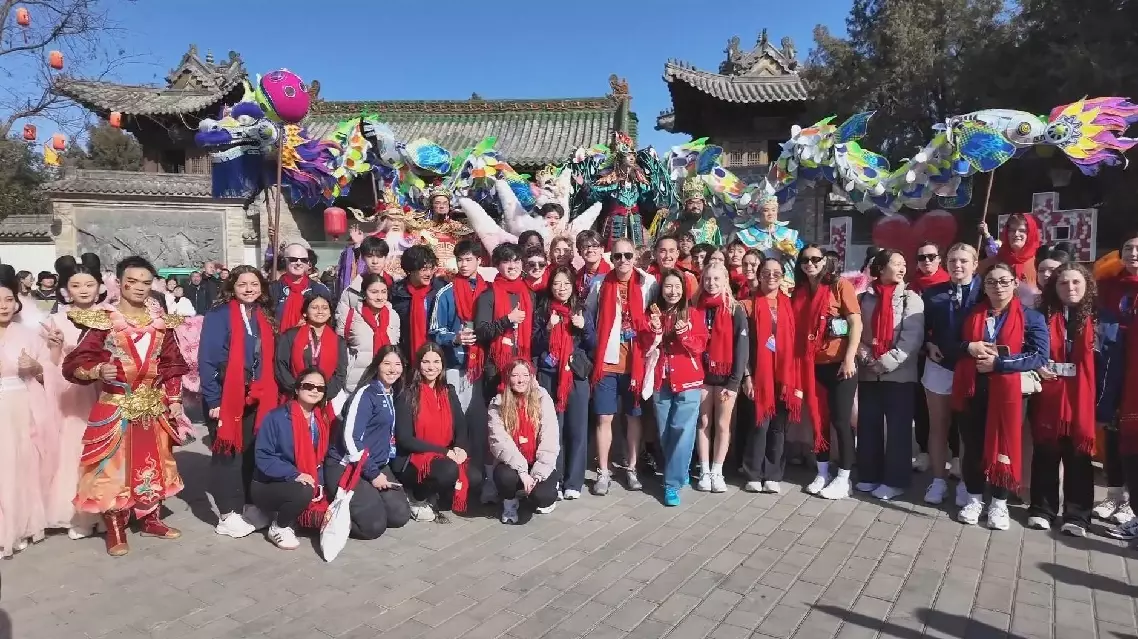
US, Chinese students connect through pickleball cultural exchange in central China city
An age-old feather duster craft in north China's Hebei Province has found new life online, as livestreaming turns a village tradition into a source of income for elderly residents. In Luan'nan County, Tangshan City, Liu Wenhao, Party secretary of Zhangmawan Village, is promoting the village's handmade feather dusters alongside fellow villagers in livestreams. Since 2024, he has led villagers in bringing the traditional craft online, quickly turning it into an internet sensation.
Elderly villagers now craft dusters while also serving as online hosts, participating in livestreams and welcoming tourists. Liu Huiying is one of them.
"This is no small income. I earn about 20,000 yuan (about 2,981 U.S. dollars) a year, which is more than enough. They call me an internet celebrity. I'm happy," she said.
The feather duster craft has a long history in Zhangmawan. Once a sideline for villagers during the agricultural off-season, craftsmen worked from dawn to dusk only to sell a single duster for 0.3 to 0.5 yuan. Sales were slightly better at rural fairs, but earnings were barely enough to make a living. As modern cleaning products diversified, traditional feather dusters gradually faded from daily life.
In recent years, with the rise of short-video platforms, several young people in the village began experimenting with short videos. Their first video showing the making of a feather duster garnered more than 600,000 views.
"Our village's traditional craft was well-known throughout the region. So we thought, with so many people here skilled at making feather dusters, why not sell them online and help boost their incomes?" said Liu.
Zhangmawan has more than 200 residents over the age of 60. To boost their incomes and pass on the craft, product transformation was key. Young villagers pooled their ideas and decided to enter the cultural and creative market.
While veteran artisans persisted in handmade production, younger people focused on innovative designs, launching new items such as car hangings, bag charms, desktop ornaments and cat teasers, tailored to modern aesthetics and lifestyles.
Online popularity has also boosted offline tourism. The village has leveraged its advantages to offer craft workshops, rural sightseeing, farm meals and educational study tours, attracting a large number of visitors and children.
"You can hang it on a schoolbag or car keys -- it can go in many places. And if something gets dirty, you can use it to sweep," said Meng Shixuan, a young visitor.
"We want to keep updating our cultural and creative feather duster products, and through short videos and livestreaming, develop the village's study tour and sightseeing businesses to provide more jobs and income opportunities," Liu said.
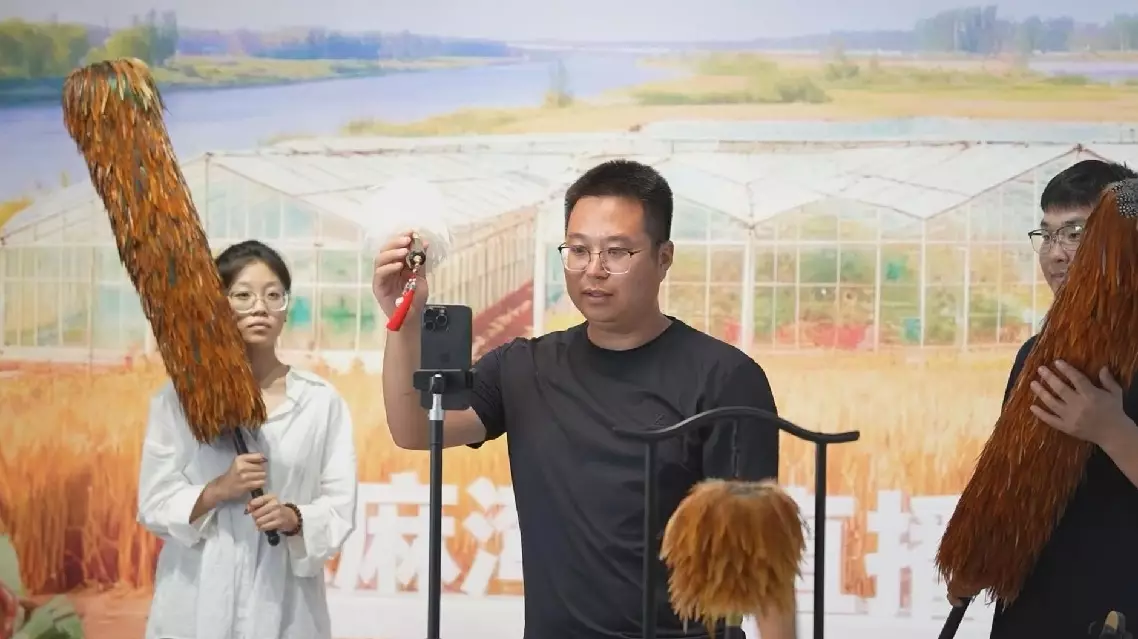
Chinese village turns traditional feather duster craft into online hit