Foreign tourists are flocking to southwest China's Yunnan Province and Shanghai during the Spring Festival holiday, drawn by the chance to immerse themselves in the traditions and cultural richness of the Chinese New Year.
The nine-day holiday began on Sunday, while the Spring Festival itself, China’s most important annual celebration marked by family reunions, festive foods, and New Year wishes, fell on Tuesday this year.
Starting from Wednesday, Hekou Port in Honghe Hani and Yi Autonomous Prefecture, Yunnan Province, witnessed a surge in both inbound and outbound tourism. Each morning during the holiday, crowds streamed across the Nanxi River Bridge at the Hekou land port, entry-exit documents in hand, ready to embark on vibrant journeys through China.
Inside the joint inspection hall, officers from the Hekou border inspection station directed visitors to designated lanes, ensuring smooth clearance in less than five minutes.
"Our whole family loves China. We enjoy the food and scenery here. If I get the chance, I'd like to visit northern China too," said a Vietnamese tourist.
"I come to China to celebrate the Chinese New Year with my family. The atmosphere here is so lively. I really like the firecrackers. It's very fun and everybody is very happy. I can't wait to eat the food tonight because Chinese food is very good," said a French tourist.
During the first four days of the Spring Festival holiday, from February 15 to 18, the Hekou Port handled 21,500 border crossings.
"During the Spring Festival holiday, Hekou Port is experiencing a peak in inbound passenger traffic. It is projected that over 100,000 people will cross the border at Hekou Port throughout the entire holiday period," said Hou Qian, a police officer of the Hekou entry-exit border inspection station.
In Shanghai, commercial districts and landmarks are staging special folk activities throughout the holiday. For many foreigners spending their first Spring Festival in China, these events offer a vivid introduction to traditional culture, experienced against the backdrop of a city where age-old customs meet modern urban life.
"It's so colorful and it's so pretty. I think it's going to be so exciting and so glamorous. So Chinese Spring Festival is actually glamorous and very festive and so many people celebrate. And I'm very excited to see what' s happening here that's why I came here. There's a lot of history here and there's a lot to explore," said a Sri Lankan tourist.
"I think it's beautiful how a lot of shows are made to give fortune to each other and like spread hope for the future and for this year," said an Italian tourist.
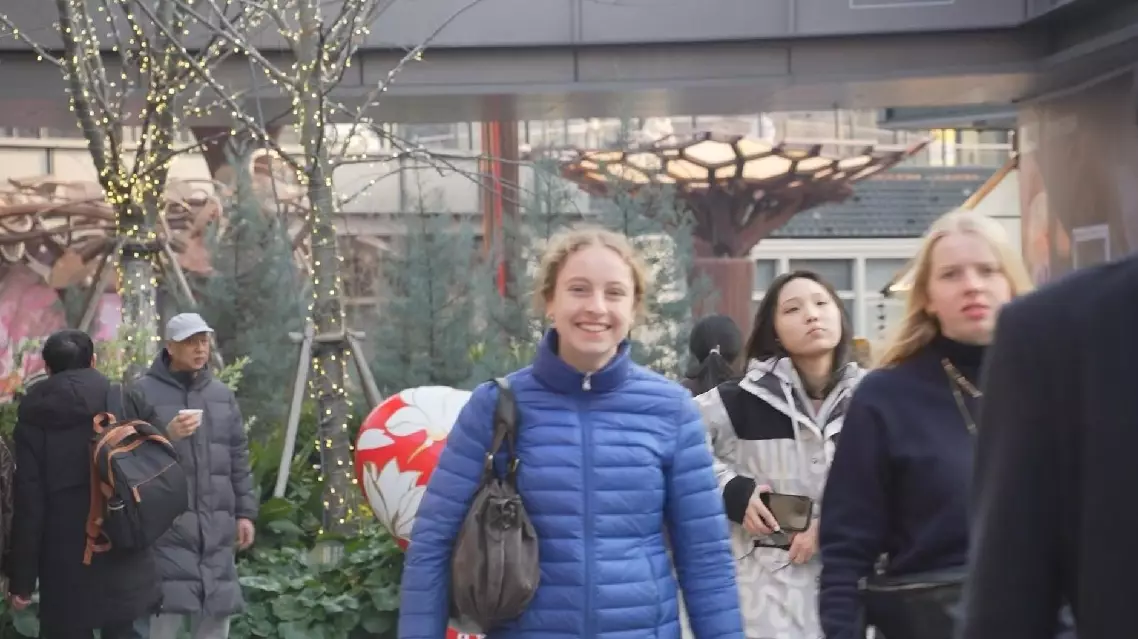
Foreign tourists flock to Yunnan, Shanghai during Chinese New Year