Skip to Content Facebook Feature Image

China to handle 5.08 billion domestic trips overall as Spring Festival travel rush hits halfway point

China

China

China

China to handle 5.08 billion domestic trips overall as Spring Festival travel rush hits halfway point

2026-02-21 23:19 Last Updated At:02-23 11:34

China is expected to handle 5.08 billion domestic passenger trips in total as this year's 40-day Spring Festival travel rush period hit its halfway point on Saturday, according to official estimates.

On average, a record 250 million trips are being made daily across different Chinese regions from Feb 2, the start of the 2026 Spring Festival travel rush period, to Feb 21.

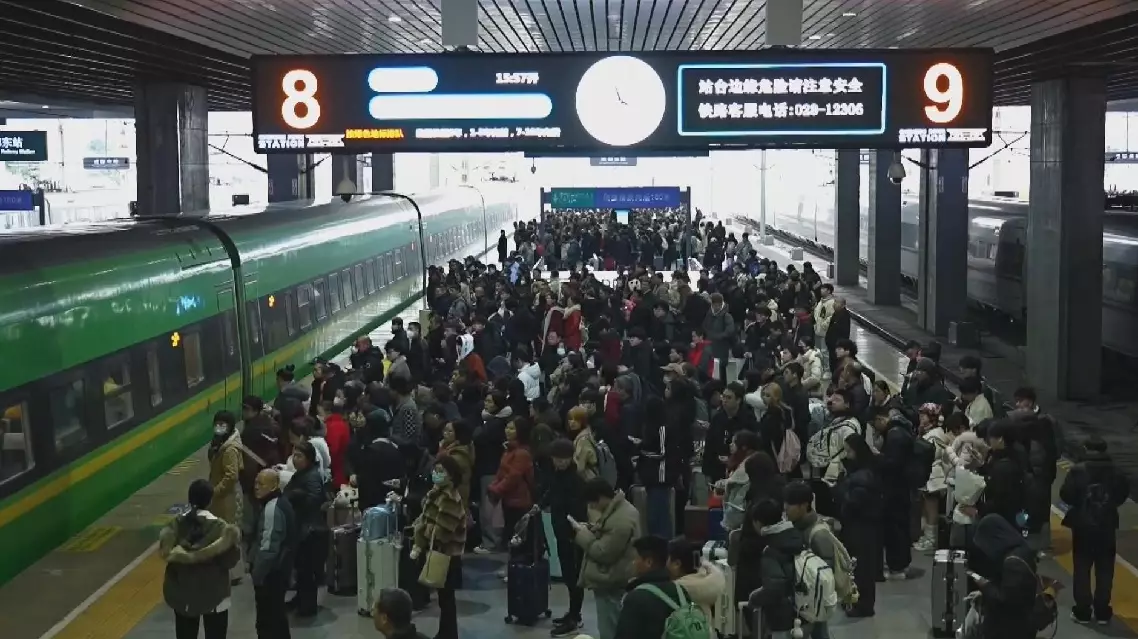
More than 360 million cross-regional trips are expected on Saturday, marking the third consecutive day during which passenger flow has exceeded the single-day peak of the same period in the history of the annual holiday travel rush.

Saturday, which is also Day 6 of this year's official nine-day Spring Festival holiday, also saw a rise in the number of return trips across China, as people head back to big cities from their hometowns.

The country's rail network is expected to handle 16.8 million passenger trips on the day.

Southwest China's Guizhou, and central China's Hubei and Hunan provinces on Saturday mobilized more overnight high-speed trains and deployed special train services to meet the increasing travel demand by migrant workers.

The Guangzhou South Railway Station in south China's Guangdong Province, a premier destination for migrant labor, has recently brought an intelligent system online to ensure the smooth high-intensity operations during the return travel rush.

On China's roads, over 339 million trips have been estimated on Saturday, with traffic volume on expressways expected to exceed 65 million.

Meanwhile, Saturday is also expected to see 2.63 million passenger trips made by air and 1.81 million trips made by water, with the maritime authorities monitoring key areas around the clock to ensure the safety of passengers on their return journeys.

"The volume of cross-regional personnel flow is expected to continue increasing tomorrow to reach the peak of overall passenger flow in the 40-day Spring Festival travel rush period this year. We've been continuously improving the comprehensive transportation network, effectively guaranteeing the large-scale travel of the population," said Yang Yong, deputy head of the Transport Services Department of the Chinese Ministry of Transport.

The Spring Festival travel rush, also known as "chunyun," amounts to the world's largest annual human migration as millions embark on journeys across the nation to reunite with loved ones to celebrate the arrival of the Chinese New Year.

The Spring Festival fell on Feb 17 this year. The official holiday lasts nine days from Feb 15 to 23, with the travel rush period lasting through March 13.
China to handle 5.08 billion domestic trips overall as Spring Festival travel rush hits halfway point

China to handle 5.08 billion domestic trips overall as Spring Festival travel rush hits halfway point

People in Yemen are struggling for survival as the country continues to grapple with a deepening labor crisis after more than a decade of war, with many lamenting the lack of opportunities which are leaving the livelihoods of many hanging in the balance.

As the world marks International Workers' Day on Friday, the situation in Yemen seems all the more poignant as millions of people are finding it increasingly hard to find any work at all.

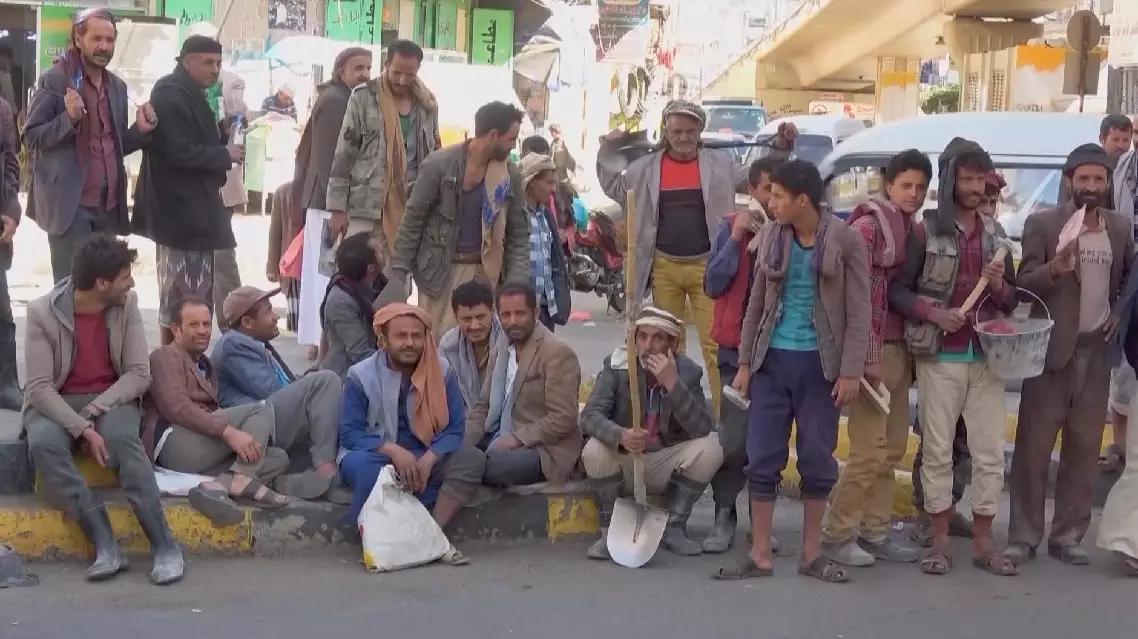
In the crowded streets of the capital Sana'a, workers gather on street corners, waiting for jobs that may never come. Ahmed Muawadah is one of the many who are sitting here, watching passing cars, desperately hoping that one will stop and offer work.

"Our suffering is that we sit here without work. Sometimes we spend a whole month without working, except for one day, or just one day every two weeks. Work is very limited, almost non-existent. I have nine children, and I only work one day a month. I cannot support them. Jobs have completely disappeared. If opportunities were opened for us, I and all the workers would work," said Muawadah.

This individual story reflects a broader reality affecting an estimated eight million workers across Yemen. Many of them are hoping to receive a daily wage, but the challenges are mounting in an increasingly strained labor market.

Activity in key sectors such as construction and services has dropped sharply, largely due to the suspension of several international initiatives, including those backed by the World Bank. As a result, income opportunities have narrowed for those who rely primarily on daily wages.

Meanwhile, the widening impact of the U.S.-Israeli war on Iran and the disruption caused along the key Strait of Hormuz -- a key shipping route for global trade -- has brought more misery in recent weeks.

"There has been a significant decline in business activity as a result of the war, the blockade, and the disruption of work. Foreign capital has also left the country, and large companies have moved out of Yemen and stopped their operations. This is one of the main reasons," said Abdul Karim Al, secretary general of the General Federation of Trade Unions in Sana'a.

Yemen residents struggling to survive as work dries up amid deepening labor crisis

Yemen residents struggling to survive as work dries up amid deepening labor crisis

Recommended Articles