Skip to Content Facebook Feature Image

Russian artist bridges cultures with Chinese ink painting

China

China

China

Russian artist bridges cultures with Chinese ink painting

2026-02-22 06:24 Last Updated At:07:47

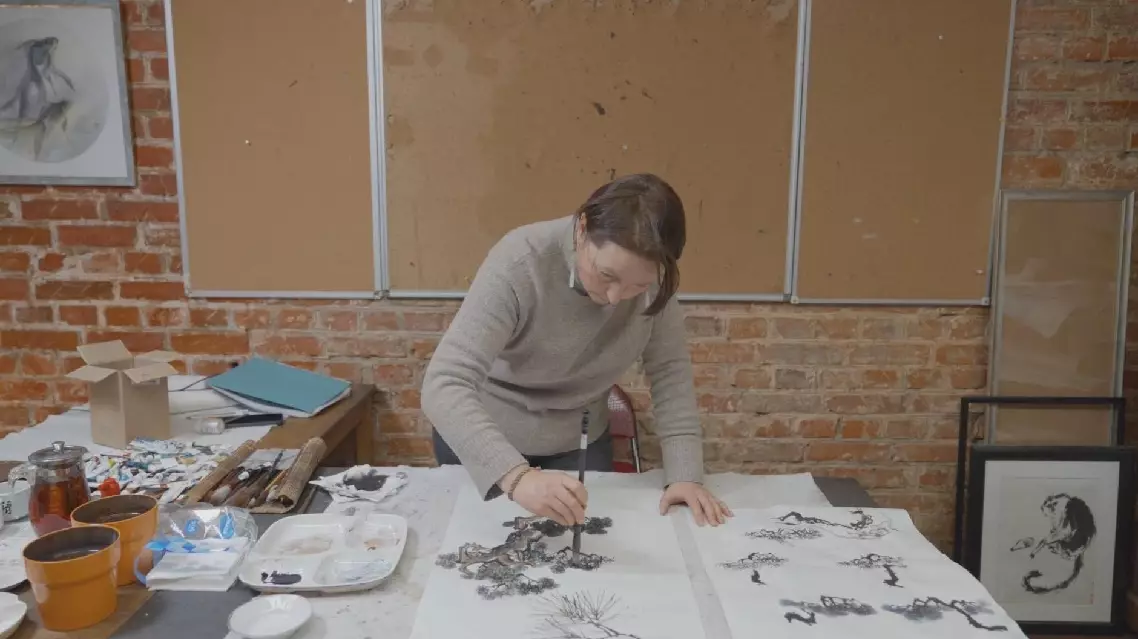
Olga Sumarokova, a Moscow-based Russian artist, has been devoted to traditional Chinese painting for 15 years, serving as a cultural bridge between China and Russia.

Sumarokova has been deeply fascinated by Chinese painting, particularly the xieyi, or freehand style, which is marked by loose brushstrokes and light colors to convey poetry.

She said what she loves about Chinese painting is the philosophy it embodies, as well as the artistic conception that cannot be fully expressed in words.

Before studying traditional Chinese painting, Sumarokova worked as a designer. She began learning bird-and-flower painting and gongbi painting, a realistic and elaborate-style Chinese painting technique under Russian Chinese-painting artist Yulia Naumova. During her studies, Sumarokova traveled to China almost every year for further training.

At her studio in Moscow, Sumarokova also teaches freehand style Chinese painting. She said that the freehand style of Chinese painting requires long-term observation and moments of inspiration, but without an understanding of Chinese culture, the art would be groundless, like water without a source and a tree without roots.

Sumarokova said she will continue learning from Chinese masters and refining her skills. She said even when her hands tremble one day, she will not give up the art. She plans to keep running her studio, taking part in exhibitions and exchanging with artists from different parts of China.

"I truly admire China's development. China 14 years ago was totally different from it is today. And in terms of the people, the changes in the Chinese people are also remarkable. I'm sure that Chinese people are especially good at expressing their artistic charm," she said.

To celebrate the Chinese New Year, Sumarokova created an ink-wash painting of galloping horses in freehand style. Falling on Tuesday this year, the Spring Festival, or the Chinese New Year, is China's most important festival marked by family reunions, festive foods and New Year wishes. Chinese New Year's Day in 2026 marked the start of the Year of the Horse -- the seventh of the 12 zodiac animals in the Chinese zodiac.

Sumarokova said in Chinese culture, the horse symbolizes speed and achievement. She hopes this year will be filled with good ideas, achievements and exciting moments -- a blessing to her Chinese friends, and to herself.
Russian artist bridges cultures with Chinese ink painting
Russian artist bridges cultures with Chinese ink painting

Colorful celebrations have been taking place across China to mark the Year of the Horse.

Falling on Tuesday this year, the Spring Festival, or the Chinese New Year, is China's most important holiday, marked by family reunions, festive foods and New Year wishes. The official holiday lasts nine days from February 15 to 23

In Beijing's Taoranting Park, a special Chinese New Year garden party has drawn large crowds with its festive scenery, traditional foods, creative products and folk performances.

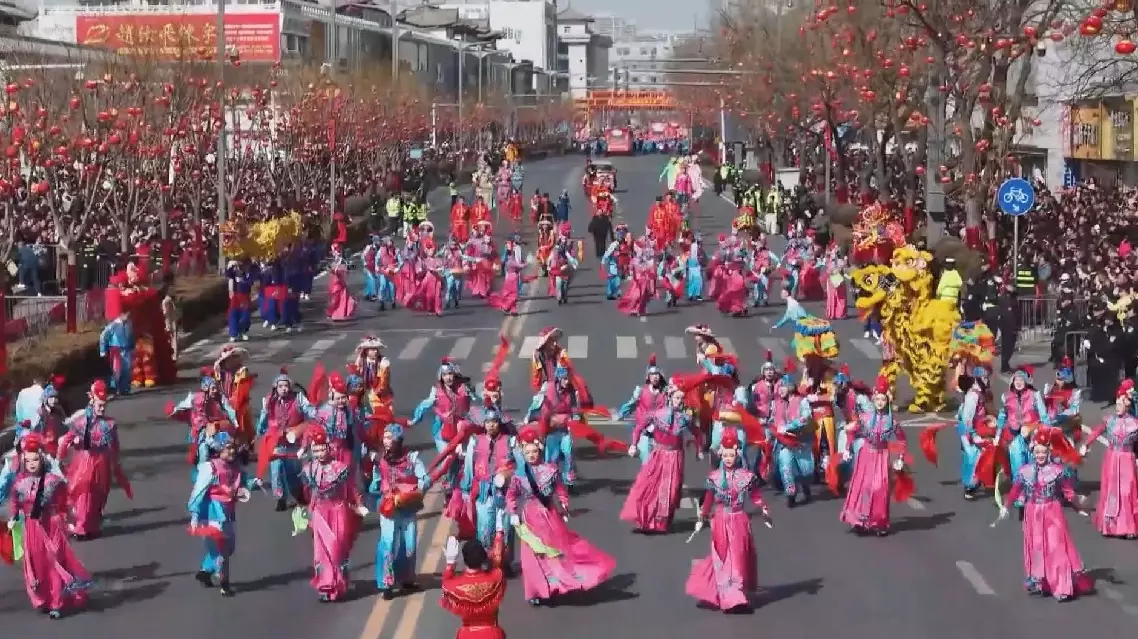
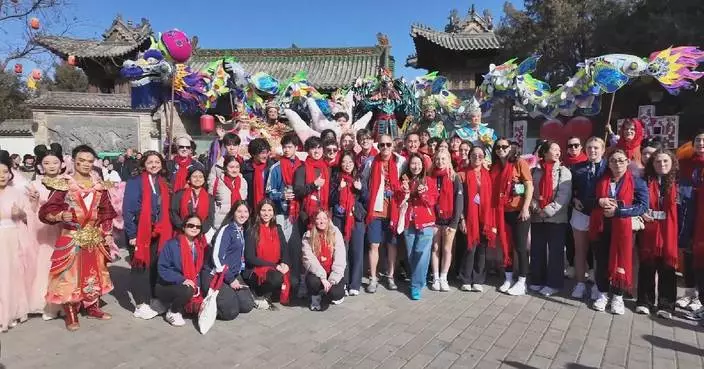
In Yulin City in northwest China's Shaanxi Province, more than 30 Yangge folk dance troupes from across the country performed with drums, gongs and flowing red ribbons, offering festive blessings for the new year.

In Huzhou City in east China's Zhejiang Province, scenic spots are staging more than 8,000 performances to enrich visitors' cultural experience during the festival.

In Hubei and Fujian, cutting-edge technologies, such as robots and virtual reality, are integrated into traditional festivities, offering people a unique experience. Dance performances featuring both human actors and robots are infusing new vitality into intangible cultural heritage.

"Integrating robotic elements into traditional Chinese culture brings innovation while preserving the authentic festive spirit of Chinese tradition. It truly feels like the atmosphere of Spring Festival," said Yang Ming-hsun, a tourist from China's Taiwan region.

In Tangshan City in north China's Hebei Province, a dazzling sea of lanterns illuminates the night sky, while molten iron fireworks, equestrian shows and acrobatics showcase the unique charm of the traditional festival.

People in Linqing City of east China's Shandong Province also enjoyed a dazzling feast of light along the river to usher in the Chinese New Year.

Hong Kong and Macao special administrative regions have recorded a growing number of tourists during the ongoing festival, with inbound visitors exceeding 1.16 million and 998,000, respectively, from February 15 to 20.

Colorful celebrations fill China as Year of the Horse begins

Colorful celebrations fill China as Year of the Horse begins

Recommended Articles