JAYAPURA, Indonesia (AP) — On the southeastern coast of the city of Jayapura, Petronela Merauje walked from house to house in her floating village inviting women to join her the next morning in the surrounding mangrove forests.
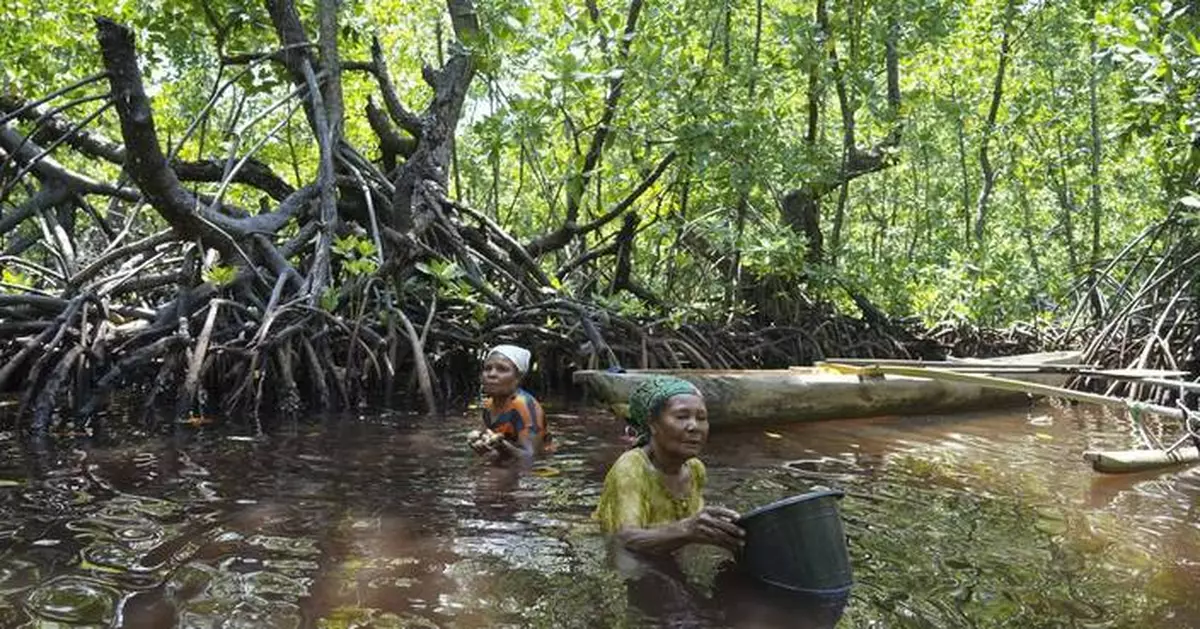
Merauje and the women of her village, Enggros, practice the tradition of Tonotwiyat, which literally means "working in the forest." For six generations, women from the 700-strong Papuan population there have worked among the mangroves collecting clams, fishing and gathering firewood.
Click to Gallery
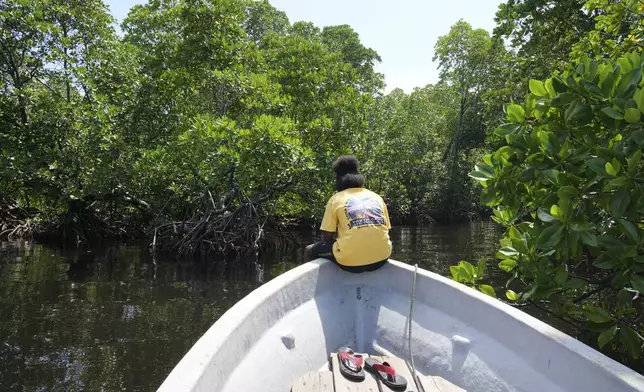
Martha Tjoe sits on a boat through a mangrove forest where only women are permitted to enter in Jayapura, Papua province, Indonesia on Wednesday, Oct. 2, 2024. (AP Photo/Firdia Lisnawati)
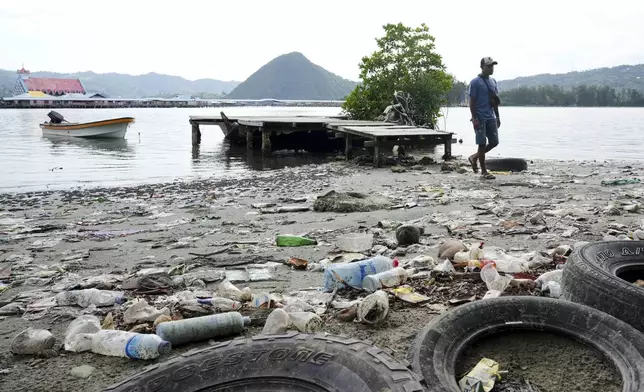
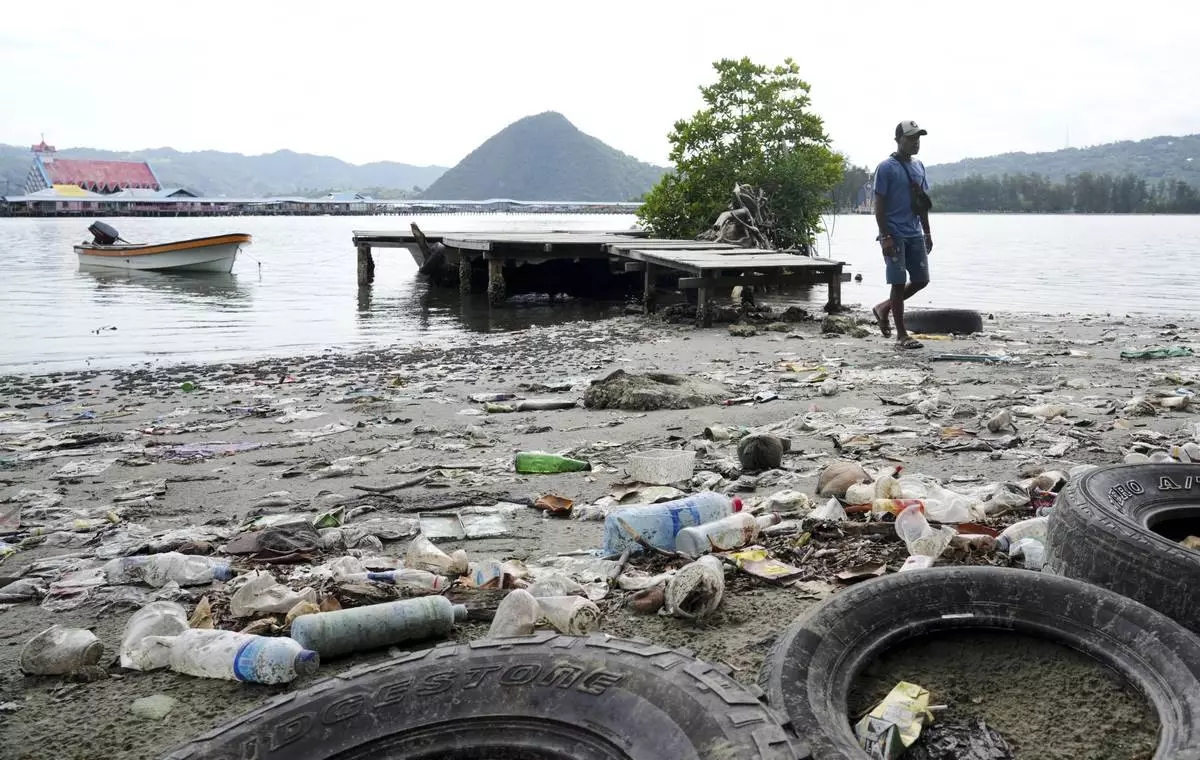
A man walks past plastic waste strewn along at Enggros village beach in Jayapura, Papua province, Indonesia on Wednesday, Oct. 2, 2024. (AP Photo/Firdia Lisnawati)
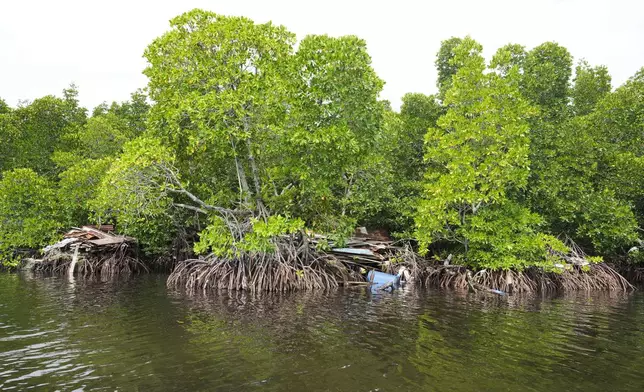
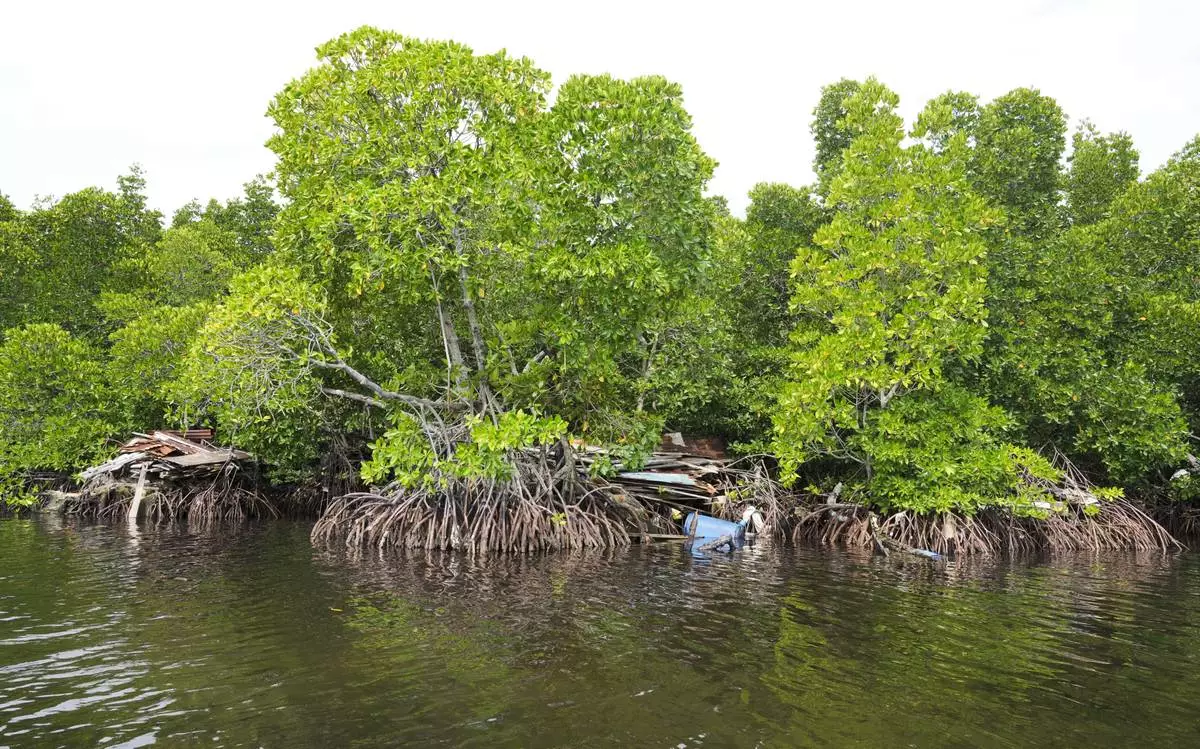
A plastic container and rubbish is stuck in mangrove trees at Enggros village in Jayapura, Papua province, Indonesia on Wednesday, Oct. 2, 2024. (AP Photo/Firdia Lisnawati)
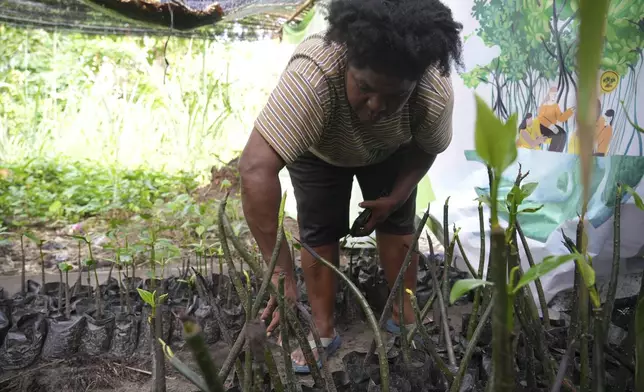
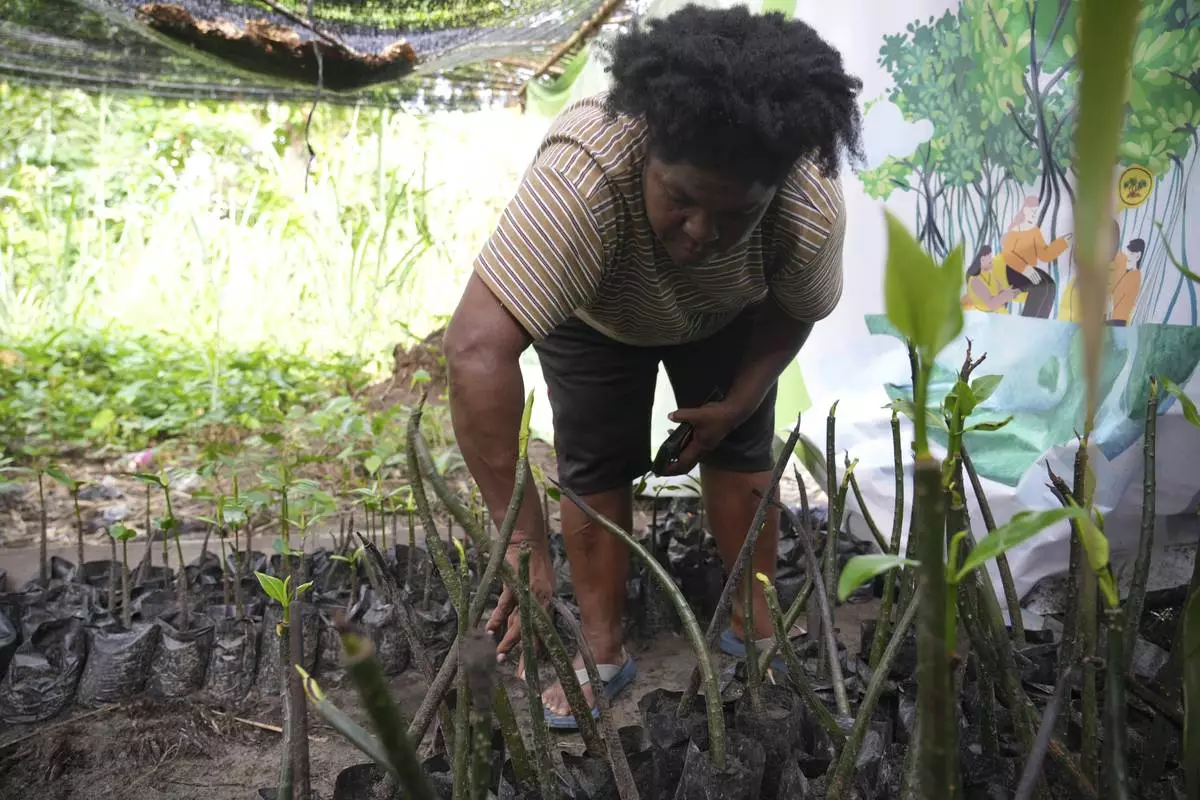
Petronela Merauje works on her mangrove seeds for planting in Jayapura, Papua province, Indonesia on Wednesday, Oct. 2, 2024. (AP Photo/Firdia Lisnawati)
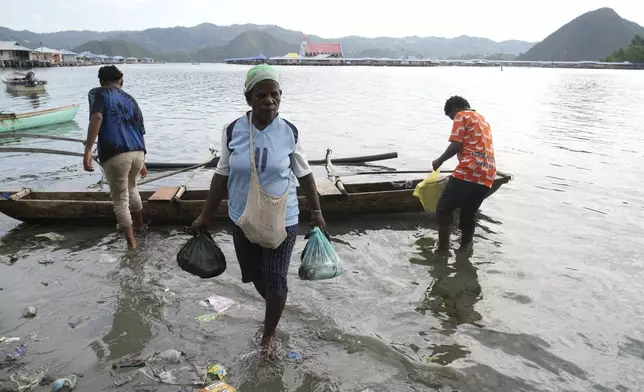
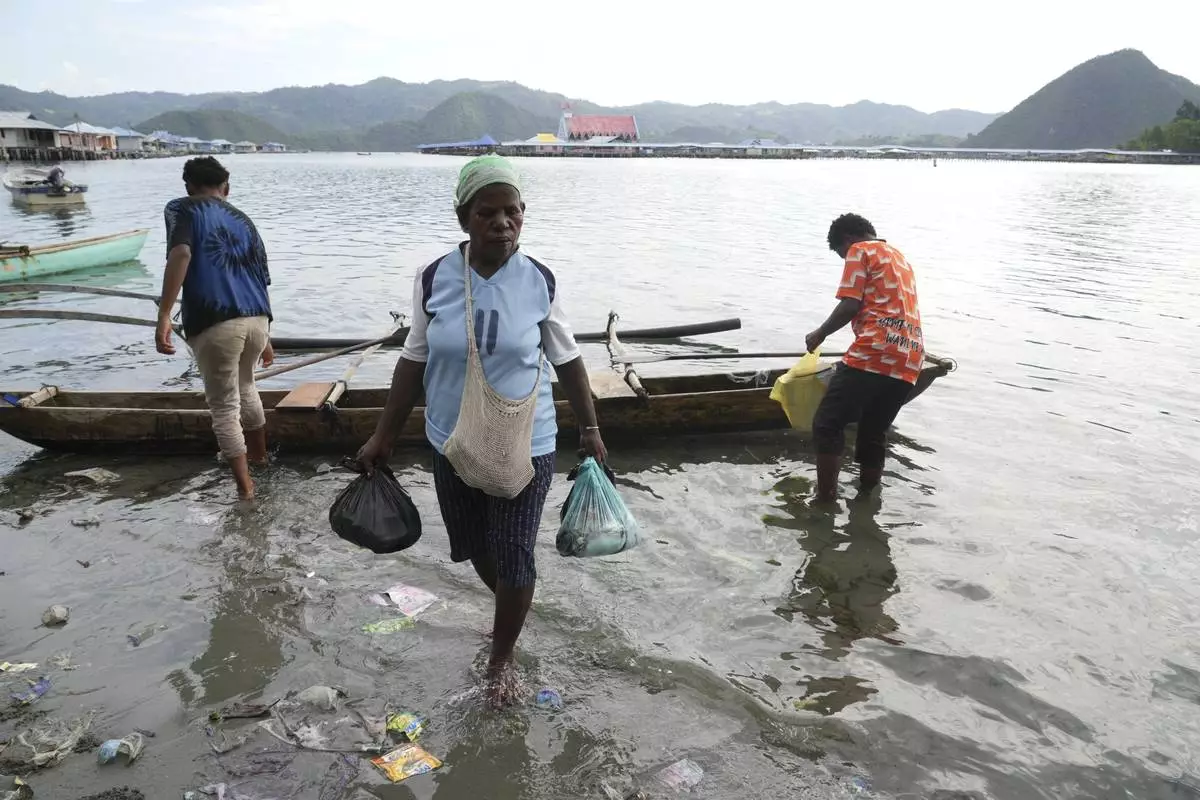
A woman carries fish in plastic bags to a market at Enggros village in Jayapura, Papua province, Indonesia on Wednesday, Oct. 2, 2024. (AP Photo/Firdia Lisnawati)
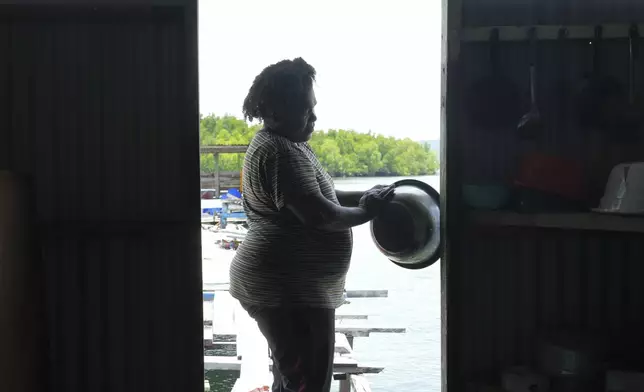
Petronela Merauje prepares to cook at her house at Enggros village in Jayapura, Papua province, Indonesia on Wednesday, Oct. 2, 2024. (AP Photo/Firdia Lisnawati)
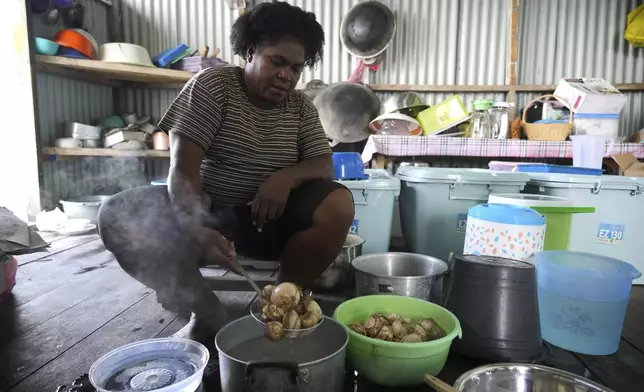
Petronela Merauje prepares clams to cook at her house at Enggros village in Jayapura, Papua province, Indonesia on Wednesday, Oct. 2, 2024. (AP Photo/Firdia Lisnawati)
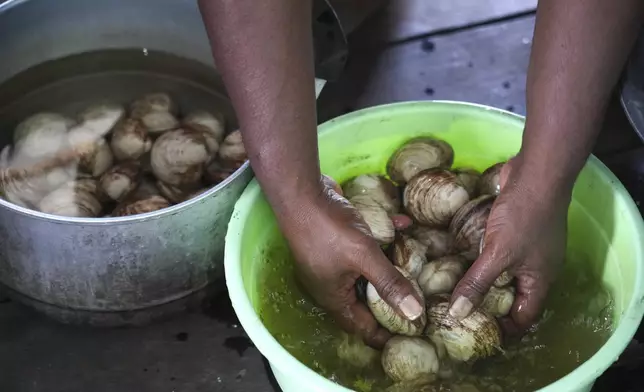
Petronela Merauje prepares clams to cook at her house at Enggros village in Jayapura, Papua province, Indonesia on Wednesday, Oct. 2, 2024. (AP Photo/Firdia Lisnawati)
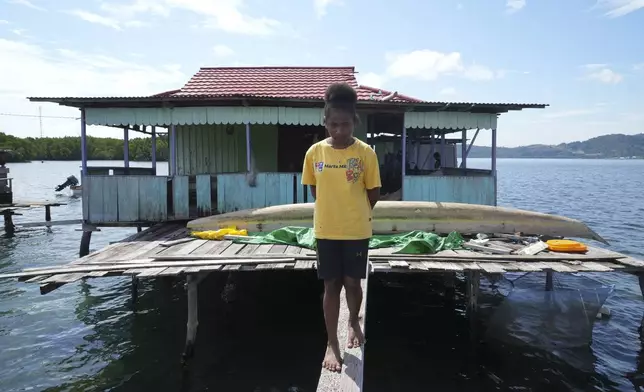
Martha Tjoe walks near her floating wooden house at Enggros village in Jayapura, Papua province, Indonesia on Wednesday, Oct. 2, 2024. (AP Photo/Firdia Lisnawati)
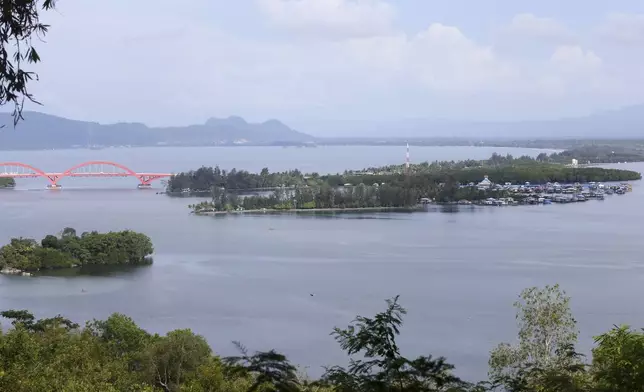
Enggros village is visible in Jayapura, Papua province, Indonesia on Thursday, Oct. 3, 2024. (AP Photo/Firdia Lisnawati)
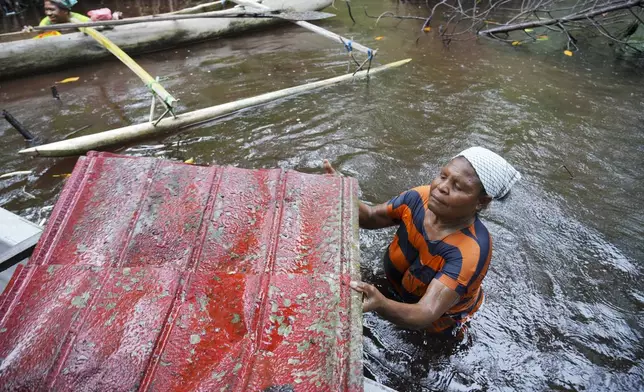
Paula Hamadi cleans up trash as she collects clams in a mangrove forest where only women are permitted to enter in Jayapura, Papua province, Indonesia on Wednesday, Oct. 2, 2024. (AP Photo/Firdia Lisnawati)
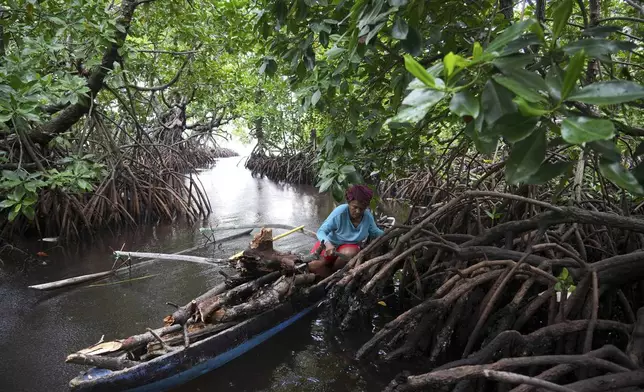
A woman on her boat collects firewood in a mangrove forest where only women are permitted to enter in Jayapura, Papua province, Indonesia on Wednesday, Oct. 2, 2024. (AP Photo/Firdia Lisnawati)
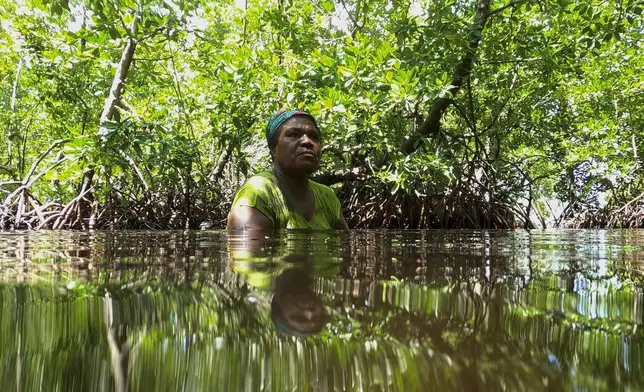
Debora Sanyi stands chest deep in water as she collects clams in a mangrove forest where only women are permitted to enter in Jayapura, Papua province, Indonesia on Wednesday, Oct. 2, 2024. (AP Photo/Firdia Lisnawati)
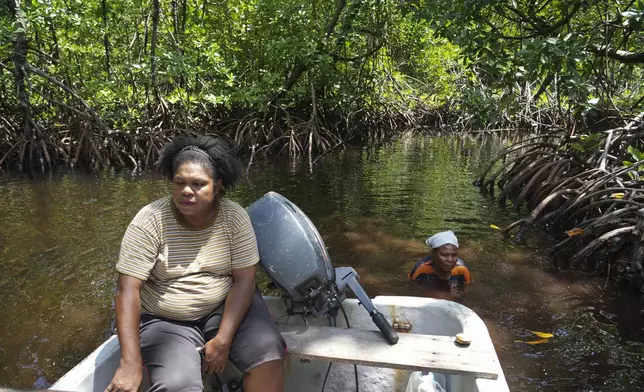
Petronela Merauje sits in a boat as Paula Hamadi, right, stands chest deep in water as she collects clams in a mangrove forest where only women are permitted to enter in Jayapura, Papua province, Indonesia on Wednesday, Oct. 2, 2024. (AP Photo/Firdia Lisnawati)
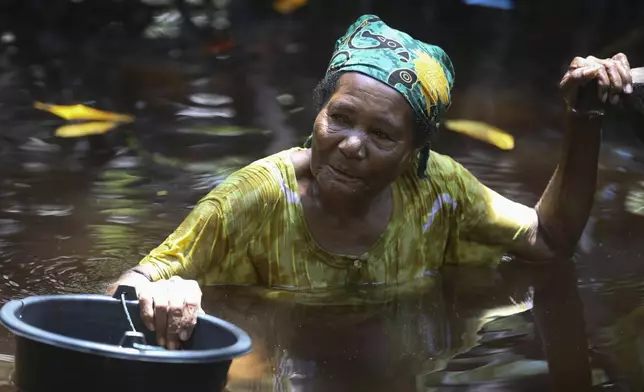
Berta Sanyi stands chest deep in water as she collects clams in a mangrove forest where only women are permitted to enter in Jayapura, Papua province, Indonesia on Wednesday, Oct. 2, 2024. (AP Photo/Firdia Lisnawati)
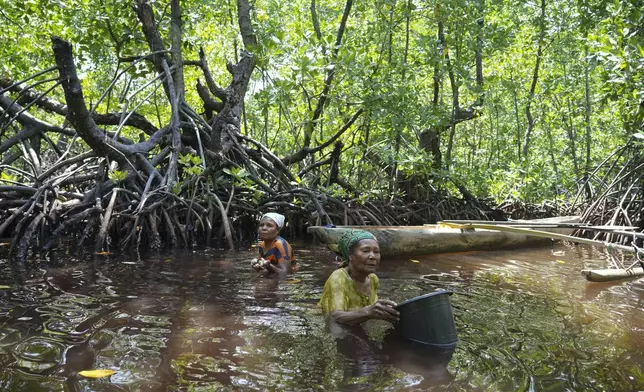
Berta Sanyi and Paula Hamadi, left, stand chest deep in water as they collect clams in a mangrove forest where only women are permitted to enter in Jayapura, Papua province, Indonesia on Wednesday, Oct. 2, 2024. (AP Photo/Firdia Lisnawati)
“The customs and culture of Papuans, especially those of us in Enggros village, is that women are not given space and place to speak in traditional meetings, so the tribal elders provide the mangrove forest as our land," Merauje said. It's “a place to find food, a place for women to tell stories, and women are active every day and earn a living every day.”
The forest is a short 13 kilometers (8 miles) away from downtown Jayapura, the capital city of Papua, Indonesia’s easternmost province. It's been known as the women's forest since 2016, when Enggros' leader officially changed its name. Long before that, it had already been a space just for women. But as pollution, development and biodiversity loss shrink the forest and stunt plant and animal life, those in the village fear an important part of their traditions and livelihoods will be lost. Efforts to shield it from devastation have begun, but are still relatively small.
One early morning, Merauje and her 15-year-old daughter took a small motor boat toward the forest. Stepping off on Youtefa Bay, mangrove trees all around, they stood chest-deep in the water with buckets in hand, wiggling their feet in the mud to find bia noor, or soft-shell clams. The women collect these for food, along with other fish.
“The women’s forest is our kitchen,” said Berta Sanyi, another woman from Enggros village.
That morning, another woman joined the group looking for firewood, hauling dry logs onto her boat. And three other women joined on a rowboat.
Women from the next village, Tobati, also have a women's forest nearby. The two Indigenous villages are only 2 kilometers (1.2 miles) apart, and they're culturally similar, with Enggros growing out of Tobati's population decades ago. In the safety of the forest, women of both villages talk about issues at home with one another and share grievances away from the ears of the rest of the village.
EDITOR’S NOTE: This is part of a series of on how tribes and Indigenous communities are coping with and combating climate change.
Alfred Drunyi, the leader of Drunyi tribe in Enggros, said that having dedicated spaces for women and men is a big part of the village's culture. There are tribal fines if a man trespasses and enters the forest, and the amount is based on how guilty the community judges the person to be.
“They should pay it with our main treasure, the traditional beads, maybe with some money. But the fines should be given to the women,” Drunyi said.
But Sanyi, 65, who's been working in the forest since she was just 17, notes that threats to the space come from elsewhere.
Development on the bay has turned acres of forest into large roads, including a 700-meter (2,300-foot) bridge into Jayapura that passes through Enggros' pier. Jayapura's population has exploded in recent decades, and around 400,000 people live in the city — the largest on the island.
In turn, the forest has shrunk. Nearly six decades ago, the mangrove forest in Youtefa Bay was about 514 hectares (1,270 acres). Estimates say it’s now less than half that.
“I am so sad when I see the current situation of the forest," Sanyi said, "because this is where we live.” She said many residents, including her own children, are turning to work in Jayapura instead of maintaining traditions.
Youtefa Bay, where the sea's brackish water and five rivers in Papua meet, serves as the gathering bowl for the waste that runs through the rivers as they cross through Jayapura.
Plastic bottles, tarpaulin sheets and pieces of wood are seen stuck between the mangrove roots. The water around the mangrove forest is polluted and dark.
After dozens of years being able to feel the clams on the bay with her feet, Sanyi said she now often has to feel through trash first. And once she removes the trash and gets to the muddy ground where the clams live, there are many fewer than there used to be.
Paula Hamadi, 53, said that she never saw the mangrove forest as bad as it is now. For years, she's been going to the forest almost every day during the low tide in the morning to search for clams.
“It used to be different," Hamadi said. “From 8.00 a.m. to 8:30 in the morning, I could get one can. But now, I only get trash.”
The women used to be able to gather enough clams to sell some at the nearest village, but now their small hauls are reserved for eating with their families.
A study in 2020 found that high concentrations of lead from waste from homes and businesses were found at several points in the bay. Lead can be toxic to humans and aquatic organisms, and the study suggests its contaminated several species that are often consumed by the people of Youtefa Bay.
Other studies also showed that populations of shellfish and crab in the bay were declining, said John Dominggus Kalor, a lecturer on fisheries and marine sciences at Cenderawasih University.
“The threats related to heavy metal contamination, microplastics, and public health are high," Kalor said. “In the future, it will have an impact on health.”
Some of the mangrove areas have been destroyed for development, leading to degradation throughout the forest.
Mangroves can absorb the shocks of extreme weather events, like tsunamis, and provide ecosystems with the needed environment to thrive. They also serve social and cultural functions for the women, whose work is mostly done between the mangroves.
“In the future people will say that there used to be a women’s forest here" that disappeared because of development and pollution, said Kalor.
Various efforts to preserve it have been made, including the residents of Enggros village themselves. Merauje and other women from Enggros are trying to start mangrove tree nurseries and, where possible, plant new mangrove trees in the forest area.
“We plant new trees, replace the dead ones, and we also clean up the trash around Youtefa Bay," Merauje said. “I do that with my friends to conserve, to maintain this forest.”
Beyond efforts to reforest it, Kalor said there also needs to be guarantees that more of the forest won't be flattened for development in the future.
There is no regional regulation to protect Youtefa Bay and specifically the women's forests, but Kalor thinks it would help prevent deforestation in the future.
“That should no longer be done in our bay,” he said.
__
The Associated Press’ climate and environmental coverage receives financial support from multiple private foundations. AP is solely responsible for all content. Find AP’s standards for working with philanthropies, a list of supporters and funded coverage areas at AP.org.
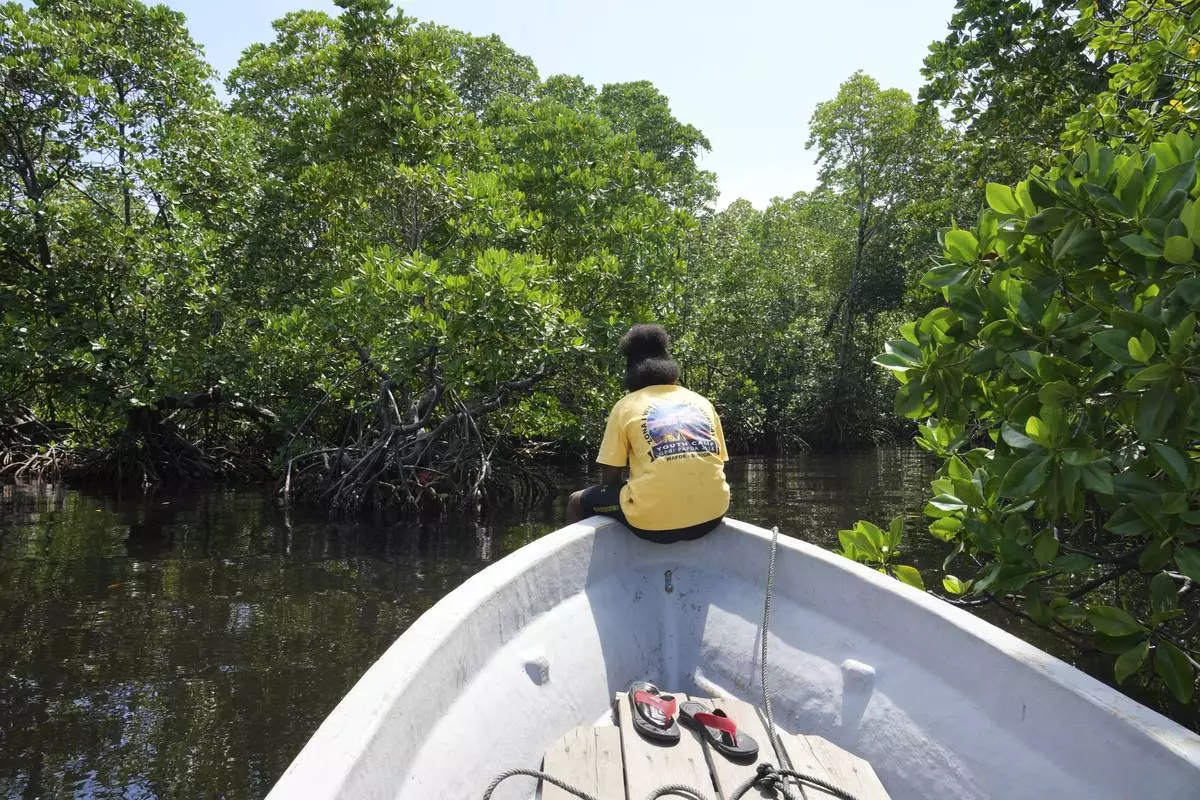
Martha Tjoe sits on a boat through a mangrove forest where only women are permitted to enter in Jayapura, Papua province, Indonesia on Wednesday, Oct. 2, 2024. (AP Photo/Firdia Lisnawati)
A man walks past plastic waste strewn along at Enggros village beach in Jayapura, Papua province, Indonesia on Wednesday, Oct. 2, 2024. (AP Photo/Firdia Lisnawati)
A plastic container and rubbish is stuck in mangrove trees at Enggros village in Jayapura, Papua province, Indonesia on Wednesday, Oct. 2, 2024. (AP Photo/Firdia Lisnawati)
Petronela Merauje works on her mangrove seeds for planting in Jayapura, Papua province, Indonesia on Wednesday, Oct. 2, 2024. (AP Photo/Firdia Lisnawati)
A woman carries fish in plastic bags to a market at Enggros village in Jayapura, Papua province, Indonesia on Wednesday, Oct. 2, 2024. (AP Photo/Firdia Lisnawati)
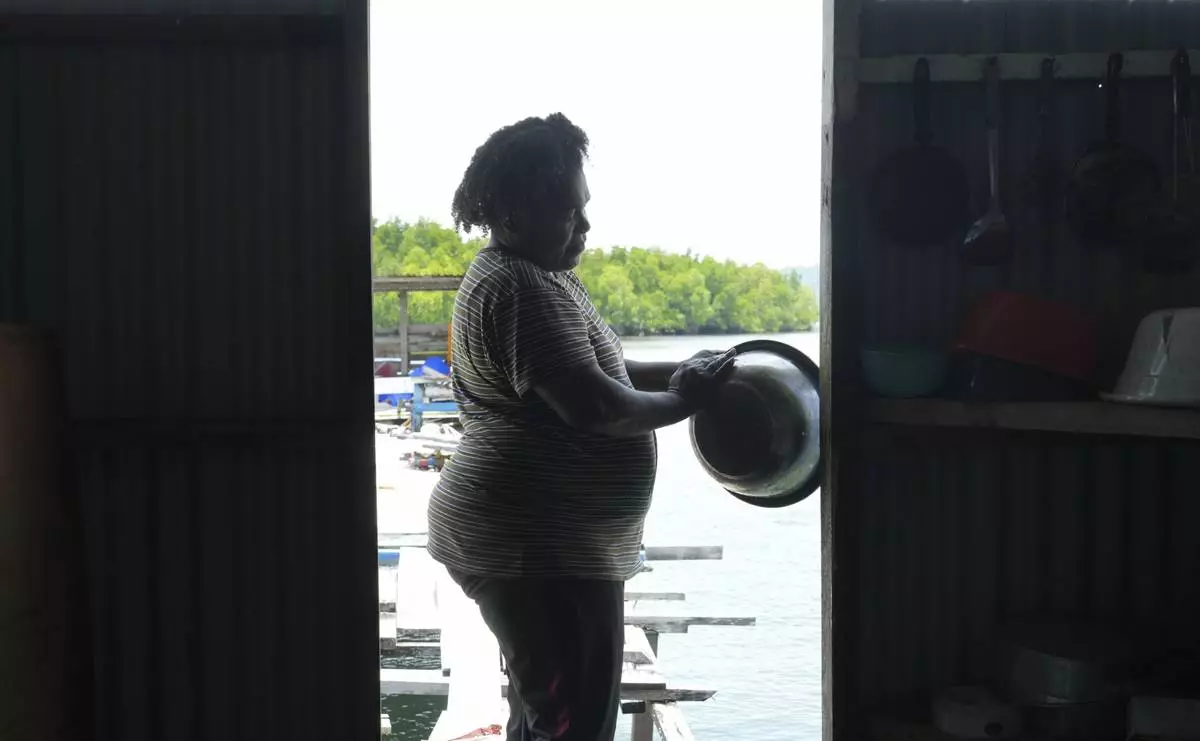
Petronela Merauje prepares to cook at her house at Enggros village in Jayapura, Papua province, Indonesia on Wednesday, Oct. 2, 2024. (AP Photo/Firdia Lisnawati)
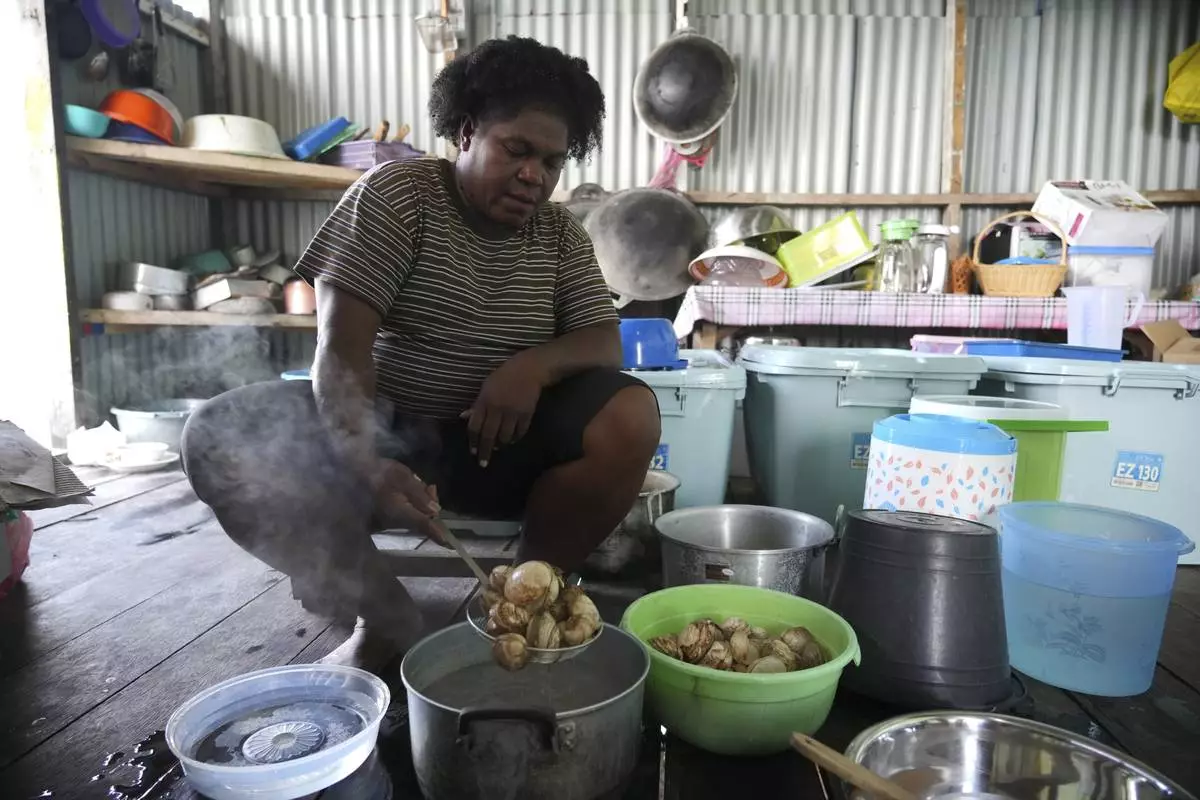
Petronela Merauje prepares clams to cook at her house at Enggros village in Jayapura, Papua province, Indonesia on Wednesday, Oct. 2, 2024. (AP Photo/Firdia Lisnawati)
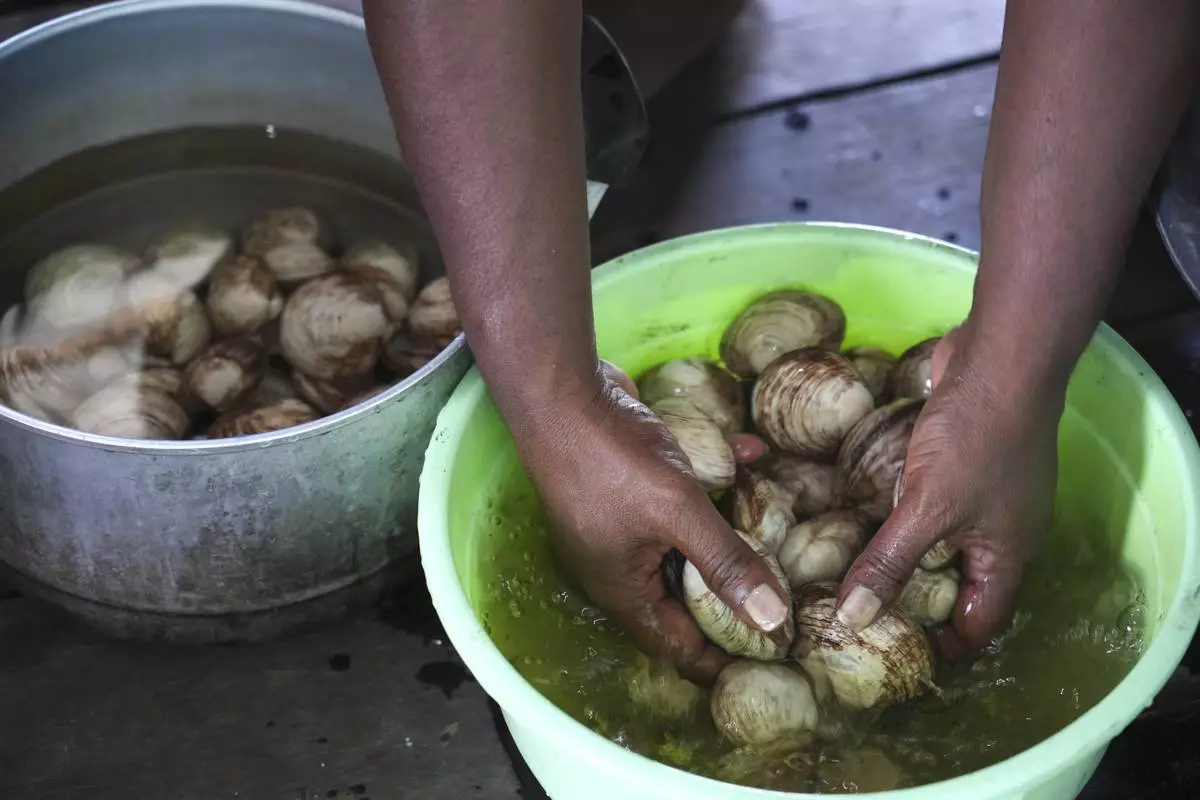
Petronela Merauje prepares clams to cook at her house at Enggros village in Jayapura, Papua province, Indonesia on Wednesday, Oct. 2, 2024. (AP Photo/Firdia Lisnawati)
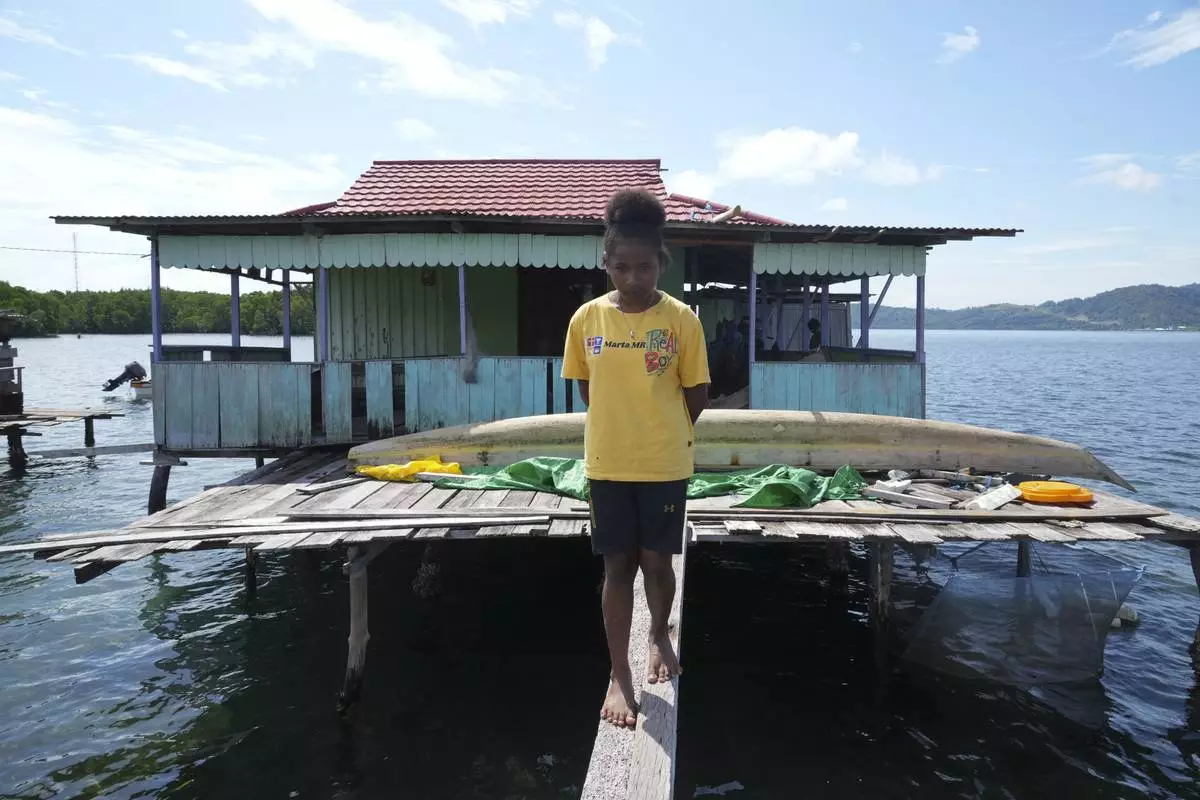
Martha Tjoe walks near her floating wooden house at Enggros village in Jayapura, Papua province, Indonesia on Wednesday, Oct. 2, 2024. (AP Photo/Firdia Lisnawati)
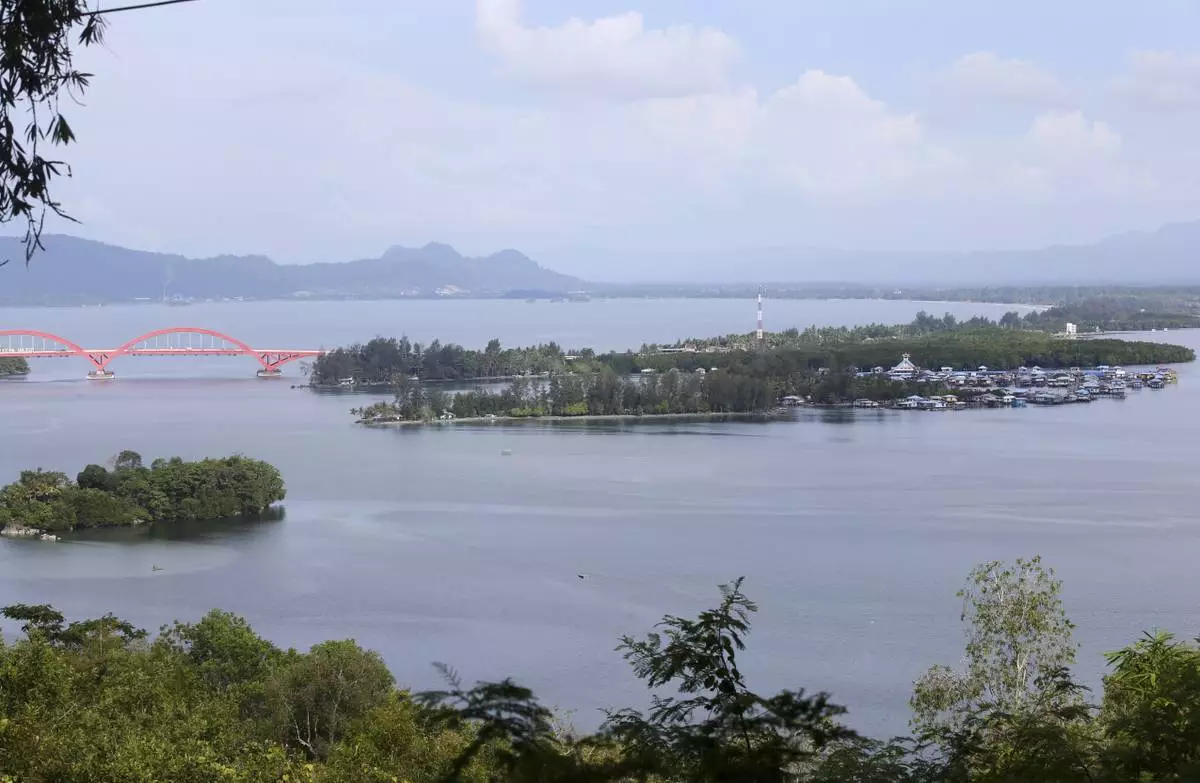
Enggros village is visible in Jayapura, Papua province, Indonesia on Thursday, Oct. 3, 2024. (AP Photo/Firdia Lisnawati)
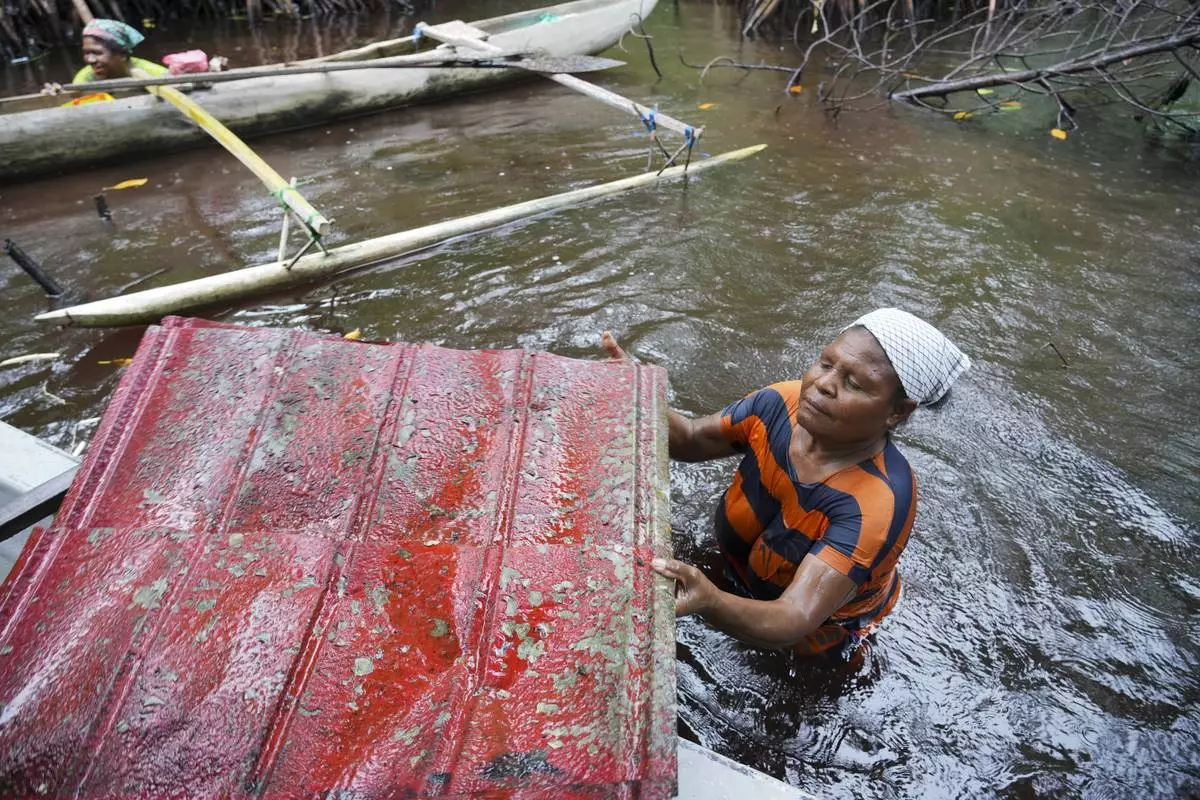
Paula Hamadi cleans up trash as she collects clams in a mangrove forest where only women are permitted to enter in Jayapura, Papua province, Indonesia on Wednesday, Oct. 2, 2024. (AP Photo/Firdia Lisnawati)
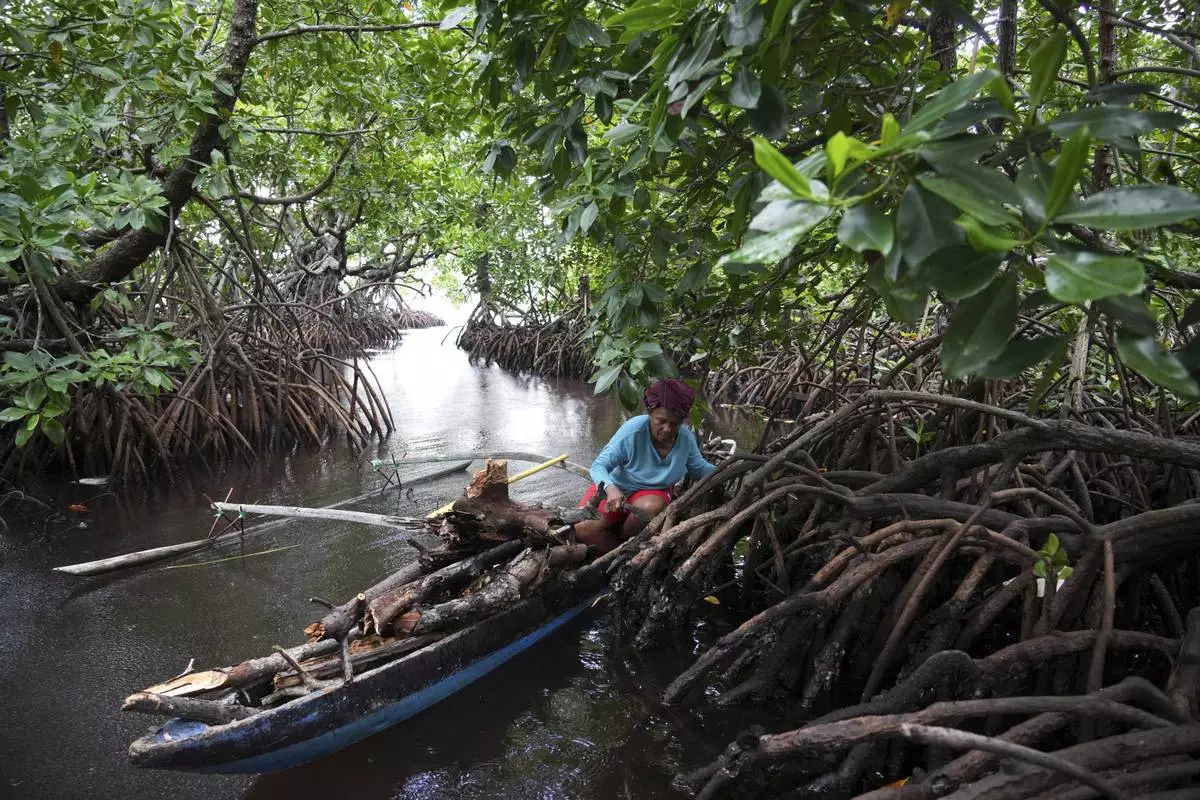
A woman on her boat collects firewood in a mangrove forest where only women are permitted to enter in Jayapura, Papua province, Indonesia on Wednesday, Oct. 2, 2024. (AP Photo/Firdia Lisnawati)
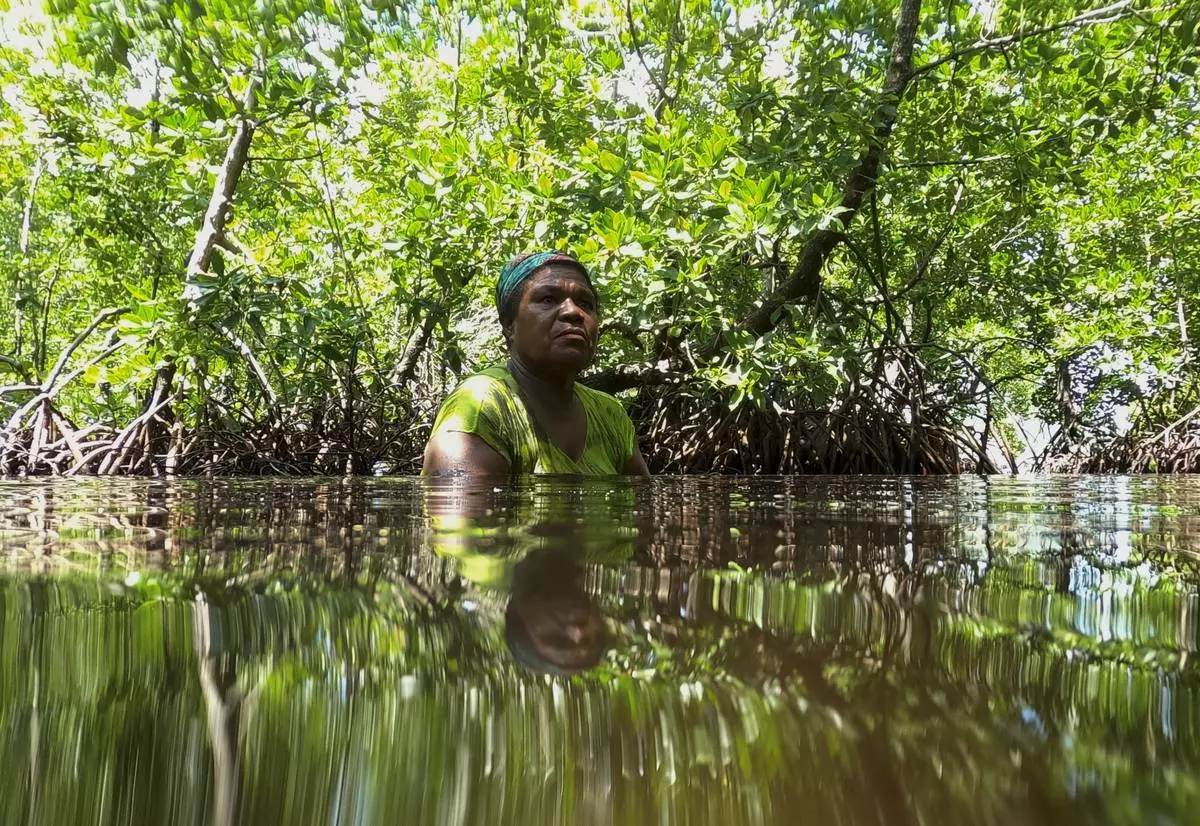
Debora Sanyi stands chest deep in water as she collects clams in a mangrove forest where only women are permitted to enter in Jayapura, Papua province, Indonesia on Wednesday, Oct. 2, 2024. (AP Photo/Firdia Lisnawati)
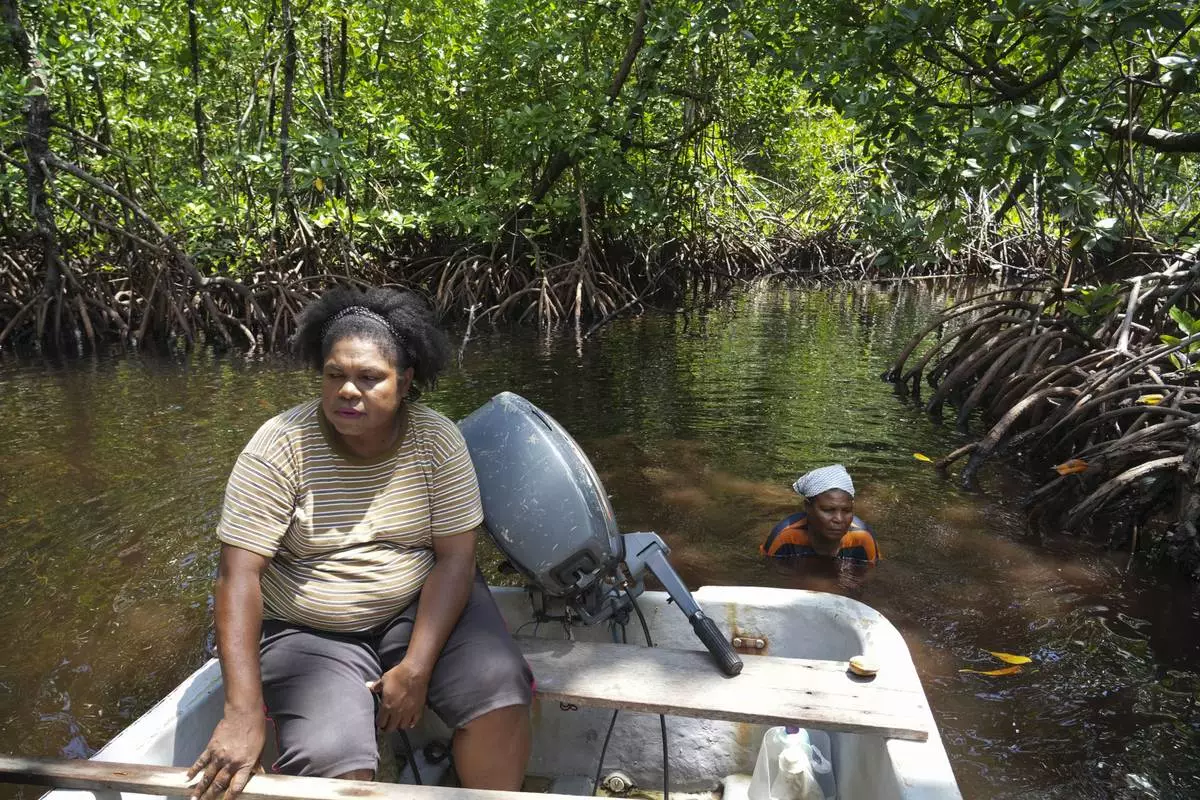
Petronela Merauje sits in a boat as Paula Hamadi, right, stands chest deep in water as she collects clams in a mangrove forest where only women are permitted to enter in Jayapura, Papua province, Indonesia on Wednesday, Oct. 2, 2024. (AP Photo/Firdia Lisnawati)
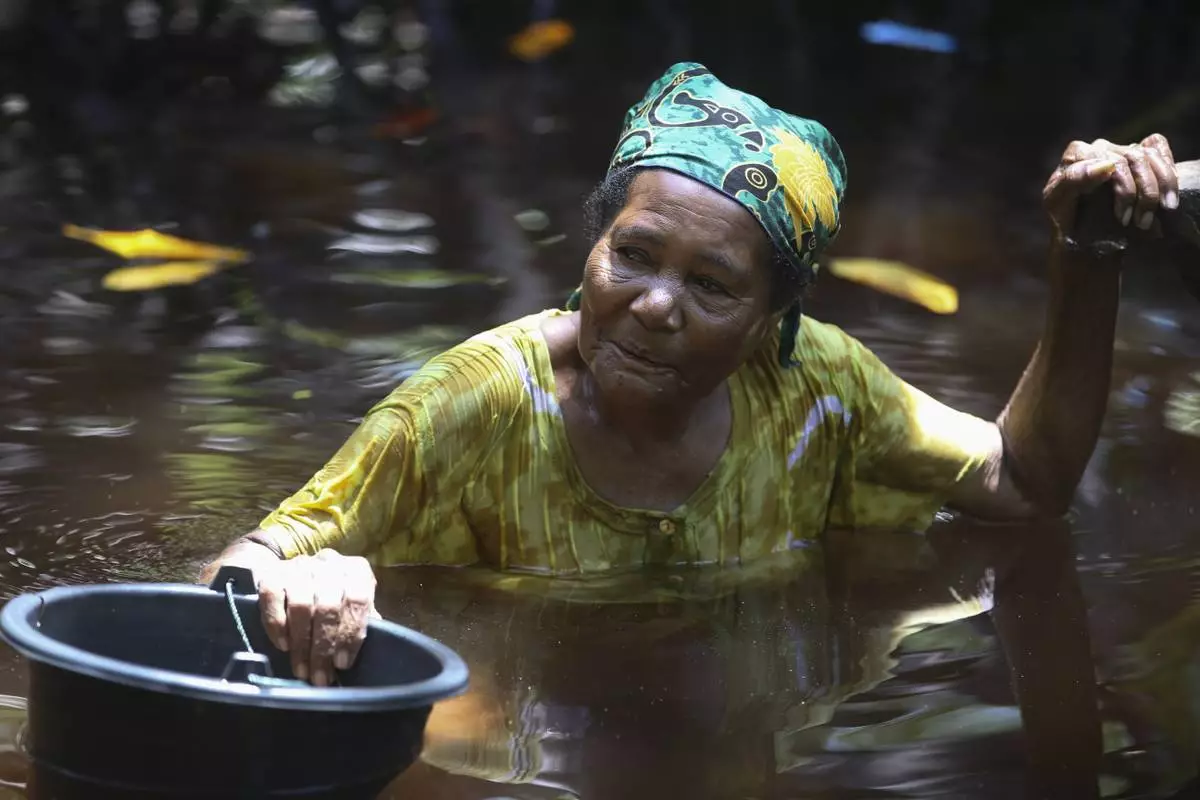
Berta Sanyi stands chest deep in water as she collects clams in a mangrove forest where only women are permitted to enter in Jayapura, Papua province, Indonesia on Wednesday, Oct. 2, 2024. (AP Photo/Firdia Lisnawati)
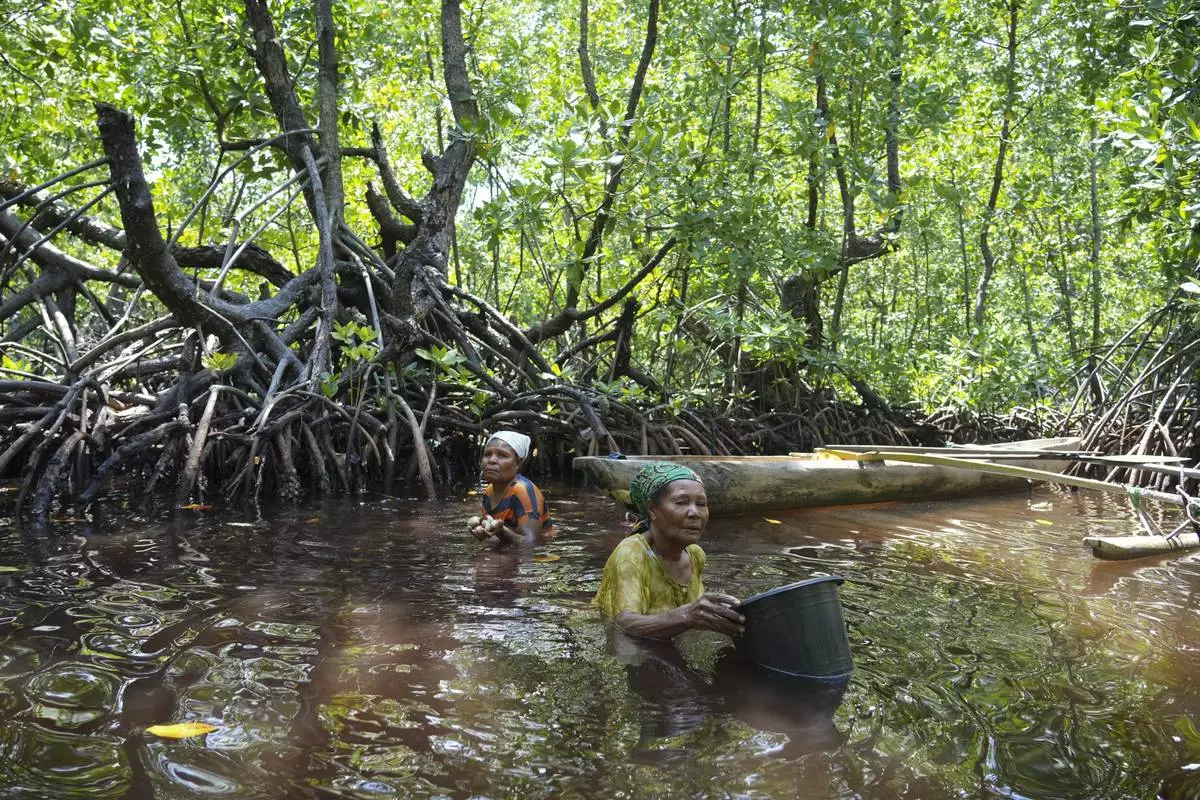
Berta Sanyi and Paula Hamadi, left, stand chest deep in water as they collect clams in a mangrove forest where only women are permitted to enter in Jayapura, Papua province, Indonesia on Wednesday, Oct. 2, 2024. (AP Photo/Firdia Lisnawati)