China’s property market has shown signs of recovery since October, spurred by a wave of favorable policies targeting the housing sector.
In Beijing’s Fengtai District, a milestone occurred at the end of October with the auction of a land plot for shantytown reconstruction. For the first time in three years, the auction omitted price ceilings and sales guidance prices, marking a significant shift in land sale policies. Similarly, Shenzhen announced the transfer of its fifth residential land plot of the year earlier this month. This plot also came with eased conditions: no price or type restrictions, immediate property certification upon purchase, and the highest bidder winning the auction.
"As the real estate market is picking up and confidence in the property market has been restored, developers can receive funds quickly, creating a virtuous cycle. The demand for commodity buildings continues to increase, and the demand for land is also on the rise. The national land market has picked up, and confidence in the land market is recovering," said Zhao Xiuchi, the vice president of the Beijing Real Estate Law Society.
As Beijing and Shenzhen have optimized land auction rules to attract more companies to participate, other major cities such as Shanghai have also increased land supply.
Some places have optimized the land transfer process and conditions, lowered the threshold for land purchase and relaxed pre-sale conditions, as part of efforts to boost confidence in the land market.
Meanwhile, many regions have released land featuring lower plot ratio to the market, and actively introduced policies to encourage developers to build neighborhoods which are less densely populated and have more green spaces and energy-saving and smart homes.
"With policies taking effect, the supply and demand relationship in the real estate market has continued to improve, and property developers have seen an improvement in financing environment. It is expected that the land market will further improve in the fourth quarter," said Niu Sanyuan, the deputy director of the real estate research office at the institute of market economics under the Development Research Center of State Council (DRC).
Although the confidence of all parties in land market transactions is gradually recovering, it still takes time for the overall market to recover. At present, private real estate companies remain cautious in acquiring land, and high-quality land plots are more popular in auctions.
Data show that in the first half of this year, 22 key cities such as Beijing, Shanghai, and Shenzhen launched a total of 348 plots of land, and 297 plots were sold, signaling that the real estate transactions are still relatively sluggish.
Under the influence of a number of favorable policies for the property market, the willingness of real estate companies to acquire land has continued to increase since September. According to the data from the China Index Academy, from October 1 to November 15, 22 key cities such as Beijing, Shanghai, and Shenzhen sold 149 plots of land, and the land market has recovered significantly.
Meanwhile, however, data also show that the national land market continues to be low in October, with most cities selling land at the reserve price.
Industry insiders said that after a combination of real estate policies was introduced in September, high-quality land plots in major cities have been in high demand, but the rest of the plots are still mostly sold at the reserve price. And the uneven recovery will continue for some time.
"As for the recent combination of policies, the market has responded quite positively. The land market and the real estate market are linked. When people in the real estate market have sufficient confidence in buying houses and the market responds positively, developers will also be more confident in acquiring land, which will also be conducive to the recovery of overall market confidence," said Cui Guangcan, director of the Real Estate and Urban Development Research Center at Shanghai Normal University.
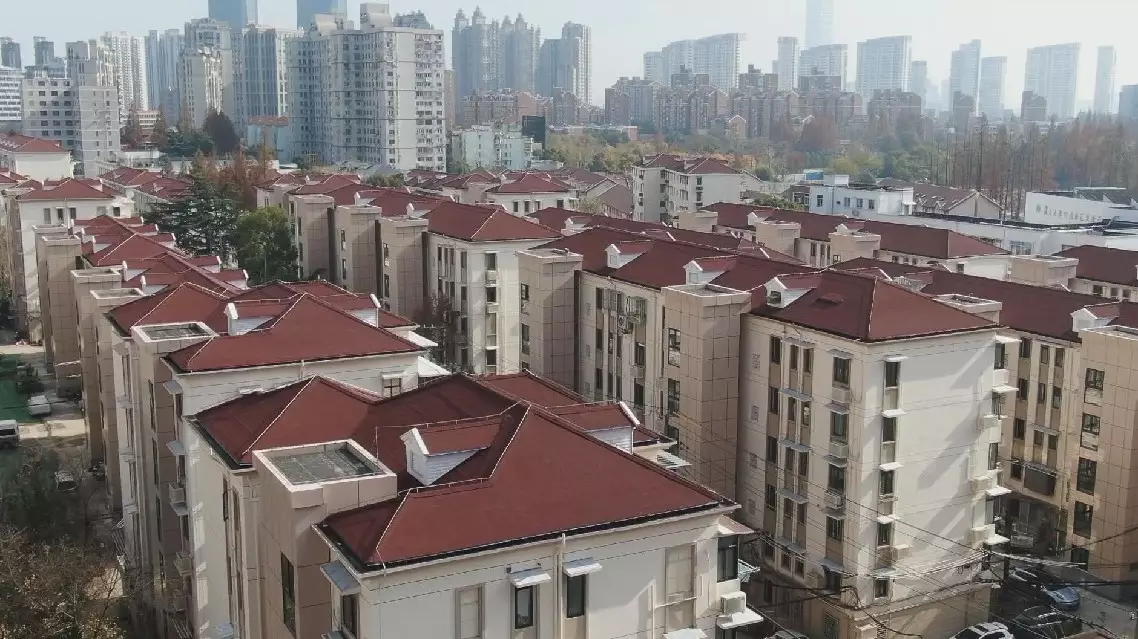
China’s property market shows recovery amid pro-housing policies and land market optimizations