China's foreign trade has achieved steady growth, with its structure further optimized, said the China Council for the Promotion of International Trade (CCPIT) on Friday.
As of October 2024, the country issued a total of 611,200 certificates for trade promotion, including certificates of origin, ATA carnets, and commercial certificates, representing a year-on-year increase of 20.41 percent, CCPIT spokesperson Sun Xiao told a press conference in Beijing.
The value of preferential certificates of origin issued totaled 7.172 billion U.S. dollars, a year-on-year increase of 43.14 percent.
Also, the value of certificates of origin issued under the Regional Comprehensive Economic Partnership (RCEP) reached 784 million U.S. dollars, up 26.4 percent on a yearly basis.
The export destinations include Japan, South Korea, Indonesia, Vietnam, and other member countries. China's national trade promotion system issued 51,623 commercial certificates, reflecting a year-on-year increase of 9.31 percent, Sun said.
"This indicates that, through the active training and promotion activities of various sides, including the CCPIT, more Chinese companies are now able to proficiently utilize RCEP-related policies to gain benefits, thereby strengthening their motivation to engage in foreign trade," he said.
Certificates of origin are documents widely used in international trade transactions. They state that the products listed have met sufficient criteria to be considered as originating in a particular country. The issuance of these certificates is widely regarded as a barometer of foreign trade.
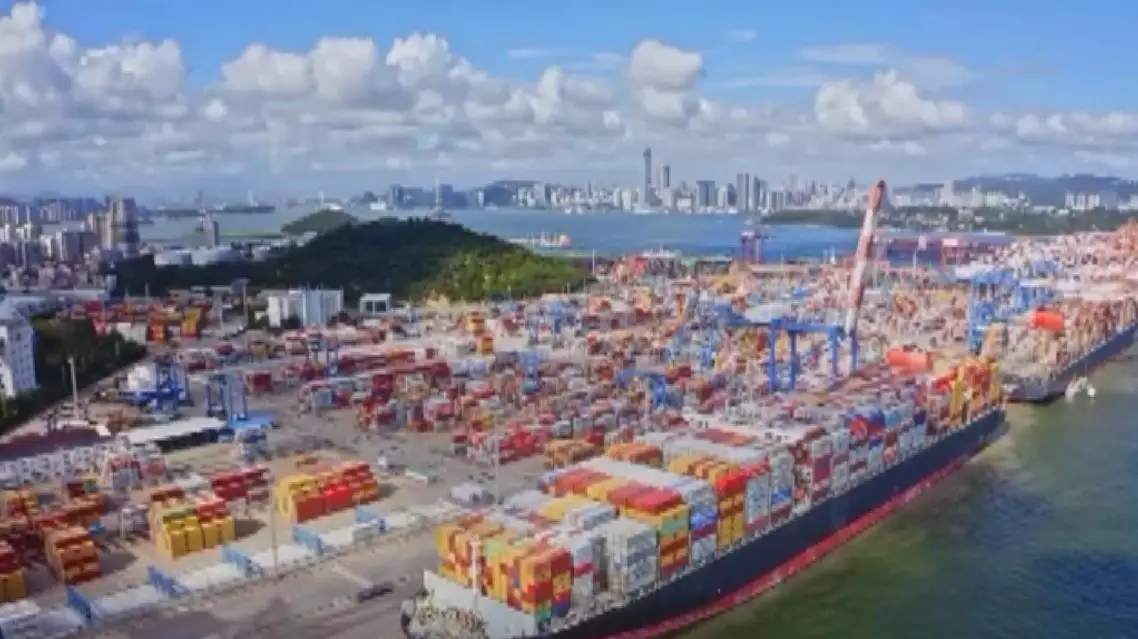
China's foreign trade grows steadily, with structure further optimized: trade council
Myanmar's new President U Min Aung Hlaing met Wang Yi, a member of the Political Bureau of the Communist Party of China Central Committee and Chinese foreign minister, in Nay Pyi Taw, Myanmar's capital, on Saturday.
Noting that Myanmar consistently regards its relationship with China as the most important bilateral tie, U Min Aung Hlaing emphasized that Myanmar stays committed to the one-China principle and highly appreciates and actively supports the China-proposed four global initiatives.
The new Myanmar government expects to strengthen high-level exchanges with China, advance the construction of the Myanmar-China Economic Corridor, and work together to maintain border peace and stability, while continuously deepening the comprehensive strategic cooperative partnership between the two countries, the president said.
Myanmar will never allow any activities that harm China's interests within its borders, and will continue to intensify its crackdown on online gambling and telecom fraud and take concrete measures to ensure the safety of Chinese personnel, institutions and projects in Myanmar, he added.
For his part, Wang stressed that China's policy toward Myanmar remains consistent. China firmly supports Myanmar in following a successful development path that suits its national conditions and is supported by its people; firmly supports Myanmar in safeguarding its national sovereignty, security and territorial integrity; and firmly supports Myanmar in achieving national peace, reconciliation and social harmony, he said.
Wang also noted that building a China-Myanmar community with a shared future perfectly aligns with the development and revitalization needs of both countries and serves the fundamental interests of both peoples, urging both sides to unswervingly follow this path.
China is willing to cooperate with Myanmar to resolutely and thoroughly eradicate online gambling and telecom fraud, he noted. China will also support Myanmar's participation in more dialogue and cooperation mechanisms and the enhancement of its interaction with ASEAN, Wang added.
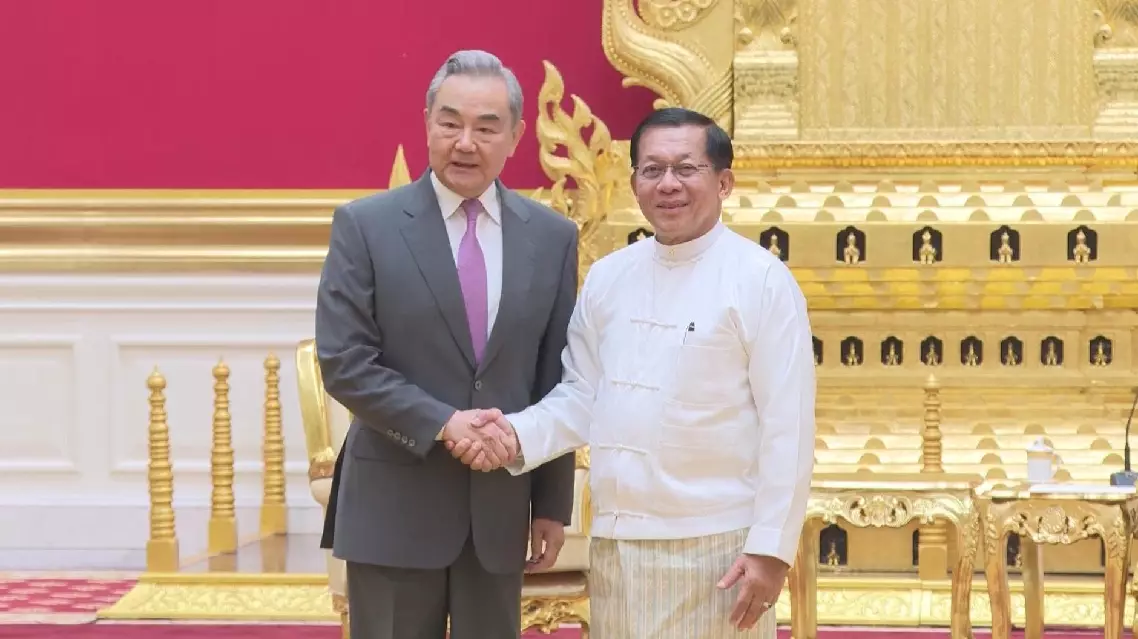
Myanmar president meets Chinese FM
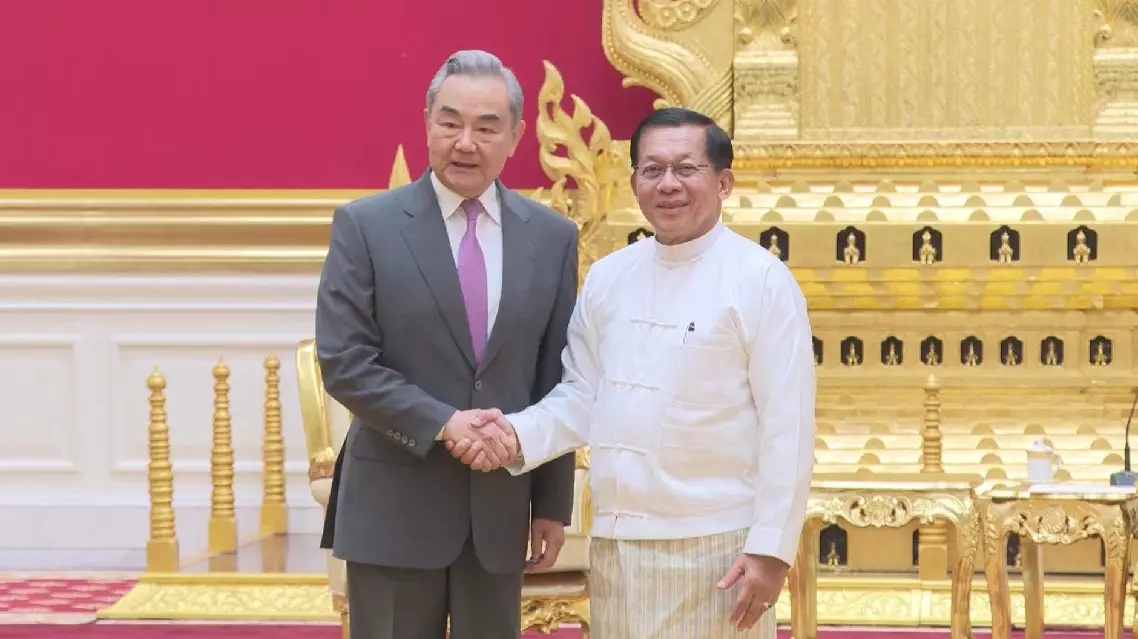
Myanmar president meets Chinese FM