Skip to Content Facebook Feature Image

China sees robust growth in EV charging facilities

China

China

China

China sees robust growth in EV charging facilities

2024-11-22 16:52 Last Updated At:17:57

The number of charging piles for electric vehicles (EV) in China had reached 11.884 million by the end of October this year, a significant year-on-year growth of 49.4 percent, industry data showed on Thursday.

From January to October, 3.288 million new charging piles were installed across China, an increase of 19.8 percent year on year, according to data released by China Electric Vehicle Charging Infrastructure Promotion Alliance at the China Automobile Charging and Swapping Ecology Conference running from Wednesday to Friday in Taiyuan City of north China's Shanxi Province.

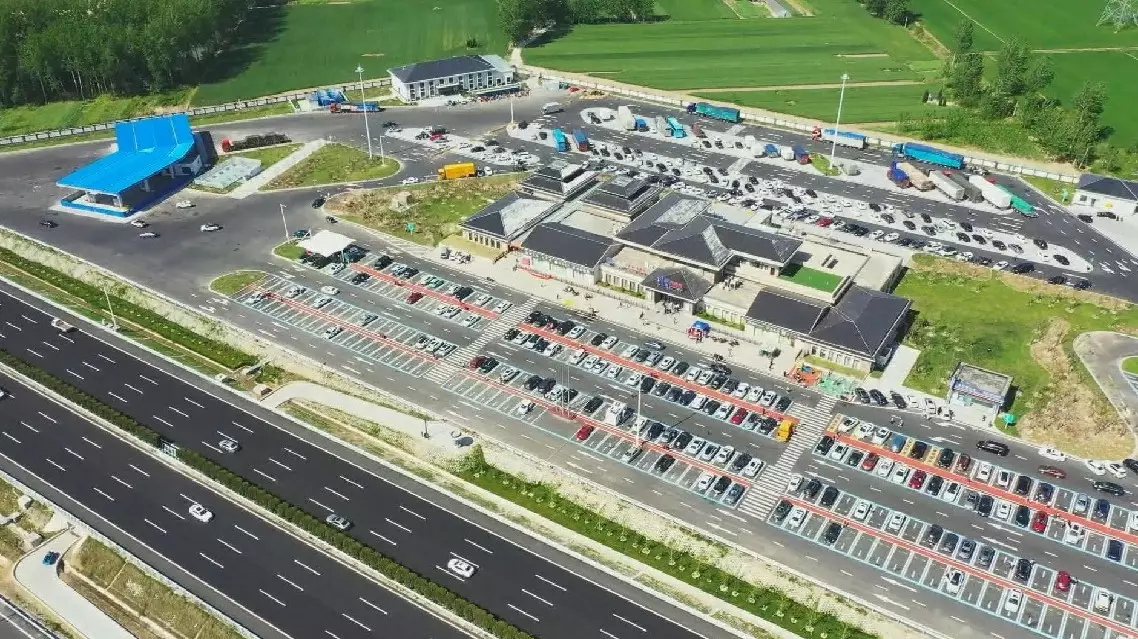
Thanks to the adoption of various favorable policies in recent years, China has established a quite complete automobile charging and swapping service network, with charging infrastructure covering residential areas, highway rest areas, areas along highways, public spaces and rural areas.

Another contributor to this expansion is the high production capacity and wide popularity of EVs in the country. With a month and a half left in the year, China's annual output of new-energy vehicles has already surpassed the 10-million-unit mark, making it the first country to achieve this milestone, according to data from industry group China Association of Automobile Manufacturers (CAAM).

"The current incremental ratio of charging piles to new energy vehicles is 1:2.6. The development of charging infrastructure has caught up with the rapid growth in new energy vehicles. The total number of existing charging piles is nearly 12 million, and the total number of new energy vehicles is over 28 million, so the facilities can meet the current charging needs," said Tong Zongqi, deputy secretary-general of the alliance, in an interview with China Central Television on the sidelines of the China Automobile Charging and Swapping Ecology Conference. In keeping with the rapid growth in EV charging facilities nationwide over recent years, the EV charging industrial chain has also kept improving, with breakthroughs made in the development of new technologies such as mobile charging, wireless charging and megawatt charging, with rapid progress achieved in smart charging.

At the conference on Thursday, the alliance announced the first batch of 44 five-star electric vehicle charging stations, which are built by 23 companies to improve the industrial ecology and better meet the increasingly differentiated demand from EV owners.

The meeting also stressed the importance of talent cultivation for further development of the industrial ecology.

In the future, China will encourage innovations of charging technology and business forms, make appropriately future-oriented efforts to step up the construction of charging networks in rural areas, and carry out high-power facility building with priority given to the busiest charging service areas.
China sees robust growth in EV charging facilities


China sees robust growth in EV charging facilities

The Hong Kong Special Administrative Region (HKSAR) has "never been better" and is thriving under the National Security Law, with the legislation helping stabilize the city, according to Allen Zeman, chairman of the Lan Kwai Fong Group.

The High Court of the HKSAR on Monday sentenced former newspaper publisher Jimmy Lai to 20 years in prison, after considering his "serious and grave criminal conduct." Lai was found guilty on two charges of conspiring to collude with external forces and one charge of conspiracy to publish seditious materials. The court ruled that Lai was "the mastermind and driving force behind these conspiracies."

Zeman spoke to China Global Television Network (CGTN) after the sentencing.

He stressed that Hong Kong’s stability and prosperity have improved since the law's introduction.

"I say that those people don't know what they're talking about, because I can say what I want up to a point. It's the same as most countries, you know, but you can't collude with a foreign government against your country, wherever that is. The National Security Law, I've read so many of them, and I can tell you it's not done. It's not allowed. It's a crime," he said.

"In Hong Kong, [it's] the same thing, we get behind one leader. We all work together. And the people's lives have gotten better and better. Hong Kong right now is thriving. Hong Kong has never been better at the moment. The National Security Law really helped Hong Kong to stabilize," said Zeman.

On Hong Kong's future, Zeman said the city will remain a global marketplace and a vital connector between the Chinese mainland and the world. He pointed to Hong Kong’s low tax base and strong financial infrastructure as key advantages.

"People trust Hong Kong. It has a low tax base, free flow of capital in and out. In most countries, it's not exactly like that. You know, there's restrictions and all that. In Hong Kong, you can have the money come in and out, low tax of 15 percent, one of the lowest taxes in the world as well. And that kind of gives Hong Kong the stability. And most companies who want to go into China set up their head office in Hong Kong. We have all the top banks in Hong Kong. Last year and this year again, we've had about almost 300 conventions and exhibitions in the Hong Kong convention center and from countries all over the world. Everybody comes here now, because they see it's really the marketplace of the world. I've been here a long time. It's always been good, but it's never been as good as it is now," said Zeman.

Zeman defends National Security Law after Jimmy Lai sentenced to 20 years in Hong Kong

Zeman defends National Security Law after Jimmy Lai sentenced to 20 years in Hong Kong

Zeman defends National Security Law after Jimmy Lai sentenced to 20 years in Hong Kong

Zeman defends National Security Law after Jimmy Lai sentenced to 20 years in Hong Kong

Recommended Articles