Mobile technology will continue to fuel economic growth over the next decade through the implementation of 5G technology, John Hoffman, CEO of the Global System for Mobile Communications Association (GSMA), said at the 2024 World Internet Conference (WIC) Wuzhen Summit on Thursday.
Mobile technology has been a core driver of economic growth globally, contributing trillions of U.S. dollars to economies around the world, said Hoffman.
"So mobile has been at the core of economic growth. I mean, we contribute trillions of U.S. dollars around the world to economies, big and small, developed and developing. It's been a true driver of economic impact," said Hoffman.
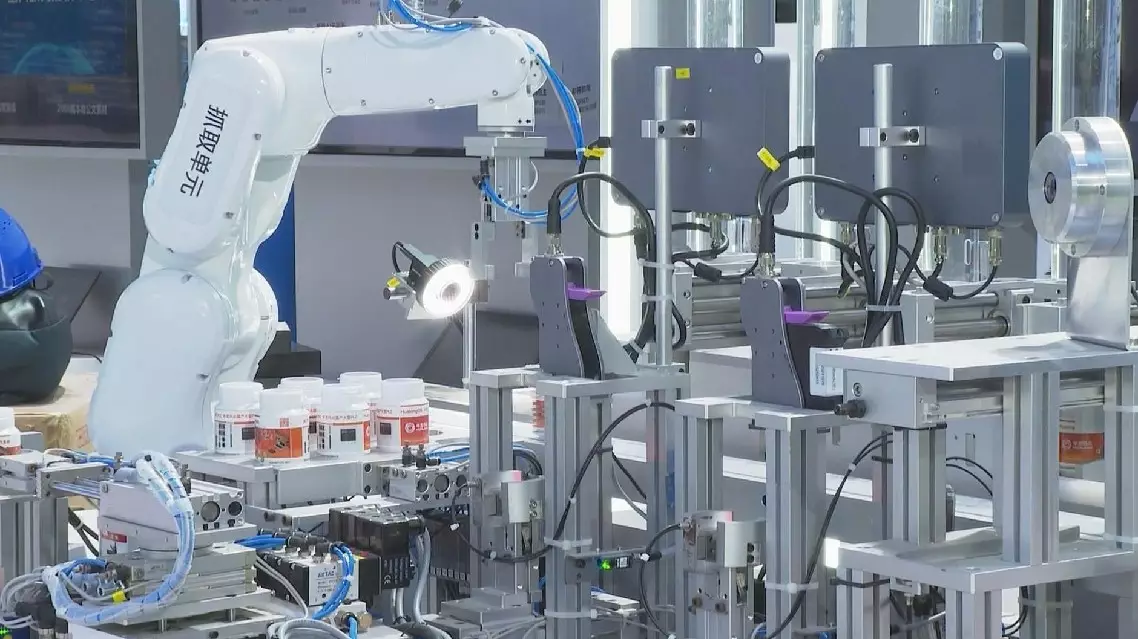
Hoffman highlighted the transformative potential of 5G and its advanced iterations, 5G-advanced, and 6G, saying that the enterprise sector stands to benefit immensely from 5G.
"The enterprise sector is going to benefit from 5G, 5G-advanced and ultimately 6G, but what we're seeing now is the transformation of businesses, large and small around the world, everything from manufacturing sector being remade using technology to the education systems around the world using technology to educate our young people in ways that they've never foreseen in the past. So it's really a transformational opportunity that we have here with 5G. Fintech, medical research, the practice of remote surgeries that we could only envision in the past is now becoming the wave of the future. So 5G is a very much transformational technology -- the one that is going to impact all of our lives now and then well into the future," said Hoffman.
Hoffman also praised China as one of the leaders in 5G technology, saying that the GSMA aims to share China's success with countries that are just beginning to use 5G technology
"China has been one of the leaders of 5G, obviously one of the first to implement the 5G technology, the first two, one of the first two, now evolve it to 5G advanced. It is the largest country. We have more users of 5G technology here in China than we do anywhere in the world. So it's one of the global leaders. It's a showcase for the technology. And that's what the GSMA wants to do is help bring that innovation, showcase that innovation, showcase the use cases that have been successful here to other parts of the world to learn not only as China has learned from others, but to export that learnings to other countries that are now maybe just adopting 5G," said Hoffman.
The 2024 World Internet Conference(WIC) opened on Wednesday in east China's Wuzhen Town of Zhejiang Province. Themed with "Embracing a people-centered and all-for-good digital future - building a community with a shared future in cyberspace," this year's Wuzhen Summit ran through Nov 22.
Mobile technology drives global economic growth: GSMA CEO