The first group of China's 41st Antarctic expedition team has arrived at Qinling Station in Antarctica, the country's fifth research station on the continent.
The station, located on the Inexpressible Island in the Ross Sea, was officially inaugurated in February. Covering an area of 5,244 square meters, the station is in a shape resembling the Southern Cross constellation, a unique design to honor Zheng He, a legendary admiral, navigator and diplomat in the Ming Dynasty (1368-1644).
The first group of the team consists of 34 individuals with expertise in management, security, and construction. Upon arriving at the Qinling Station, they immediately began operations, deploying three excavators, two loaders, and two 100 kW generators. By the end of the day, the station's power supply function had been largely restored.
"After standing through the entire winter, the main building of Qinling Station remains intact, with its structure confirmed to be safe and reliable. Next, we will implement projects involving new energy systems and outdoor pipelines to make comprehensive preparations for the deployment of various systems," said Wang Zhechao, chief of the Qinling Station.
China's 41st Antarctic expedition team set off from Guangzhou City, south China's Guangdong Province, on Nov 1, taking the research icebreakers Xuelong and Xuelong 2, or Snow Dragon and Snow Dragon 2, as well as cargo vessel Yong Sheng.
In the coming months, researchers will build the supporting infrastructure for the Qinling Station, investigate the impact of climate change on the Antarctic ecosystem, and conduct international research and logistics cooperation.
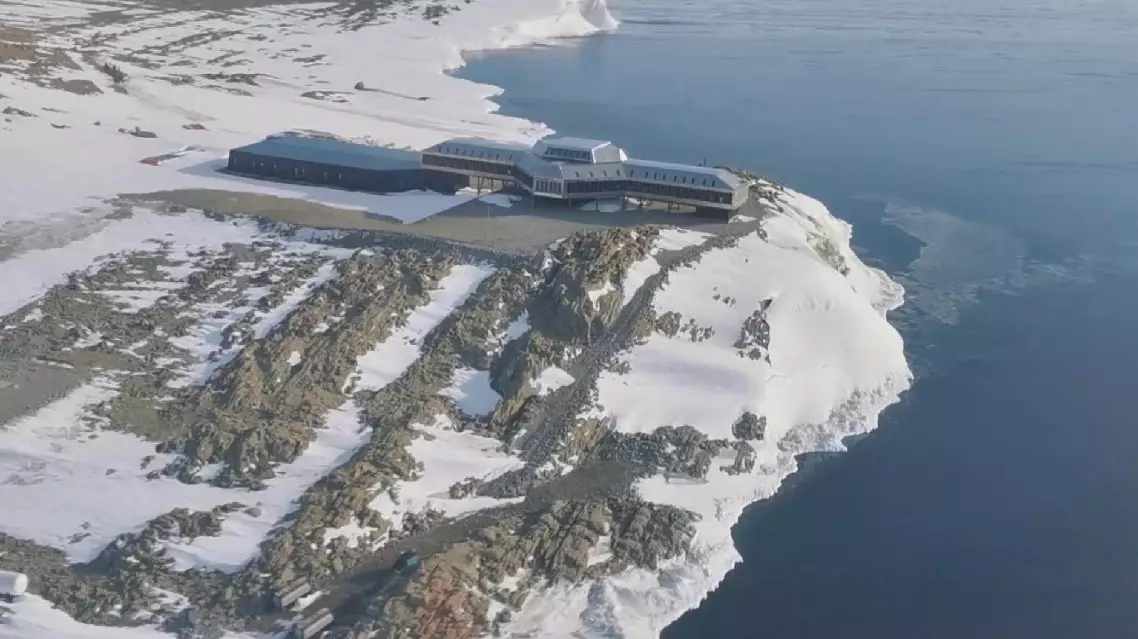
First group of China's 41st Antarctic expedition team arrives at Qinling Station
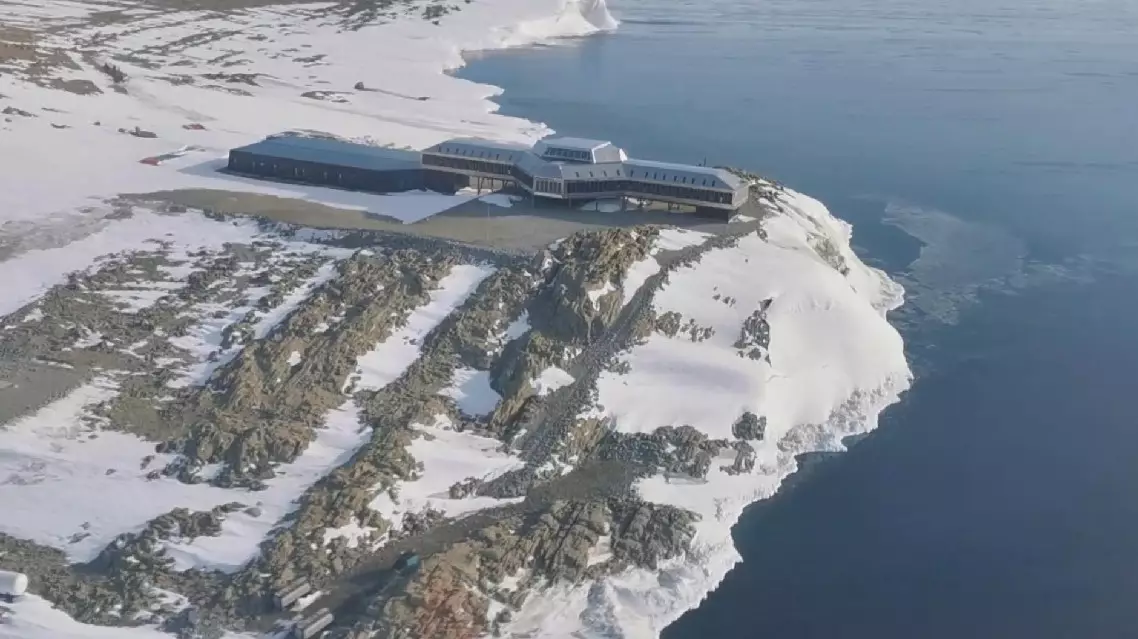
First group of China's 41st Antarctic expedition team arrives at Qinling Station
Nicaragua's co-foreign minister Valdrack Jaentschke has warned that militarism must never be allowed to rise again, as Japan's recent moves to lift its arms export ban and revise the pacifist Constitution continue to draw international concern.
This year marks the 80th anniversary of the opening of the Tokyo Trials, where Japan's Class-A war criminals from World War II were brought to justice.
In an interview with China Global Television Network (CGTN), Valdrack Jaentschke voiced his concern that today's world order is being undermined by interventionism and other challenges.
"It is necessary for us to remember that after the end of World War II, countries worked hard to build a new international order based on international law. However, regrettably, more than 80 years later, we are seeing that this once explored and attempted order is being challenged by interventionism, a confrontational mindset, and tendencies like 'might makes right.' These are precisely the conditions that gave rise to fascism and militarism in the past, which ultimately led to the tragedy of World War II," he said.
He said the international community has a responsibility to pursue a new international order -- one fundamentally grounded in peace.
"Looking back at the history more than eight decades ago and comparing it with today's reality, it is our responsibility to recognize that the world should, and must, build a new international order that is more just, fairer, rooted in international law, based on a logic of mutual benefit and shared success, and fundamentally grounded in peace," said the minister.
"Today, as we revisit the Tokyo Trials, it is meant to remind the world that such a tragedy must never be repeated -- and that we must do everything in our power to prevent it from happening again. We must stop that dark world -- born from militarism, interventionism, and fascism -- from ever returning," he said.

Nicaraguan FM warns of militarism revival