China has sustained strong momentum in advancing new energy infrastructure, paving the way for a greener future.
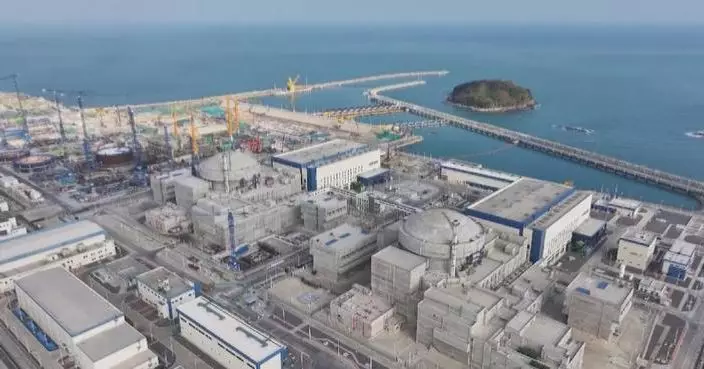
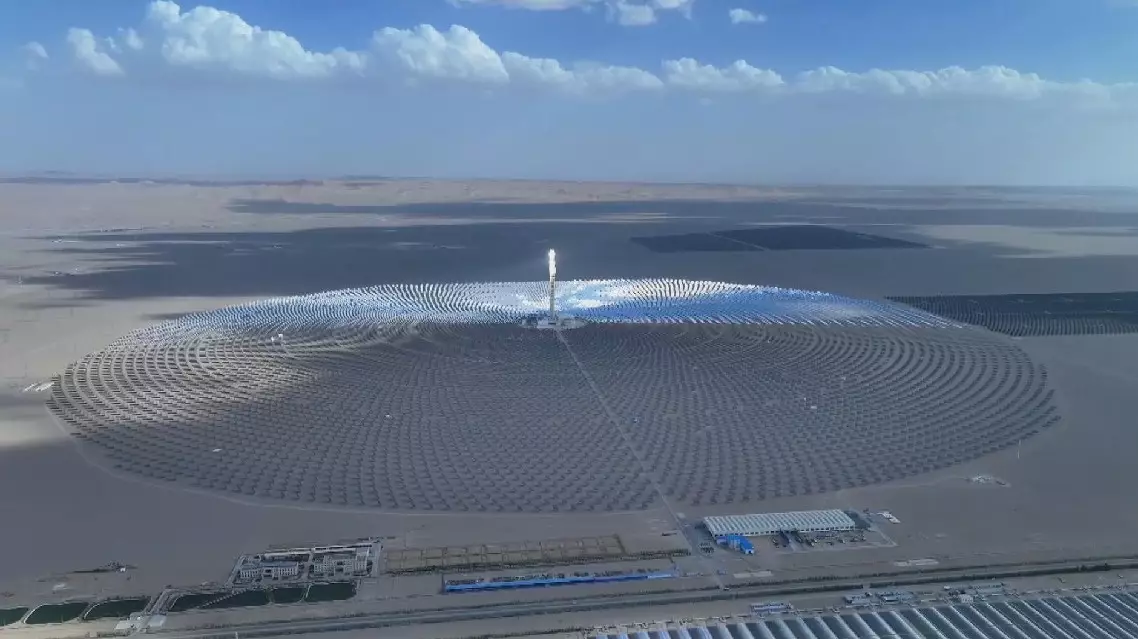
In September, a groundbreaking 100 MW solar thermal energy storage project in the Hexi Corridor region of northwest China's Gansu Province became operational, marking the country's first fully operational project integrating solar thermal storage, photovoltaic and wind power.
Unlike common solar thermal plants, this project utilizes linear Fresnel technology, which leverages light reflection and refraction principles to convert solar energy into electricity. This approach provides advantages such as simplified construction, easier maintenance, and improved safety. A key feature is its energy storage capability, which supports grid load balancing.
To date, the project has generated 440 million kWh of electricity, equivalent to saving 521,000 tons of coal annually and reforesting over 93,300 hectares. The Hexi Corridor is now home to several million-kilowatt-level wind and solar power industrial clusters, positioning Gansu as a leader in renewable energy innovation.
"With the in-depth implementation of strategies for achieving 'dual-carbon' goals, developing new energy not only provides innovative solutions for upgrading and transforming traditional industries toward green development but also contributes to fostering and expanding strategic emerging industries such as advanced equipment manufacturing, big data and hydrogen energy," said Wang Yongjie, deputy director of Gansu Provincial Energy Bureau.
Gansu's green development showcases a progressively refined new energy industry system, with technological advancements continuously reaching new heights. China now holds a leading global position in new energy technologies and equipment manufacturing, covering power generation, energy storage and utilization.
China has also established the world's largest clean electricity supply system, with its new energy vehicles, lithium batteries and photovoltaic products achieving strong competitiveness in international markets.
"New energy is a crucial lever for achieving carbon peaking and carbon neutrality goals. Building a new energy structure has driven the development of new industrial systems, agricultural systems, transportation systems and architectural systems. These systems share a common characteristic: they are green and low carbon. In other words, the construction of a new energy system serves as a breakthrough point for advancing green and low-carbon development," said Chang Jiwen, deputy director of the Institute of Resources and Environmental Policy at the Development Research Center of the State Council.
"China is now the world leader in terms of producing renewable energy infrastructure, and it's growing by leaps and bounds in China, especially the deployment of solar in the last few years has been really impressive," said Deborah Seligsohn, former counselor for environment, science, technology, and health at the U.S. Embassy in China.
China is also actively sharing its clean energy technologies and application experiences with the rest of the world. At the recently concluded 29th session of the Conference of the Parties to the United Nations Framework Convention on Climate Change, or the COP29, held in Azerbaijan, Chongqing -- a city in southwest China -- shared its experience in using new energy batteries to enhance grid stability and promote urban sustainable development at the event's China Pavilion.
Completed in 2023 in Chongqing's Hechuan District, the energy storage system effectively addressed load-balancing challenges and provided a solution for renewable energy storage and consumption.
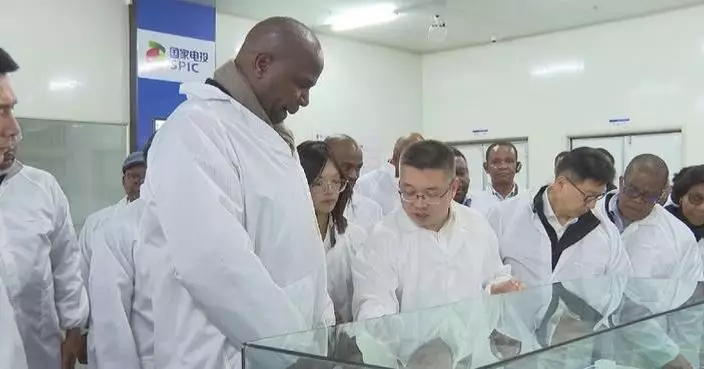
"The energy storage station is like a giant power bank composed of over 10,000 battery packs. Its battery system currently uses the most advanced pack-level batteries in the country. By employing big data to monitor the station's operations, we can ensure its safe and stable performance," said Liu Yongxian, chairman of Chongqing Hechuan Power Generation Company under the State Power Investment Corporation.
"Over the last seven years, China has invested more in renewable energy than any other country in the world. So, for seven consecutive years, China is the number one investor in renewable energy," said Peter Bakker, Chairman and CEO of the World Business Council for Sustainable Development.
China continues bold environmental strides with new energy infrastructure development