Renowned for their size and fragrance, roses from southwest China's Yunnan Province have become a sensation in Japan, attracting competitive bidding in its largest wholesale flower market, the Ota Market in Tokyo.
Each week, the market has two or three imports of these Chinese roses, with shipments now often exceeding 10,000 stems, catering to an increasingly appreciative consumer base.
"These roses from Yunnan can grow such big in just one year. They are noticeably larger than Japanese varieties, which is one of their distinctive features," said Jun Shishido, a manager at a floral wholesale company.
At the Ota Market, the auction for Yunnan roses is dynamic, with one purchase done in nearly every five seconds after an offer is started. Following the auction, secondary wholesalers will quickly distribute the flowers to various flower shops across Tokyo.
"Our export volume has increased bit by bit. We started with 8,000 stems a day at the beginning. Today, we delivered 15,000, and last Friday we even delivered 30,000. Starting December, they require 90,000 stems daily," said Wang Zhenhua, a Chinese floral trader.
A flower shop in Tokyo, operating for over 60 years, began selling Yunnan roses this year. One stem of the fresh roses, which are shipped from Yunnan to Tokyo within 24 hours after they are picked, sell in the shop for 400 yen (about 2.6 U.S. dollars).
"These roses are very pretty. I believe this type of rose is perfect to express one's emotions and ideas," said a Japanese buyer.
Other flowers that roses from China, such as calla lilies and carnations, are also winning more and more Japanese consumers with their high quality and cost-effectiveness. Data show that from January to September this year, Japan imported 237 million fresh cut flowers from China, ranking the first in the source of imported flowers.
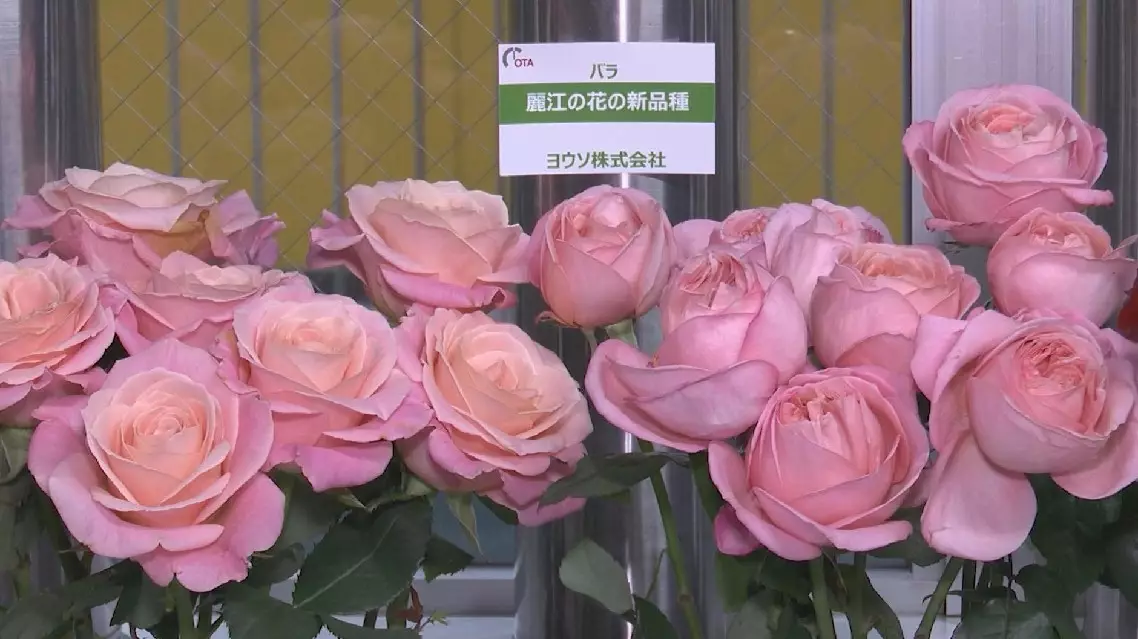
Roses from Yunnan thrive in Japanese market
A new China Global Television Network (CGTN) documentary explores how the historic Long March spirit is driving modern innovation, as young Chinese researchers and engineers are channeling this relentless drive to overcome critical bottlenecks in the EV and AI industries.
Titled "The Source of AI: Not a Single Rock Goes to Waste", the documentary highlights the pioneering journeys of Zhong Yu and He Pengyu.
Two years ago, Zhong made a pivotal career shift, leaving a long-established automaker to return to China and join Farasis Energy, a homegrown battery manufacturer based in Ganzhou City of east China's Jiangxi Province.
Working around the clock, Zhong and his team are developing solid-state batteries. This next-generation technology promises higher energy density and enhanced safety, having the potential to completely disrupt the current automotive landscape.
Through his research, Zhong is determined to establish China as a global leader in the battery sector.
While Zhong focuses on the power sources of the future, He Pengyu is tackling the foundational raw materials required for the EV and AI boom.
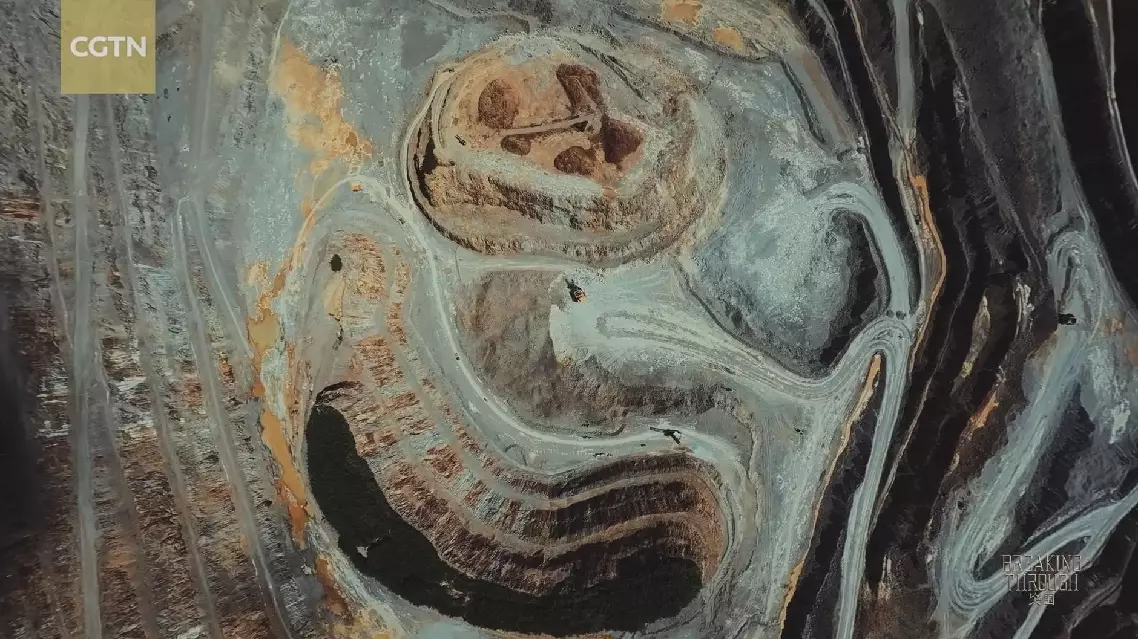
The rapid expansion of these sectors has triggered a massive surge in demand for copper and rare earth elements. However, extracting and separating these valuable minerals from raw ore has long been a formidable technical hurdle.
Without advanced equipment, China's mining industry once relied on grueling, inefficient manual sorting.
Determined to change this paradigm after returning from his studies in France, He founded HPY Sorting. The company has developed a revolutionary AI-driven optical ore sorting system capable of automatically separating waste rock from valuable ore.
Processing up to 300 tons of ore per hour, this intelligent sorting technology is now deployed in mines across the world, replacing tasks that once relied on human experience with precision-driven algorithms and automated machinery.
He Pengyu hopes that through his innovation, not a single rock goes to waste.
The documentary is part of CGTN's "Breaking Through" series, which traces China's journey from the historic Long March undertaken by the Red Army nine decades ago to its modern-day achievements, highlighting the resilience, ingenuity, and determination of its people.
Long March spirit drives critical breakthroughs in China's EV, AI industries: documentary