As the Spring Festival holiday drew to a close, transport hubs across China have stepped up capacity and services to cope with surging return traffic.
At Taiyuan Wusu International Airport in north China's Shanxi Province, 336 flights were scheduled on Monday, the final day of the holiday, with passenger throughput expected to reach 51,000.
"On the last day of the Spring Festival holiday, Taiyuan airport plans to operate 336 flights. Peak traffic is concentrated on routes linking Taiyuan with major hubs such as Shanghai, Shenzhen, Guangzhou and Chengdu," said Kong Rong, a staff member at the Taiyuan airport.
The airport optimized flight capacity based on passenger flow patterns and introduced tailored services, including priority assistance for first-time and urgent travelers, as well as coordinated support for late-arriving passengers to ensure smooth connections.
In south China's Guangdong Province, China Railway Guangzhou Group also saw a peak in return passenger flow. On Monday, it handled 2.577 million passenger trips, up 14.5 percent year on year.
To manage demand, the railway operator ran 3,979 trains, including 747 additional services.
Highways also experienced heavy traffic on Monday.
In Tianjin, expressways recorded peak vehicle flow. At the Wuqing West toll station on the Beijing-Shanghai Expressway, traffic was dense but moving steadily without major congestion. Authorities issued real-time traffic updates to help drivers avoid bottlenecks.
In Shijiazhuang, Hebei Province, highways around the city saw increased traffic from Sunday. Police intensified video monitoring and patrols to quickly handle incidents and ease pressure on main routes.
In Jiangsu Province, several cross-river bridges experienced return traffic peaks. For the past week, the Jiangyin Yangtze River Highway Bridge recorded an average daily traffic volume of 125,000 vehicles.
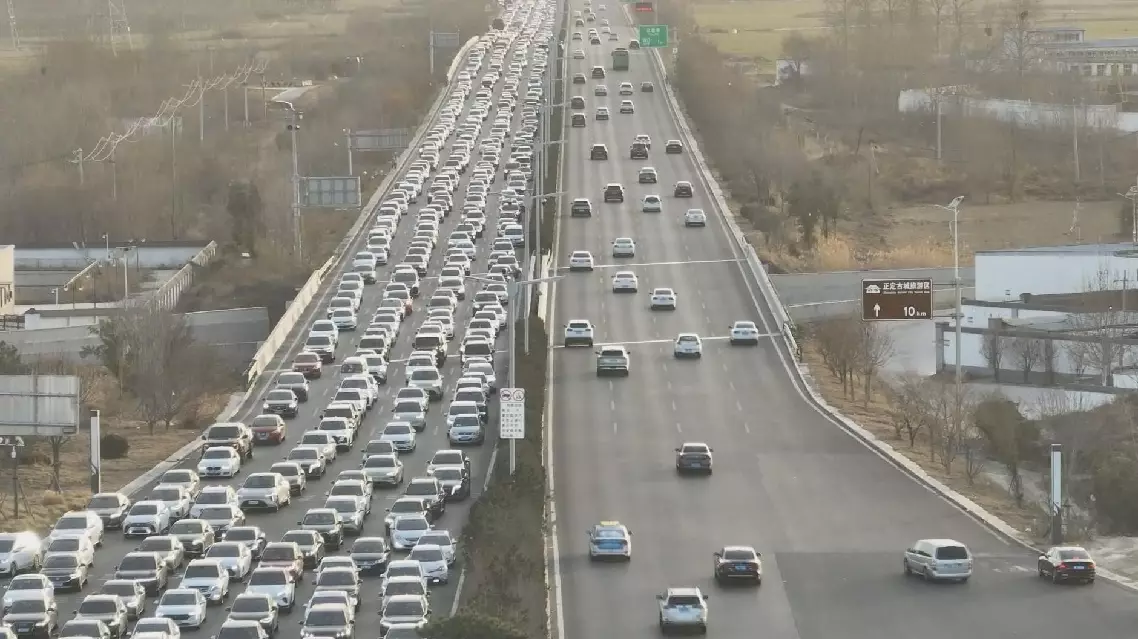
China's transport network steps up services as return travel peaks
Traditional villages across China emerged as new tourism highlights during the Spring Festival holiday from Feb 15 to 23, drawing over 73 million visits, according to the Ministry of Housing and Urban-Rural Development.
Centered on local culture and traditions, villages across China staged more than 10,000 village events during the holiday, bringing a new momentum for rural development, the data shows.
In Dongyuan Village, central China's Hubei Province, visitors from across the country explored the rustic charm while taking part in folk activities such as paper-cutting and making glutinous rice cakes. The immersive experiences turned centuries-old customs into living heritage that could be seen, tasted and actively engaged with.
Hongcun Village in east China's Anhui Province, often described as a "village in a traditional Chinese painting," attracted many foreign tourists during the holiday. Dressed in traditional Chinese costumes, they joined lantern parades and experienced Chinese New Year traditions firsthand.
Qingfeng Village in southwest China's Sichuan Province attracted tourists with its centuries-old architecture adorned with red Spring Festival couplets and hanging lanterns. Visitors flocked to the mountain village to savor what many described as an authentic taste of the New Year.
"The ancient buildings are captivating, the natural scenery is beautiful, and we can also enjoy the traditional 'baba banquet.' This has been such an interesting Spring Festival," said a tourist.
The open-air "baba banquet" is the traditional feast for festivals and celebrations in southwest China. Featuring steaming specialties served amid lively serving calls from hosts, the banquets have been proved especially popular with local hospitality. The influx of tourists also spurred brisk sales of local specialty products.
"Our family enjoyed everything, food, lodging, sightseeing, and shopping, and we spent just over 1,000 yuan (about 145 U.S. dollars). It was absolutely worth it," another visitor said.
By Monday, the seventh day of the Chinese New Year, more than 4,000 traditional villages nationwide had hosted 15,472 events, including village galas, folk performances, intangible cultural heritage showcases, seasonal farming activities, sports competitions, and creative cultural fairs. These activities attracted about 73.87 million visits and generated 5.884 billion yuan (around 851 million U.S. dollars) in consumer spending, according to ministry data.
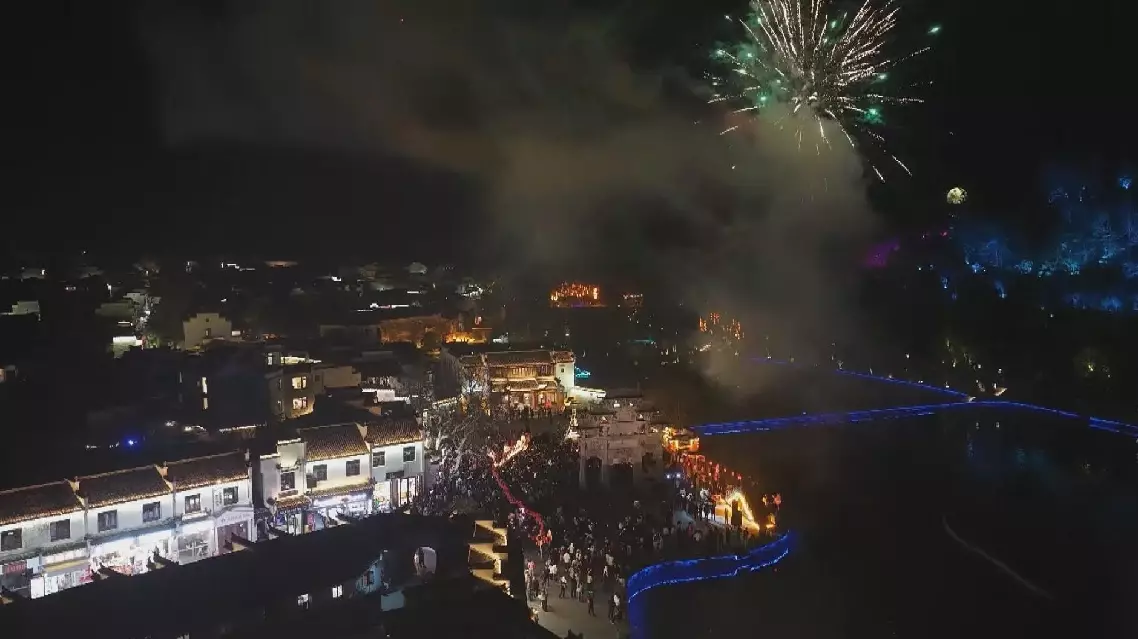
Traditional village tourism thrives during Spring Festival holiday