The 5th Symposium on Global Maritime Cooperation and Ocean Governance concluded in Sanya City of South China's Hainan Province on Wednesday.
The event drew more than 300 guests from over 30 countries and regions to discuss issues relating to maritime cooperation and ocean governance.
Attendees, comprising scholars and representatives of international organizations and maritime departments, tackled seven topics, including "Global Ocean Governance: Rules, Responsibilities, and Power" and "Settlement of Maritime Disputes: Dialogue or Confrontation."
As global governance currently faces new opportunities and challenges, there was a consensus among participants to favor dialogue over confrontation in resolving maritime disputes between countries over maritime delimitation and even territorial sovereignty.
"Dialogue is the way and confrontation just leads to misery. The essential thing in the ocean is that there is only one ocean. It's very important that we all get together occasionally to discuss our one ocean," said Peter Thomson, United Nations Secretary-General's Special Envoy for the Ocean.
"I think every state has its own claims and interests based on international law. I think in that sense, cooperation and dialogue and consultation are very important, but then also at the same time I think self-restraint has been emphasized as critical so that it does not escalate to a conflict," said Dita Liliansa, a research fellow at the Ocean Law and Policy Program of the Center for International Law of the National University of Singapore.
The symposium also focused on ecological conservation and sustainable development of the ocean. The attending guests looked forward to building a platform for communication and cooperation through the symposium, and providing suggestions for global ocean governance.
"We hope to gradually build consensus among all parties through this platform and pool everyone's wisdom," said Wang Sheng, president of the National Institute for South China Sea Studies (NISCSS).
"We are committed to the sustainable, high-quality and peaceful development of the ocean so as to advance the progress of the harmonious civilization, peace, cooperation and friendship in the ocean, which is the purpose and objective for us to develop this platform," said Wu Shicun, chairman of the Huayang Center for Maritime Cooperation and Ocean Governance, and also director of the Academic Committee of the NISCSS.
Multiple parallel forums and dialogues with a specific emphasis on ocean-related issues were also held throughout the two-day symposium.
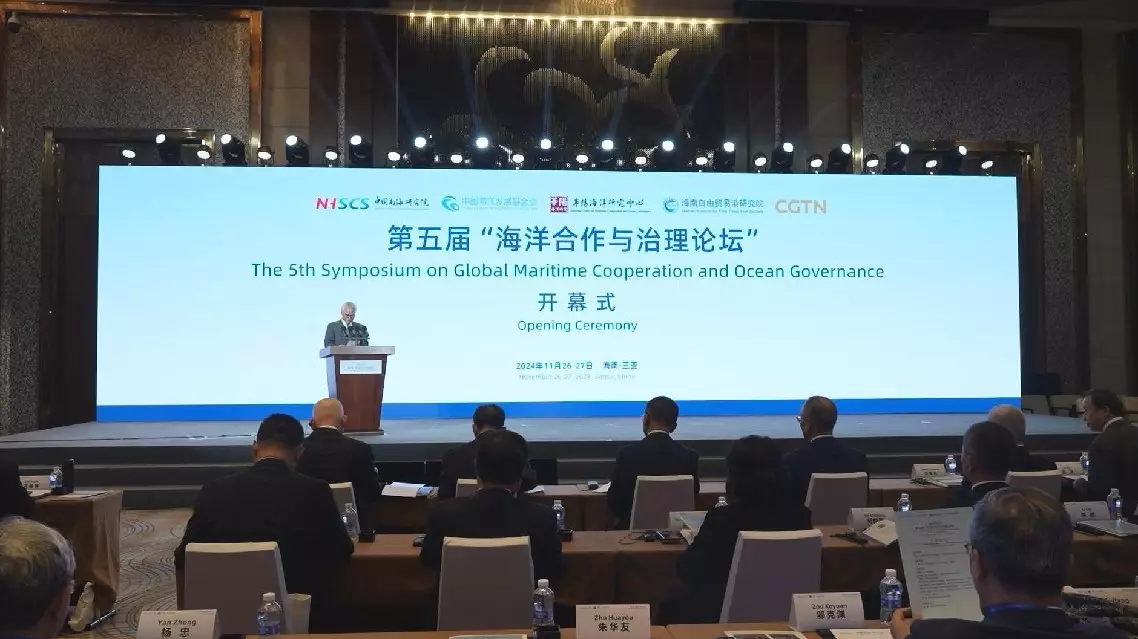
5th Symposium on Global Maritime Cooperation and Ocean Governance held in Hainan
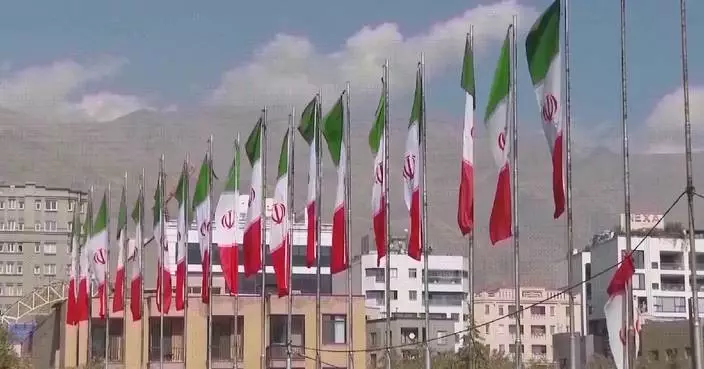
The Iranian government is focusing on public concerns and maintaining stable supplies of essential goods amid recent protests, Iranian President Masoud Pezeshkian said in a televised interview on Sunday.
In the city of Karaj, northwest of the capital Tehran, daily life has largely continued as normal. A video filmed by a local resident on Sunday shows food stores open and grocery shelves fully stocked.
"This is the block near my home, and there are some food stores here. Daily life continues here. Last night we did not see many protests in Karaj. Right now the city is very safe. This is a grocery store close to my home. All the food is available; nothing is in shortage. Here are noodles and different types of beans. Here are dairy products, cheese, and yogurt. I also checked other grocery stores and didn't see any shortages. Everything is available," said local resident Ali Reza.
Iranian officials have described recent disturbances as acts orchestrated by the "enemy," including some carried out by well-trained and armed "terrorists." The incidents have caused casualties among security personnel and civilians, as well as property damage.
The Secretary of Iran's Supreme National Security Council Ali Larijani has directed authorities to severely punish the "terrorists."
Meanwhile, Iran's police chief Ahmad-Reza Radan said on Sunday that the police had raised alert levels and arrested several leaders of the troublemakers during the operations on Saturday.
President Pezeshkian noted in the interview that the normal demands of the Iranian people are reasonable and justified, but they must realize that triggering riots and carrying out terrorist acts are the enemy's attempts to undermine the country. He urged the public to remain vigilant.
Also on Sunday, Iranian Parliament Speaker Mohammad Baqer Qalibaf warned that Tehran would regard U.S. and Israeli bases and facilities in the Middle East as "legitimate targets" if Washington takes military action against Iran. His remarks followed media reports saying U.S. President Donald Trump is "seriously considering authorizing a strike" against Iran.
Iranian state media reported that at least 109 members of Iran's security forces have been killed in clashes since the protests began 14 days ago. Meanwhile, human rights groups based outside the country said the number of protesters killed has exceeded 200, though the figure could not be independently verified.
The protests initially erupted over a sharp depreciation of the rial and sweeping subsidy reforms. Iranian authorities have blamed the unrest on foreign-linked agents and sanctions imposed by the United States.
Iranian president says government focusing on ensuring supplies amid protests