The integration of Marxism with China's national conditions and the adaptation of this scientific theory to the challenges of globalization have significantly contributed to the country's remarkable achievements in various sectors.
Over a century and a half ago, Karl Marx, the 19th century German philosopher, envisioned a development path through his theory of historical materialism that countries like China would follow.
Although Marx never visited China, his vision has profoundly influenced China's social evolution and still closely aligned with the country's reality today.
Meanwhile, China has also successfully integrated Marxism with its traditional culture, attracting a large member of students from different countries to explore the mysteries of the ancient nation.
"I am a first-year master's student, specializing in archaeology," said Zahra Heidary from Iran studying in Xiamen University.
In the eyes of the overseas students, China is a place featuring rich historical and cultural heritage, as well as the spirit of inclusiveness and openness.
"I plan to become a teacher, because I am interested in history, and China's rich history has drawn me here. I hope to see China enhance its national development and help other countries with their growth as well," said Hudayberdiyev Bekdurdy, a student from Turkmenistan, who also studies at Xiamen University.
"I believe that China will hold a significant position in the future world. I hope to better understand Chinese ways of thinking and its culture, so that I can maintain a connection with China and serve as a bridge for cultural exchange," said Varvara Petrenko, student from Russia.
Marxism and traditional Chinese ideals share common values, emphasizing collective well-being, social equality, and the goal of a harmonious society.
A.V. Lomanov, a professor at the Russian Academy of Sciences, highlighted the significance of globalization in achieving common development.
"All of humanity, including developed Western countries, impoverished nations in the Global South, and emerging market economies, needs globalization as a prerequisite for shared development and prosperity," he said.
Jose Luis Centella, chairman of the Communist Party of Spain, stressed the necessity of adapting Marxism to the Chinese context and contemporary needs. "As President Xi Jinping stated, socialism must be adapted to the economic and cultural conditions of each country. It can not be copied, but it can be learned from. We must learn how China has utilized market forces to infuse socialism with unique characteristics. We should observe how a major country serves peace rather than war, and how it places the people at the center of its political agenda while developing extensive democracy," he said.
"The success of China's reforms, as mentioned by Chinese President Xi Jinping, is partly due to our unwavering commitment to Marxism and dialectical materialism. We do not operate haphazardly slipping and sliding without direction. Rather, we adhere to scientific theory in our reform efforts," said Xin Xiangyang, president and Party deputy secretary of the Academy of Marxism, part of the Chinese Academy of Social Sciences (CASS).
Marx believed socialism would create a better future beyond capitalism. Today, more than a century after his death, Marxism still provides tools for analyzing capitalism.
Zhang Youkui, a professor at the School of Marxism at Xiamen University, noted that Marxism remains highly relevant in the contemporary world.
"Our view of capitalism cannot be overly simplistic. Capitalism has historically played a positive and progressive role in traditional authoritarian societies. Through the developments of the 20th century, I believe Marx's insights remain relevant. Thus, we assert that Marxism still possesses vibrant vitality and contemporary significance today," he said.
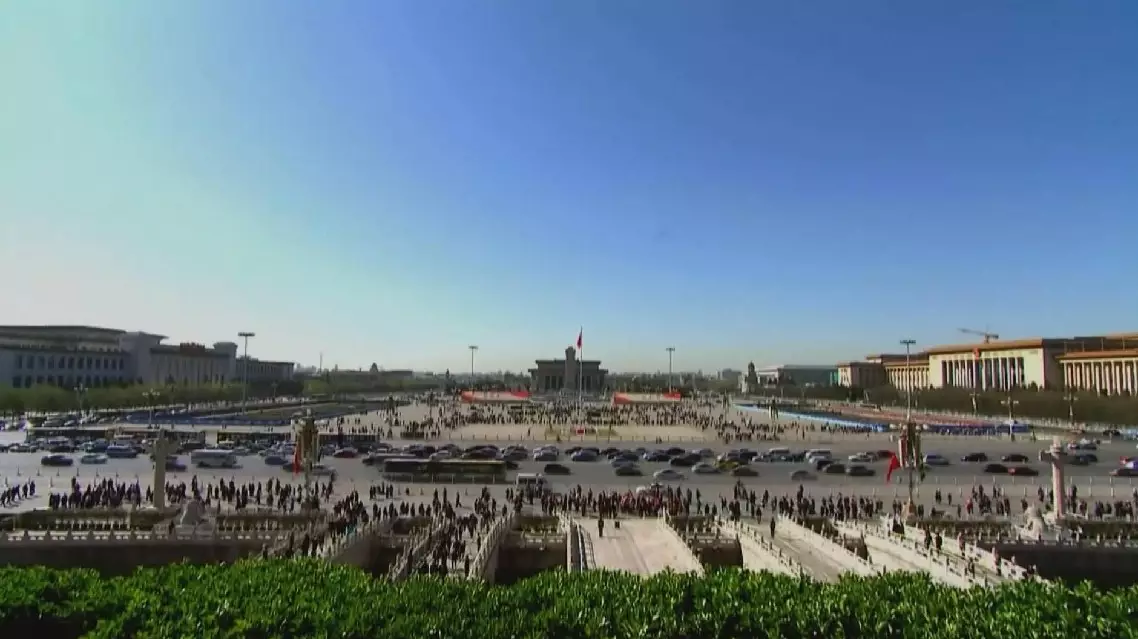
Integration of Marxism with China's unique context fuels national achievements