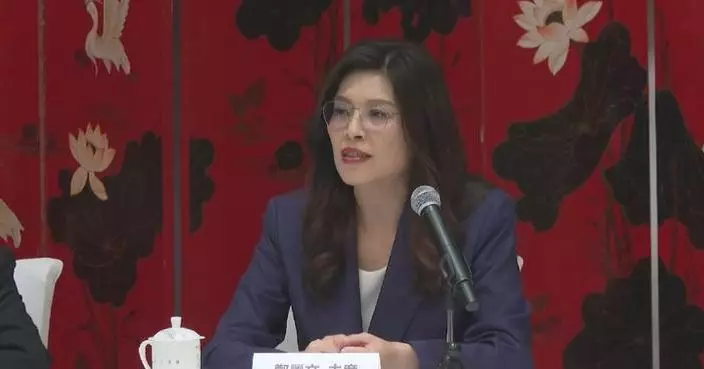
A significant gap between developing and developed countries in addressing climate change was highlighted at the recently concluded 29th session of the Conference of the Parties to the United Nations Framework Convention on Climate Change (COP29), said a Chinese climate negotiator.
In an interview with China Global Television Network (CGTN), Wang Yan revealed that gap in both the quantity and quality of climate funding, acknowledging that there is no easy solution to bridge this divide.
"Negotiations were so intense over the last two days at the conference. And it ultimately led to a compromise goal that no party is fully satisfied with. Developing countries argue that the actual agreement in climate financing falls far short of the trillion-dollar level that they had hoped for. On the other hand, developed countries feel that they've already made progress by adding $50 billion to the initial target. This is a significant gap in financing aid quantity," said Wang.
Small island countries often face severe disasters and losses due to climate change and are in urgent need of international financial support. However, much of the financing available comes in the form of loans with interest, which are general-purpose loans. As a result, some representatives are reluctant to see their nations saddled with heavy debt while dealing with the consequences of climate change, according to Wang.
"They instead hope for more grant-based support or highly concessional loans. However even though the funding volume is enough, the funding quality is not that good. There are still high interests," said Wang.
Climate change originates from greenhouse gas emissions and this issue didn't arise overnight, but is a result of centuries of carbon emissions by developed countries during their development, said the negotiator, noting the historical responsibility for this is already well-established.
Both the UN Framework Convention on Climate Change and the Paris Agreement have explicitly clarified this responsibility. For developed countries, providing funding is not just an obligation but a responsibility.
China has been actively helping developing countries secure financial assistance. Additionally, China voluntarily provides them with support to mitigate and reduce disasters, including financial aid, technology, training, and personnel. Since 2016, China has voluntarily provided 24 billion U.S. dollars as aid fund.
"This is a quite inspiring number. Many countries believe China has reached a pinnacle of contribution in the fight against climate change, one that most other countries cannot match. But this is not China's responsibility just because we provide aid," said Wang.
Despite all challenges, Wang reaffirmed China's commitment to green development and its growing role in this area.
"No matter how the external environment changes, China will remain steadfast in its commitment to global green development, including enhancing climate resilience and advancing efforts toward carbon neutrality. I believe China will continue to serve as a role model for responsible developing countries and play an increasingly significant role in addressing climate change," said Wang.

Climate funding inequality threatens global progress: COP29 negotiator

Climate funding inequality threatens global progress: COP29 negotiator

Climate funding inequality threatens global progress: COP29 negotiator
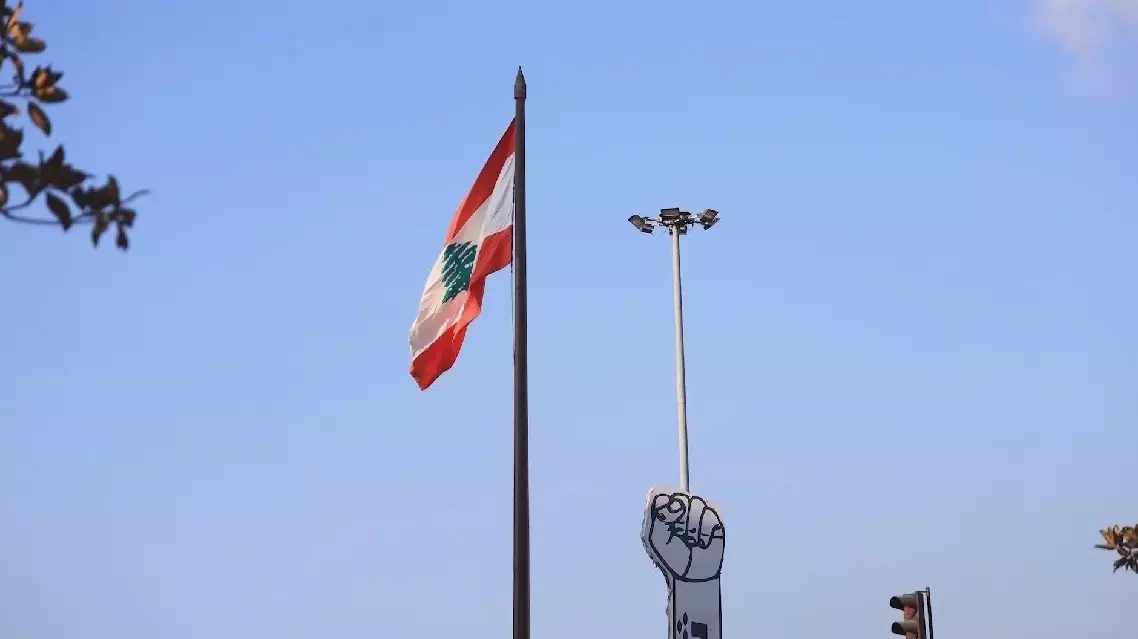
European countries and international organizations have widely condemned Israeli air strikes on Lebanon which have resulted in more than 1,000 civilian casualties, including children, and have caused damage to civilian infrastructure.
Israel launched large-scale air raids across Lebanon on Wednesday, saying it had carried out 100 strikes within a matter of minutes on positions they claimed belonged to the Hezbollah group.
Lebanon's Ministry of Public Health reported more than 300 had been killed in the attacks, with roughly 1,150 wounded.
The attacks came after a two-week ceasefire agreement was reached by the United States and Iran. However, both Israel and the United States have maintained Lebanon is not included in the truce.
Spanish Foreign Minister Jose Manuel Albares on Thursday accused Israel of violating international law to carry out the air strikes on Lebanon, calling the attacks "a shame on the conscience of all humanity".
Earlier on Thursday, Albares announced that Spain would reopen its embassy in Tehran in the hope of achieving peace in the region.
Italian Prime Minister Giorgia Meloni said that Israel had "disrespected" the two-week ceasefire with Iran by carrying out the strikes.
Meloni also warned of further economic turmoil if U.S.-Israeli strikes on Iran flare up again, and said the European Union should consider a temporary suspension of the Stability and Growth Pact, an agreement which ensures economic stability within the European Union, in order to handle the potential monetary consequences.
Meanwhile, German Chancellor Friedrich Merz on Thursday warned that Israel's military operations in Lebanon could cause the entire peace process as a whole to fail, telling a press conference in Berlin "that must not happen."
Merz announced that the German government will resume direct talks with Iran in order to support the newly agreed two-week ceasefire between Washington and Tehran.
He also stated that a window of opportunity for a negotiated solution has opened for the first time since the outbreak of the conflict, though he cautioned that the situation in the Middle East remains "fragile."
The UK's Foreign Secretary Yvette Cooper said on Thursday that she is "deeply troubled" by Israel's escalating attacks on Lebanon, expressing hope that Lebanon will be included in the current ceasefire arrangement.
Cooper also reiterated the importance of reopening the Strait of Hormuz, saying that the effective closure of the vital shipping chokepoint had been "deeply damaging for the world", while stressing how crucial the passageway is to the entire global economy.
French Foreign Minister Jean-Noel Barrot described the Israeli strikes on Lebanon as "intolerable."
In a radio interview, Barrot said France strongly condemns "the massive strikes" which seriously undermine the temporary ceasefire reached earlier between the United States and Iran. The European Union's foreign policy chief Kaja Kallas said Thursday that Israel's latest strikes on Lebanon, which killed hundreds overnight, could not be considered as an act of self-defense.
"Israel's right to defend itself does not justify inflicting such massive destruction," Kallas said in a post on the social media platform X. She warned that the strikes risk further destabilizing the region and added that Israel's actions were putting the U.S.-Iran ceasefire under severe strain.
Despite this widespread criticism, Israeli Prime Minister Benjamin Netanyahu insisted on Thursday there would be no ceasefire in Lebanon, signaling that Israel will continue its military operations while pursuing planned negotiations with Beirut.
"There is no ceasefire in Lebanon," Netanyahu said in a video address to residents of northern Israel, adding: "We continue to strike Hezbollah with force and we will not stop until we restore your security."
Netanyahu said he had instructed his cabinet to open direct talks with Lebanon following what he described as repeated requests from the Lebanese government.
The negotiations, which are expected to begin next week in Washington, aim to disarm Hezbollah and reach a "historic and lasting" peace agreement, Netanyahu added. Delegations will be led by the Lebanese and Israeli ambassadors to the United States.
Israel and Lebanon have no formal diplomatic relations and technically remain in a state of war.
European Leaders widely condemn Israeli attacks on Lebanon