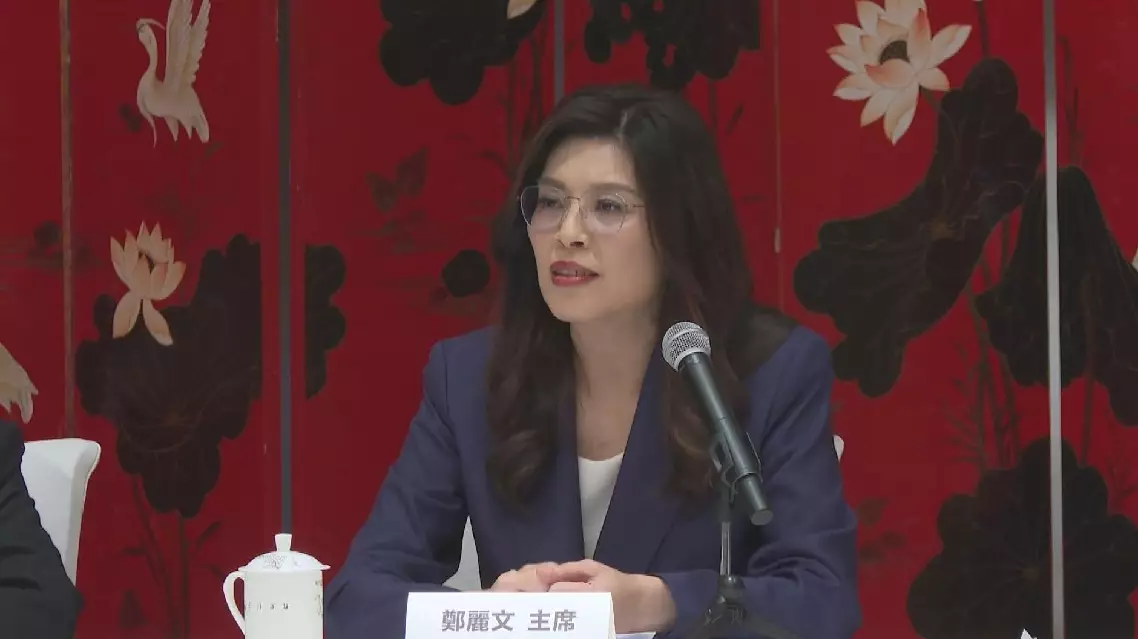
Cheng Li-wun, chairperson of the Chinese Kuomintang (KMT) party, expressed gratitude to Xi Jinping, general secretary of the Communist Party of China (CPC) Central Committee, for his goodwill, and urged all political parties in Taiwan to work together for peace.
She made the remarks at a press conference in Beijing on Friday after meeting Xi.
"I sincerely hope that all political parties in Taiwan shall give up their differences and work together for peace when it comes to cross-Strait relations. General Secretary Xi also showed this significant goodwill just now. Such exchanges certainly will not be confined to exchanges between the Kuomintang and the Communist Party. I believe such a broad vision and open-mindedness are something the Chinese Kuomintang is very pleased to see. We are not here today for the selfish interests of a single party. We are here today because we have our historical responsibility, and because we cannot allow Taiwan or the Taiwan Strait to fall into a battlefield. So we are taking the lead. Now that we have begun to blaze the trail, and it will only become ever smoother and broader going forward," Cheng said.
Invited by the CPC Central Committee and Xi, Cheng is the first KMT chairperson to have led a delegation to the Chinese mainland in a decade. The delegation, on a six-day visit, had visited Jiangsu Province and Shanghai before coming to Beijing.
KMT chairperson expresses appreciation for Xi's goodwill, urges peace
KMT chairperson expresses appreciation for Xi's goodwill, urges peace
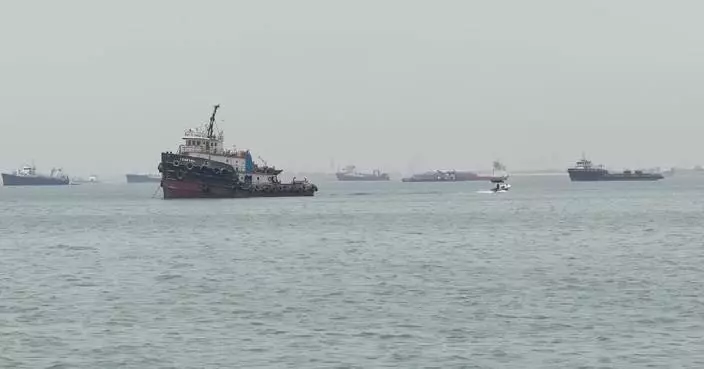
A senior Chinese military scholar on Saturday called on the international community to jointly inject positive energy into safeguarding global strategic stability.
Meng Xiangqing, head of the Chinese People's Liberation Army expert delegation and a professor at China's National Defense University said at a session at the Shangri-La Dialogue 2026 in Singapore that global strategic stability faces multiple challenges.
Against this backdrop, China has put forward the Global Security Initiative and the Global Governance Initiative, advocating a vision of common, comprehensive, cooperative and sustainable security, Meng said in a speech at the session.
The initiatives uphold multilateralism and the rule of law in international affairs, providing important ideas and solutions for addressing global challenges, he said.
Meng also said that all countries should firmly safeguard the post-war international order and strengthen the political foundation for strategic stability. He emphasized the need to remain alert to any resurgence of militarism and to uphold the outcomes of World War II and the post-war international order.
"For a country that has never thoroughly eradicated the specter of militarism, is it qualified to discuss defense cooperation on the international stage? Can it win the trust of the international community, especially the Asian countries it once invaded? I have serious doubts. The lessons of the past are not far behind us. Today, the world once again stands at a new crossroads. We must remain vigilant against any attempt to revive militarism, and earnestly safeguard the achievements of World War Two and the post-war international order," said Meng.
On nuclear issues, Meng reiterated China's long-standing position.
He said that China's stance is consistent and clear. China remains committed to peaceful development, adheres to a nuclear strategy of self-defense, and pursues a policy of no-first use of nuclear weapons.
China supports a comprehensive ban and eventual elimination of nuclear arms, and this policy has never changed, he added.
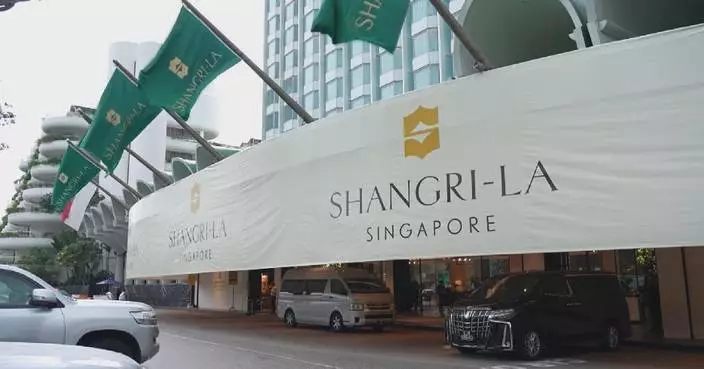
Since its launch in 2002 by the British think tank the International Institute for Strategic Studies (IISS), the Shangri-La Dialogue, officially known as the Asia Security Summit, has been held annually except in 2020 and 2021 with the support of the Singaporean government.
As Asia's premier defense and security summit, the Shangri-La Dialogue 2026 opened Friday in Singapore amid growing geopolitical tensions.
The three-day event, which focuses on major security challenges facing the region, brought together 550 delegates from over 40 countries and regions. It features six plenary sessions, two ministerial roundtables, three special sessions, and a special address.
Chinese scholar calls for positive energy in maintaining global stability