Skip to Content Facebook Feature Image

Space-bred cranberry seedlings transplanted into fields in northeast China

China

China

China

Space-bred cranberry seedlings transplanted into fields in northeast China

2026-05-31 09:45 Last Updated At:06-01 11:14

Space-bred cranberry seedlings, carried into space aboard multiple missions and nurtured through two years of greenhouse breeding and acclimatization, have begun field transplantation at a plantation in northeast China.

The seedlings were carried into space aboard China's Shenzhou-14, Shenzhou-16 and Shijian-19 missions. After returning to Earth, they underwent a rigorous two-year period of greenhouse breeding and acclimatization before being transferred to open fields for large-scale management and monitoring. Now, they are being planted in fields in Fuyuan, Heilongjiang Province.

Cheng Zhengxin, a technical engineer at the plantation, explained the meticulous transplantation procedures needed to safeguard the delicate seedlings' superior traits and maximize their survival rates in the open fields.

"Now is the ideal season for transplantation. We are moving the space-bred cranberry seedlings from greenhouses into open fields for large-scale management. During the process, we must keep the original roots and soil intact without damaging the root systems or branches. After transplantation, timely watering is needed to keep the soil moist but without water accumulation," she said.

Regarding the future direction of the breeding program, the plantation's general manager Li Feng explained the vision for domestic cultivation.

"The seedlings we are working with come from our space breeding program and radiation simulation experiments conducted with the Harbin Institute of Technology. In the future, we will continue field observation and variety comparison experiments to cultivate cranberry varieties suitable for growing in China and help fill the gap in domestic cranberry germplasm resources," he said.

Cranberries used to be sourced mainly from North America, but Fuyuan City has made breakthroughs since 2014 in the production of cranberries via cooperation among the government, companies, research institutions and colleges. Once deserted experimental fields in the city have been transformed into the biggest planting base for cranberries in China. Recent years saw Fuyuan further extending the industrial chain of cranberries to enrich the product line ranging from juice and ice cream to beer and cosmetics, which now serves as a major cash cow to the local economy.
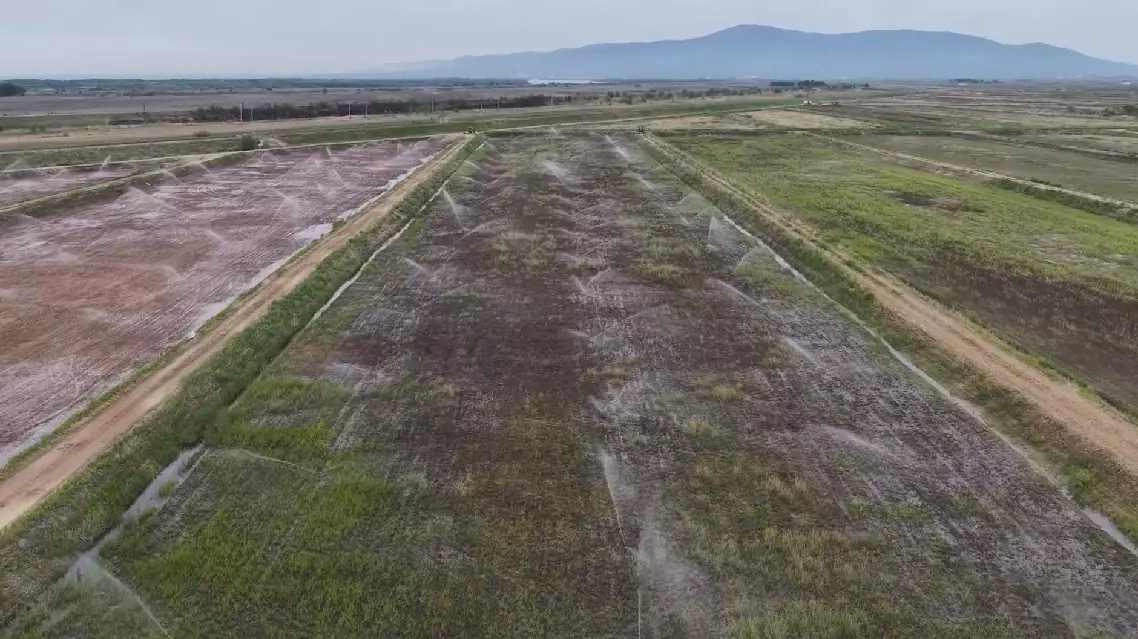
Space-bred cranberry seedlings transplanted into fields in northeast China

Space-bred cranberry seedlings transplanted into fields in northeast China

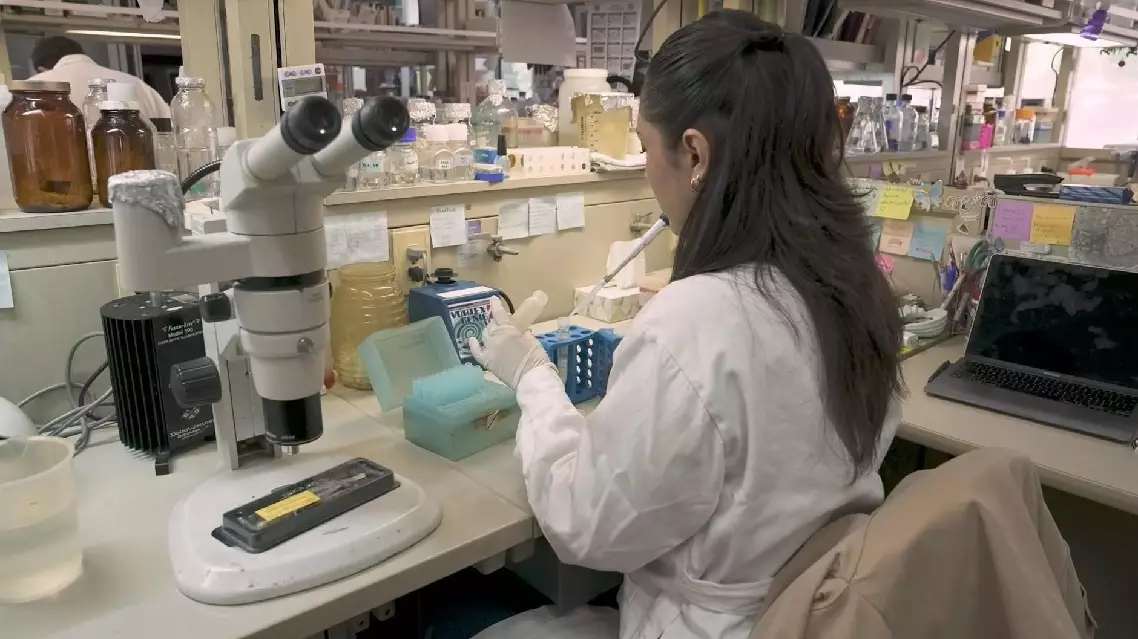
Mexican and Chinese scientists are working together at a lab belonging to Mexico's prestigious National Autonomous University (UNAM) in Cuernavaca, seeking ways to reduce worms and other insect-caused crop damage in food production.

The China-Mexico International Scientific and Technological Cooperation Project in agricultural biotechnology brings together UNAM's Institute of Biotechnology and the Chinese Academy of Agricultural Sciences' Institute of Plant Protection. Its aim is to consolidate a joint research agenda in agricultural biotechnology and lay the foundations for new scientific cooperation between the two countries.

"The focus is on insecticidal proteins that target pests, primarily agricultural ones, which feed on crops and are responsible for nearly 40 percent of losses caused by insects. So, controlling insects is a fundamental step," said Maria Alejandra Bravo, co-director of UNAM's Institute of Biotechnology.

This China-Mexico scientific collaboration has already produced more than 60 scientific documents, including articles for academic journals and at least one book.

"I think my work is very important because now we use a lot of chemical biopesticides to kill the larvae. We can control the pest and also protect the environment," said Bai Xue, a PhD student at UNAM's Institute of Biotechnology.

Mario Soberon Chavez, a senior biotechnology researcher of the Institute of Biotechnology, said these insects evolve rapidly and become resistant to chemical and biological pesticides.

"Understanding the mechanisms of resistance also allows us to modify the proteins, so that these modified proteins can then be toxic to the insects that have become resistant," he said.

A recent agreement signed by Mexico and China brought much-needed funding for scientific research and its applications to commonly shared problems.

"This greater commitment from China and Mexico will strengthen collaboration, and this could extend beyond us. Many other groups in Mexico could also benefit," said Maria Alejandra Bravo.

Mexican, Chinese scientists team up to fight crop-eating insects

Mexican, Chinese scientists team up to fight crop-eating insects

Recommended Articles