Head-of-state diplomacy plays a special guiding role in advancing relations between Russia and China, Russian foreign ministry spokeswoman Maria Zakharova said on Friday.
Speaking at a regular news briefing in Moscow, Zakharova said the recent meeting between Chinese President Xi Jinping and Russian President Vladimir Putin in the southern Chinese city of Shenzhen underscored the high level of mutual trust and strategic partnership between the two countries amid shifting global geopolitics.
Putin's two visits to China this year reflect the exceptional nature of high-level political dialogue between the two countries, Zakharova said.
Zakharova also said that Russia highly values the strong working relationship between the two leaders, adding that their consensus is vital not only for deepening bilateral cooperation, but also for resolving complex international issues and maintaining stability in the Asia-Pacific region and the whole world.
Noting that this year marks the 25th anniversary of the signing of the China-Russia Treaty of Good-Neighborliness and Friendly Cooperation, Zakharova said the strategic decisions made under the treaty and their steady implementation have demonstrated to the world the correctness of the course Russia and China have chosen to strengthen their mutually beneficial partnership.
Zakharova also congratulated China on its achievements as the host of the 2026 Asia-Pacific Economic Cooperation (APEC) meetings and thanked China for its arrangements during the APEC meetings in Shenzhen.

Leadership diplomacy plays key guiding role in China-Russia ties: spokeswoman
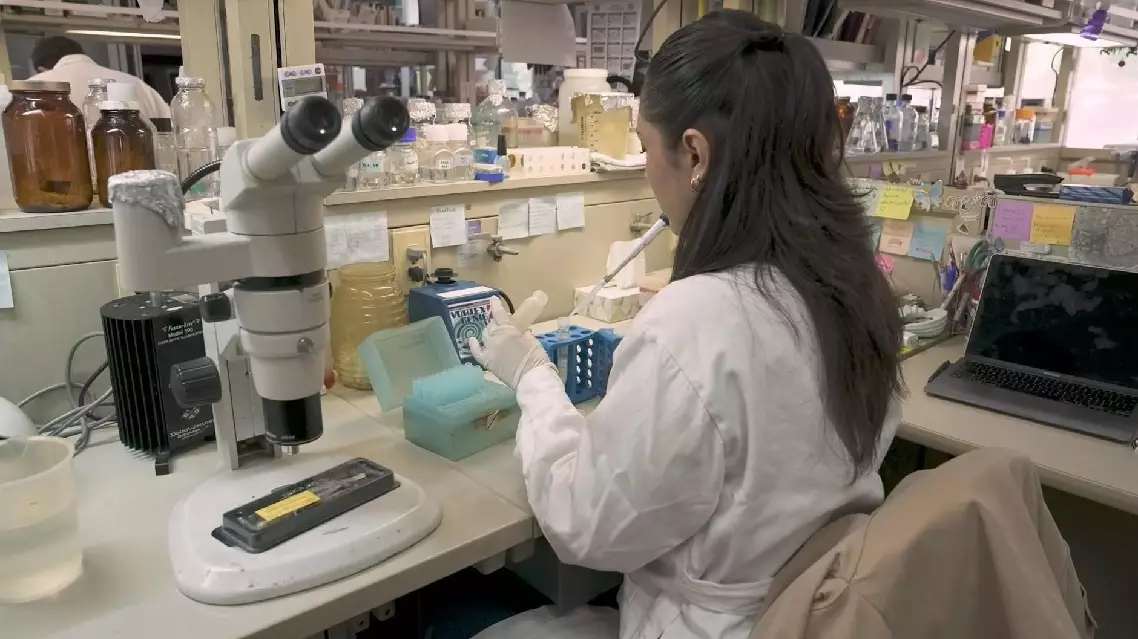
Mexican and Chinese scientists are working together at a lab belonging to Mexico's prestigious National Autonomous University (UNAM) in Cuernavaca, seeking ways to reduce worms and other insect-caused crop damage in food production.
The China-Mexico International Scientific and Technological Cooperation Project in agricultural biotechnology brings together UNAM's Institute of Biotechnology and the Chinese Academy of Agricultural Sciences' Institute of Plant Protection. Its aim is to consolidate a joint research agenda in agricultural biotechnology and lay the foundations for new scientific cooperation between the two countries.
"The focus is on insecticidal proteins that target pests, primarily agricultural ones, which feed on crops and are responsible for nearly 40 percent of losses caused by insects. So, controlling insects is a fundamental step," said Maria Alejandra Bravo, co-director of UNAM's Institute of Biotechnology.
This China-Mexico scientific collaboration has already produced more than 60 scientific documents, including articles for academic journals and at least one book.
"I think my work is very important because now we use a lot of chemical biopesticides to kill the larvae. We can control the pest and also protect the environment," said Bai Xue, a PhD student at UNAM's Institute of Biotechnology.
Mario Soberon Chavez, a senior biotechnology researcher of the Institute of Biotechnology, said these insects evolve rapidly and become resistant to chemical and biological pesticides.
"Understanding the mechanisms of resistance also allows us to modify the proteins, so that these modified proteins can then be toxic to the insects that have become resistant," he said.
A recent agreement signed by Mexico and China brought much-needed funding for scientific research and its applications to commonly shared problems.
"This greater commitment from China and Mexico will strengthen collaboration, and this could extend beyond us. Many other groups in Mexico could also benefit," said Maria Alejandra Bravo.
Mexican, Chinese scientists team up to fight crop-eating insects