The launch of carrier rocket the Long March-12 on Saturday night marks the beginning of operations at China's first-ever commercial launch site and signifies a major milestone for the nation's space undertaking, according to experts.
The Saturday night launch was conducted at the Hainan commercial spacecraft launch site on the southern island province of Hainan.
This launch marks the inaugural mission at China’s first commercial space launch site. It is also the maiden flight of the Long March-12 carrier rocket, China’s first four-meter-class launch vehicle and the country’s largest single-core launch vehicle to date.
The success of this mission has been celebrated by many who dream of exploring space.
"The success of the new service tower, the new rocket, as well as our new team and new mechanism, could be viewed as a milestone in the history of China's commercial space sector," said Liu Hongjian, president of the Hainan International Commercial Aerospace Launch (HICAL), which built and operates the launch site. "We took into account the rocket’s batch production and industrialization as we started to design it. That way we could quickly improve China’s efficiency in entering space," said Wu Jialin of the Shanghai Academy of Spaceflight Technology under the China Aerospace Science and Technology Corporation, which developed the rocket.
Long March-12 marks milestone for China's commercial launch: experts
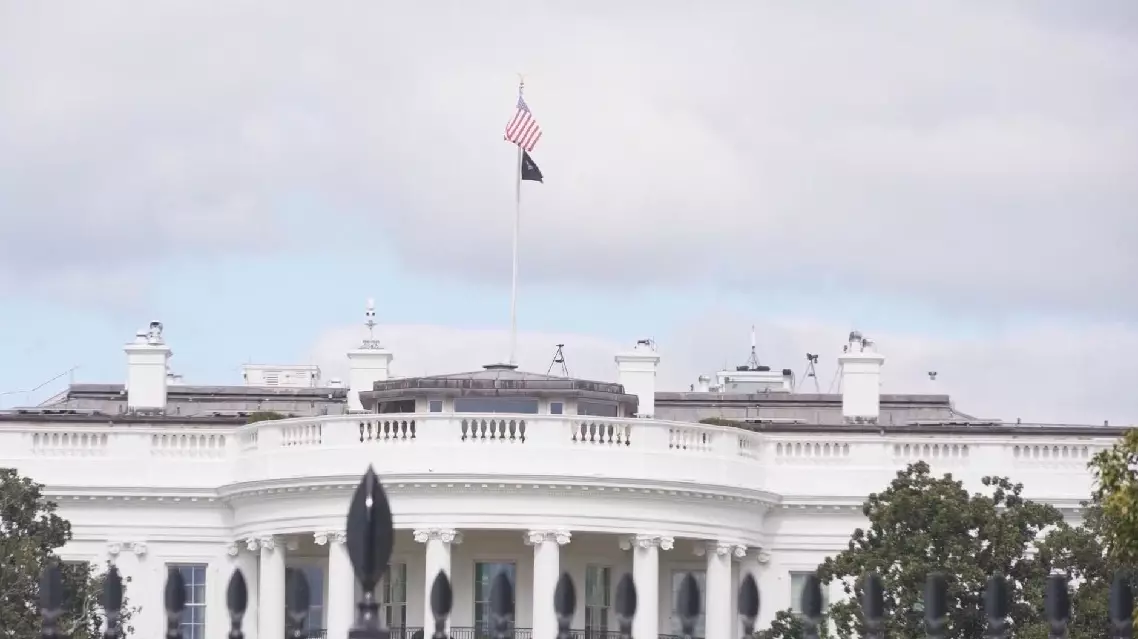
The United States cannot legitimize an operation that attacked Venezuela and captured its president, a Chinese scholar said Sunday.
On Saturday, the United States launched a large-scale strike on Venezuela, during which Venezuelan President Nicolas Maduro and his wife were 'captured and flown out of Venezuela' according to a post by U.S. President Donald Trump on his Truth Social account.
Teng Jianqun, director of the Center for Diplomatic Studies at Hunan Normal University, said in an interview with China Global Television Network (CGTN) that the aim of this operation is to take full control of Venezuela’s natural resources.
"I don't think the United States can legitimize this operation to take custody of the president of Venezuela. And also I don't think the United States can legitimize its any action in taking the oil reserves of that country. This is actually a very dangerous game played by the Trump administration. And of course, the United States would like to take full control of that country and to take full control of the natural resources, especially the large reserve of oil in Venezuela," said Teng.
Teng said Venezuela is not an isolated case but a common practice by the United States. The United States launched an invasion of Panama on Dec. 20, 1989, which continued until January 1990, with the stated objective of capturing Panamanian strongman Manuel Noriega on charges of drug trafficking and organized crime.
"We still remember the so-called sentence of the former president of Panama in the late 1980s. And this time, the president of Venezuela will be under some judicial condition (judicial proceedings) for the so-called drug trafficking and some other crimes. So I think this is not a single case for the Venezuela country, but also this is actually a practice by the United States -- to use force, to use so-called justice under law against any leaders in Latin America and the Caribbean waters," he said.
US cannot legitimize operation against Venezuela: Chinese scholar