China's continued push for scientific and technological innovation, highlighted in its 15th Five-Year Plan (2026–2030), is accelerating the growth of industries of the future at home and creating broad opportunities for global companies seeking new sources of productivity and innovation, said Denis Depoux, global managing director of the Munich-based consultancy firm Roland Berger.
In a recent interview with China Media Group in south China's Hainan Province, Depoux noted that China's focus on advanced technologies such as AI is drawing strong investment from both the public and private sectors, providing fertile ground for industrial transformation and international business cooperation.
"This priority in the 15th Five-Year Plan means that there will be a lot of state investment and support, there will be a lot of private sector involvement, there will be a lot of capital flowing. Same goes for AI Plus. So the way to make AI not only as a breakthrough technology, but as something meaningful in production, in manufacturing, to improve productivity. So it's really building industries for the future. That's why multinationals are also investing in research, development, in innovation here in China to tap the innovation potential," he said.
As China advances its innovation-driven development strategy, Depoux noted that the integration of AI with the real economy is expected to become a key growth driver.
He pointed out that beyond breakthroughs in generative AI, the next stage will involve applying AI to the physical world, particularly in manufacturing and industrial production.
"AI Plus manufacturing is one thing I would look at. So far we've had this breakthrough in generative AI with DeepSeek and other models elsewhere in the world. That's all great, but that's handling text and numbers. The next frontier is handling the physical world, and that's very different, and even the technology underlying is actually different from the large language model, because it's not relying on language, it's relying on understanding the environment. And we talk a lot about humanoid robots, but actually, let's start with industrial robots and how AI can actually create an additional productivity revolution in industry. And that's going to happen here because this is a manufacturing country," he said
"The energy sector is another sector I would look at very carefully around advanced materials, around nuclear fusion as the next frontier that obviously will change the whole parameters of the economy. It's not only about fusion, it's also about green hydrogen and usage of green hydrogen. I think the biotech industry in China is probably where we might see the next DeepSeek moment. The next blockbuster might actually come from a Chinese innovative biotech company or pharmaceutical company and be scaled either by Chinese companies or by the global pharma. So that's what I would look at," said Depoux.
He also noted that these developing trends are reshaping the strategies of both Chinese and foreign enterprises, as they seek to adapt to new consumption patterns, upgrade service industries, and expand internationally.
"We are very committed to this market, to China as a market, simply because there is so much happening here. So when you think of the level of innovation, when you think of the new consumption scenarios, when you think of the boosting of the services economy, these are all areas where companies need to adjust. And companies, Chinese and multinationals alike, need to transform. For example, they need to adopt AI to boost their productivity or to better serve their clients. Chinese companies are all going abroad, and they want to tap more affluent market in Europe, in America, in the Middle East, elsewhere. This is what we as a management consulting firm, are helping them to transform to be able to do," said Depoux.
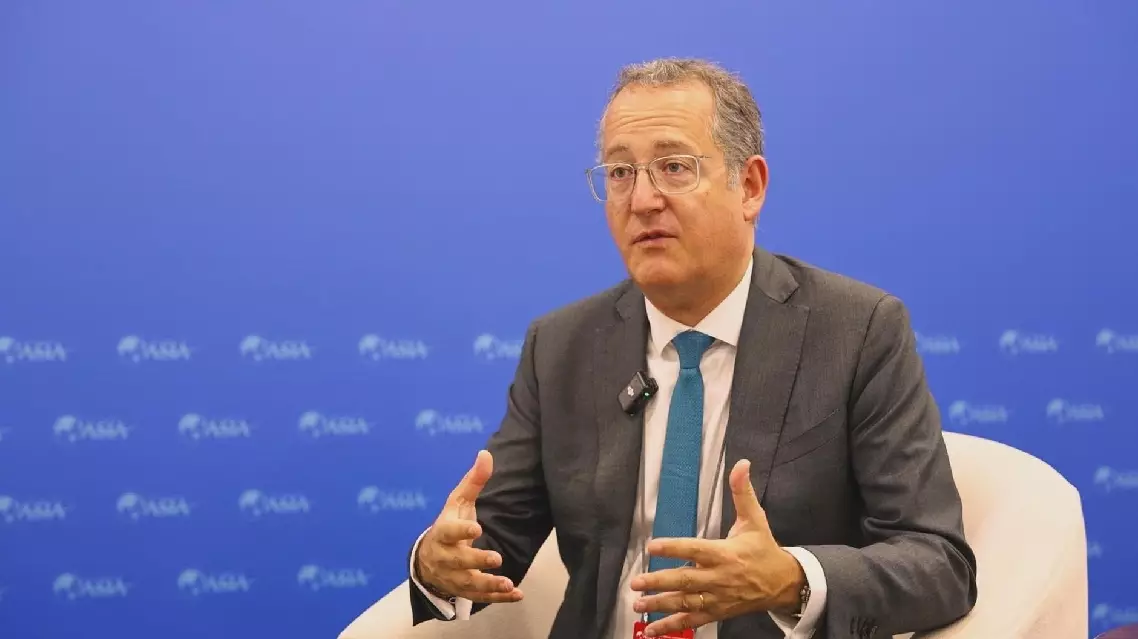
China's innovation drive creates new opportunities for global businesses: German consultancy