China's single largest natural gas pipeline, the China-Russia east-route natural gas pipeline, is now fully operational, with the capacity of supply 38 billion cubic meters of natural gas per year to Northeast China, the Beijing-Tianjin-Hebei region, and the Yangtze River Delta.
This landmark achievement was announced by the China Oil and Gas Pipeline Network Corporation (PipeChina) on Monday. The pipeline, which took nearly a decade to construct, stretches over 5,000 kilometers from northern China to the east coast, crossing nine provincial-level administrative regions.
The ceremonial opening of the final valve at the Luzhi station in Suzhou, east China's Jiangsu Province, marks the full completion of this massive energy corridor stretching from Heihe, a city in northeastern Heilongjiang Province bordering Russia, to Shanghai in east China.
It is also one of China's four strategic oil and gas import channels.
"The launch of the pipeline significantly enhances gas supply reliability and flexibility in eastern China. The project's annual supply capacity has grown from the initial 5 billion cubic meters to 38 billion cubic meters now, ensuring sufficient gas supplies for the peak demand periods expanding from this winter to next spring," said Li Bo, a representative from PipeChina's Construction Project Management Company.
In China, the pipeline construction is divided into three phases - the northern, middle, and southern sections. The pipeline delivers clean energy from Siberia, passing through northeast China and the Bohai Economic Rim before reaching the Yangtze River Delta, one of the country's most economically dynamic regions.
Since the operation of the northern section of the pipeline from Heihe to Changling, northeast China's Jilin Province, it has delivered over 80 billion cubic meters of gas.
"The daily transmission volume of the pipeline has increased from 15 million cubic meters to 110 million cubic meters," said Ren Xianghui, director of PipeChina's Heihe Operations Area.
The pipeline also marks a breakthrough in domestic energy technology, as it is the first to achieve full localization of its core control system software and hardware.
One of its most challenging sections, the Yangtze River shield tunnel crossing, features three ultra-large-diameter pipelines. This section used advanced smart robots for equipment inspection and data collection, pioneering the use of explosion-proof rail-mounted inspection robots in domestic pipeline operations.
"The explosion-proof rail inspection robot is equipped with visible light cameras and infrared thermal imaging devices. It operates autonomously or via remote control, performing pre-programmed inspection and data collection tasks in the tunnel. The robot can continuously inspect the 21-kilometer-long tunnel, significantly reducing the frequency and duration of manual inspections," said Qian Haocheng, a staff member from PipeChina's West-to-East Gas Transmission Company.
The fully operational pipeline represents a major step forward in strengthening China's energy security, promoting clean energy use and supporting sustainable economic development.
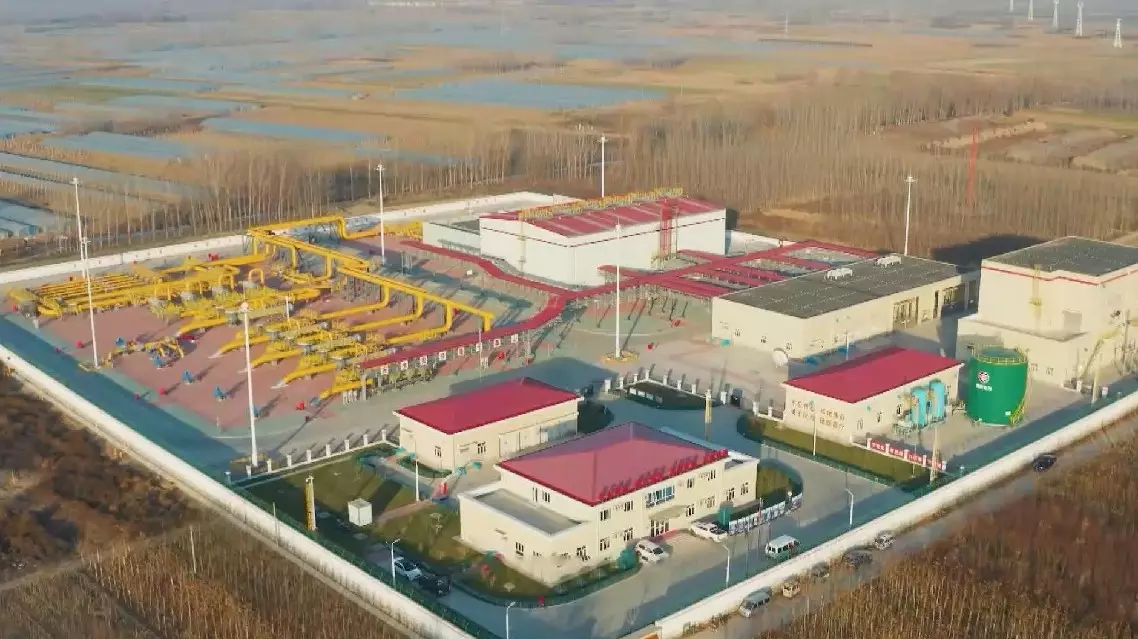
China-Russia east-route natural gas pipeline fully operational
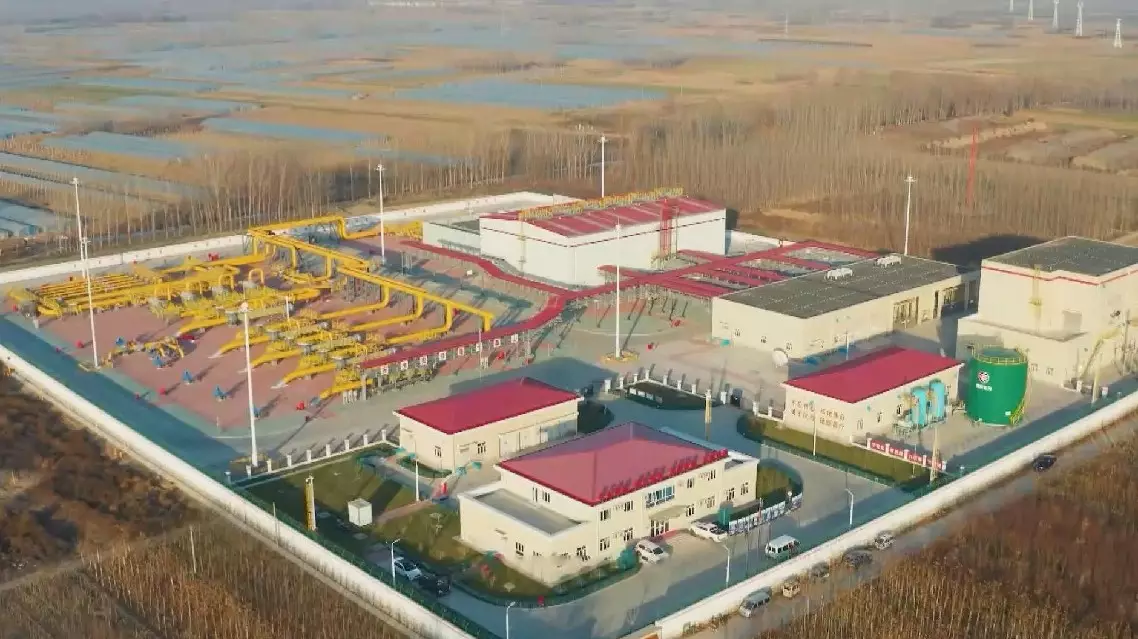
China-Russia east-route natural gas pipeline fully operational
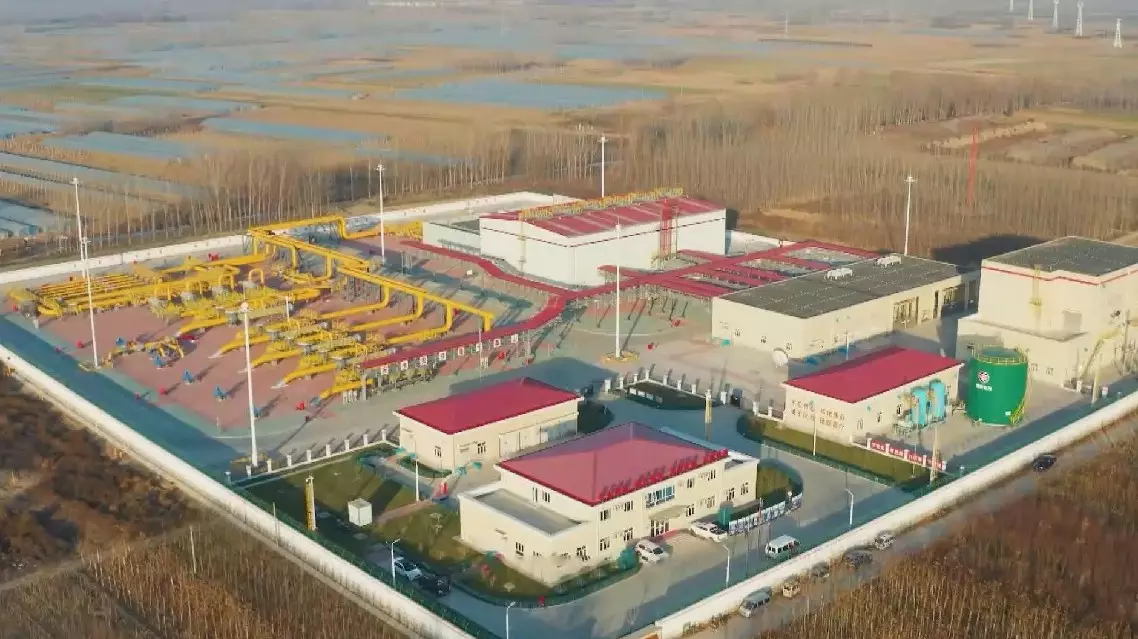
China-Russia east-route natural gas pipeline fully operational