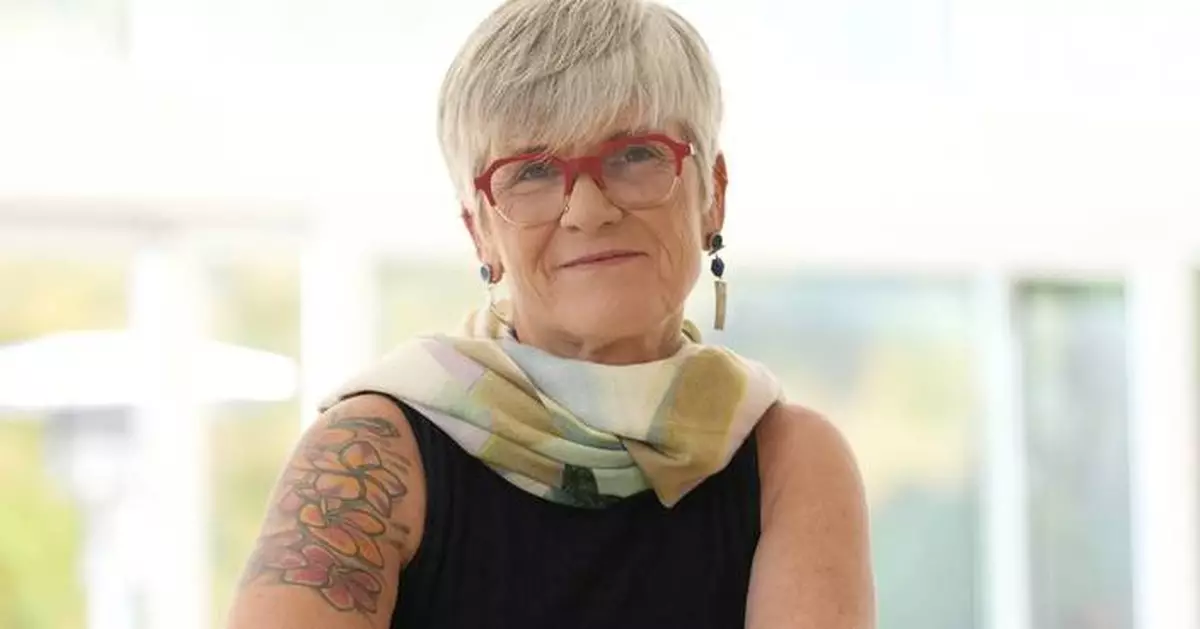
Marie Dageville and her husband Benoit Dageville became billionaires overnight when his data cloud company, Snowflake, went public in September 2020. After that life changing moment, Marie, a former hospice nurse, then set out to learn how to urgently give away that new fortune.
“We need to redistribute what we have that is too much,” she said in an interview with The Associated Press from her home in Silicon Valley.
Click to Gallery
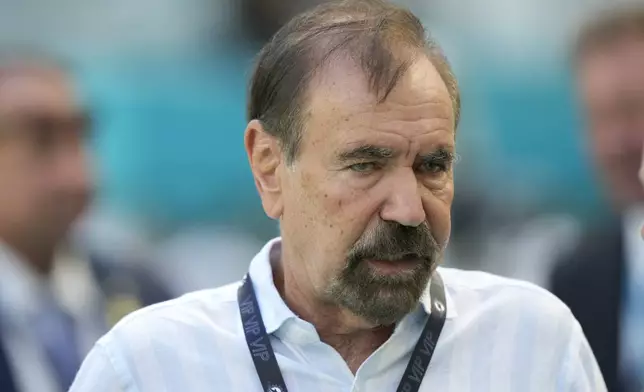
FILE - Jorge M. Perez, Chairman and Chief Executive Officer of Related Group, walks the sidelines before the start of an NFL football game between the Miami Dolphins and the Carolina Panthers, Oct. 15, 2023, in Miami Gardens, Fla. (AP Photo/Wilfredo Lee, File)
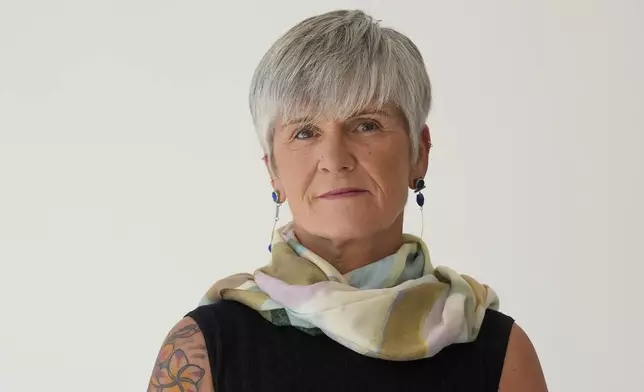
Marie Dageville poses for a portrait in San Carlos, Calif., Thursday, Nov. 14, 2024. (AP Photo/Jeff Chiu)
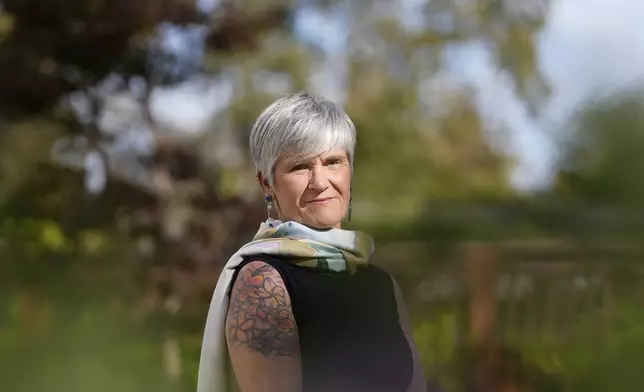
Marie Dageville poses for a portrait in San Carlos, Calif., Thursday, Nov. 14, 2024. (AP Photo/Jeff Chiu)
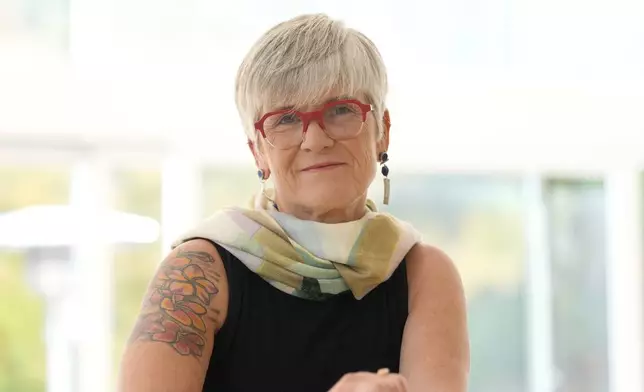
Marie Dageville poses for a portrait in San Carlos, Calif., Thursday, Nov. 14, 2024. (AP Photo/Jeff Chiu)
While many say giving away a lot of money is hard, that is not Dageville’s perspective. Her advice is to just get started.
America's wealthiest people have urged each other to give away more of their money since at least 1889, the year Andrew Carnegie published an essay entitled, “The Gospel of Wealth." He argued that the richest should give away their fortunes within their lifetimes, in part to lessen the sting of growing inequality.
A whole industry of advisers, courses and charitable giving vehicles has grown to help facilitate donations from the wealthy, to some extent prompted by the Giving Pledge, an initiative housed at the Bill & Melinda Gates Foundation. In 2010, Warren Buffett, Bill Gates and Melinda French Gates invited other billionaires to promise to give away half of their fortunes in their lifetimes or in their wills. So far, 244 have signed on.
So, what stands in the way of the wealthiest people giving more and giving faster?
Philanthropy advisers say some answers are structural, like finding the right vehicles and advisers, and some have to do with emotional and psychological factors, like negotiating with family members or wanting to look good in the eyes of their peers.
“It’s like a massive, perfect storm of behavioral barriers,” said Piyush Tantia, chief innovation officer at ideas42, who recently contributed to a report funded by the Gates Foundation looking at what holds the wealthiest donors back.
He points out that unlike everyday donors, who may give in response to an ask from a friend or family member, the wealthiest donors end up deliberating much more about where to give.
“We might think, ‘It’s a billionaire. Who cares about a hundred grand? They make that back in the next 15 minutes'," he said. "But it doesn’t feel like that.”
His advice is to think about philanthropy as a portfolio, with different risk levels and strategies ideally working in concert. That way it's less about the outcome of any single grant and more about the cumulative impact.
Marie Dageville said she benefited from speaking with other people who had signed the Giving Pledge, especially one person who urged her to make general operating grants, meaning the organization can choose how to spend the funds themselves. She trusts nonprofits close to the communities they serve to know best how to spend the money and said she is not held back by a worry that they will misuse it.
“If you are in the position where you are at now — able to redistribute this fortune — either you took risks or someone took risks on you," she said, adding. “So why can’t you take some risk (in your philanthropy)?”
Dageville also thinks there is too much focus on the wants of the donors, rather than the needs of the recipients.
Private and open conversations between donors also help them move forward, advisers have found. The Center for High Impact Philanthropy at University of Pennsylvania runs an academy that convenes very wealthy donors, their advisers and the heads of foundations to learn together in cohorts.
Kat Rosqueta, the center's executive director, said donors like MacKenzie Scott, the author and now billionaire ex-wife of Amazon founder Jeff Bezos, show it's possible to move quickly.
“Do all the ultra high net worth funders have to go slower than MacKenzie Scott? No,” she said.
But she said, sometimes donors struggle with seeing how to make a difference, given that philanthropic funding is tiny compared to government spending or the business sector.
Cara Bradley, deputy director of philanthropic partnerships at the Gates Foundation, said the scrutiny of billionaire philanthropy also means they feel a huge responsibility to use their funds as best as possible.
“They’ve signed a pledge genuinely committed to trying to give away this tremendous amount of wealth. And then, people can get stuck because life gets busy. This is hard. Philanthropy is a real endeavor,” she said.
It is also not easy to conduct empirical research on billionaires, said Deborah Small, a marketing professor at Yale School of Management. But she said, in general, current social norms value anonymity in giving, which is seen as being more virtuous because the donor isn't recognized for their generosity.
“It would be better for causes, and for philanthropy as a whole, if everybody was open about it because that would create the social norm that this is an expectation in society,” she said.
Jorge Pérez, founder and CEO of the real estate developer Related Group, along with his wife, Darlene, was early to join the Giving Pledge in 2012. In an interview with The Associated Press, Pérez said he frequently speaks with his peers about giving more and faster.
“I think people have stopped taking my calls,” he joked.
He also has engaged his adult children in their philanthropy, much of which they conduct through The Miami Foundation. He said they decided to draw on the expertise of the foundation, rather than starting their own organizations, to speed along the evaluation of potential grantees.
Even before the Pérezes joined the Giving Pledge, they were major supporters of the arts and of scholarships in Miami, where they are based. In 2011, the couple donated their art collection along with cash, together worth $40 million, to the art museum, which was renamed the Pérez Art Museum Miami after the gift.
Pérez said he gives because he thinks very unequal societies are not sustainable and because he wants to leave behind a legacy.
“I keep on selling the idea that you’re giving because of very selfish reasons,” he said. “One is it makes you feel good. But two, particularly in the city or the state or the country that you’re going to live in, in the long run, this is going to make a huge difference in making our society fairer, better and more progressive and probably lead to greater economic wealth.”
The Associated Press receives financial support for news coverage in Africa from the Bill & Melinda Gates Foundation.
Associated Press coverage of philanthropy and nonprofits receives support through the AP’s collaboration with The Conversation US, with funding from Lilly Endowment Inc. The AP is solely responsible for this content. For all of AP’s philanthropy coverage, visit https://apnews.com/hub/philanthropy.
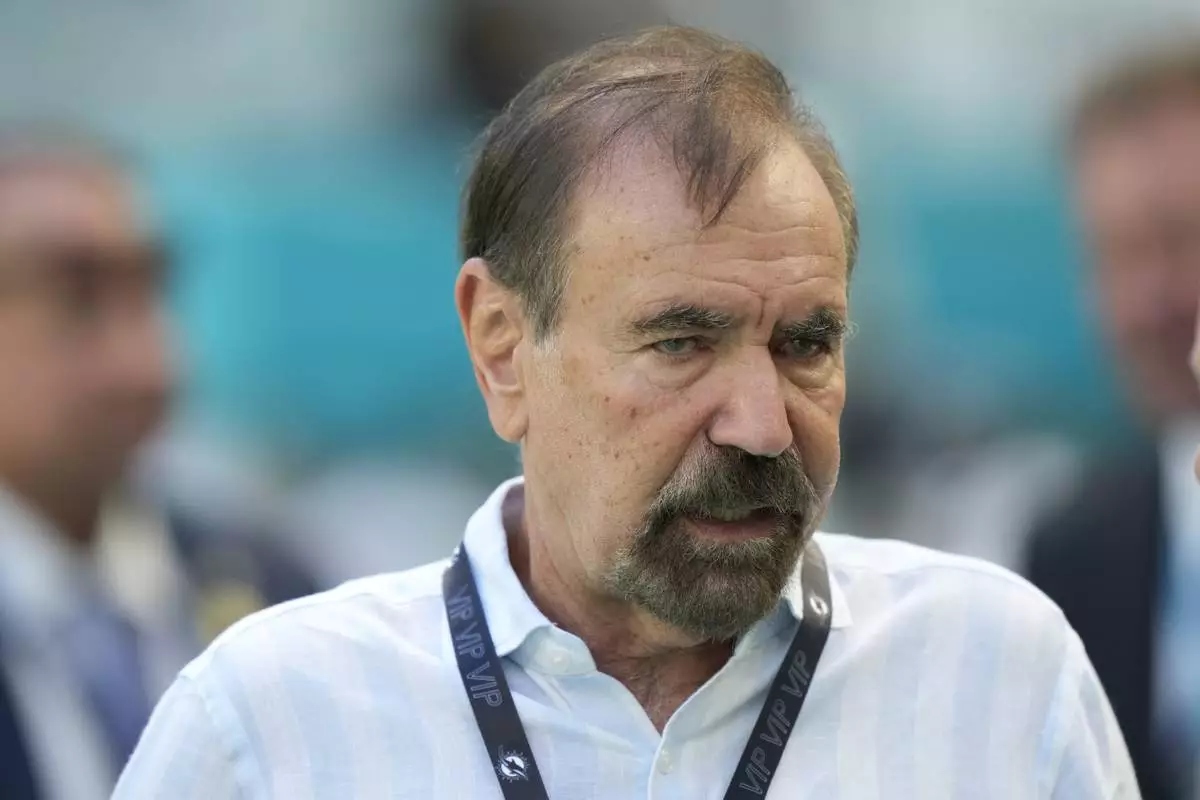
FILE - Jorge M. Perez, Chairman and Chief Executive Officer of Related Group, walks the sidelines before the start of an NFL football game between the Miami Dolphins and the Carolina Panthers, Oct. 15, 2023, in Miami Gardens, Fla. (AP Photo/Wilfredo Lee, File)
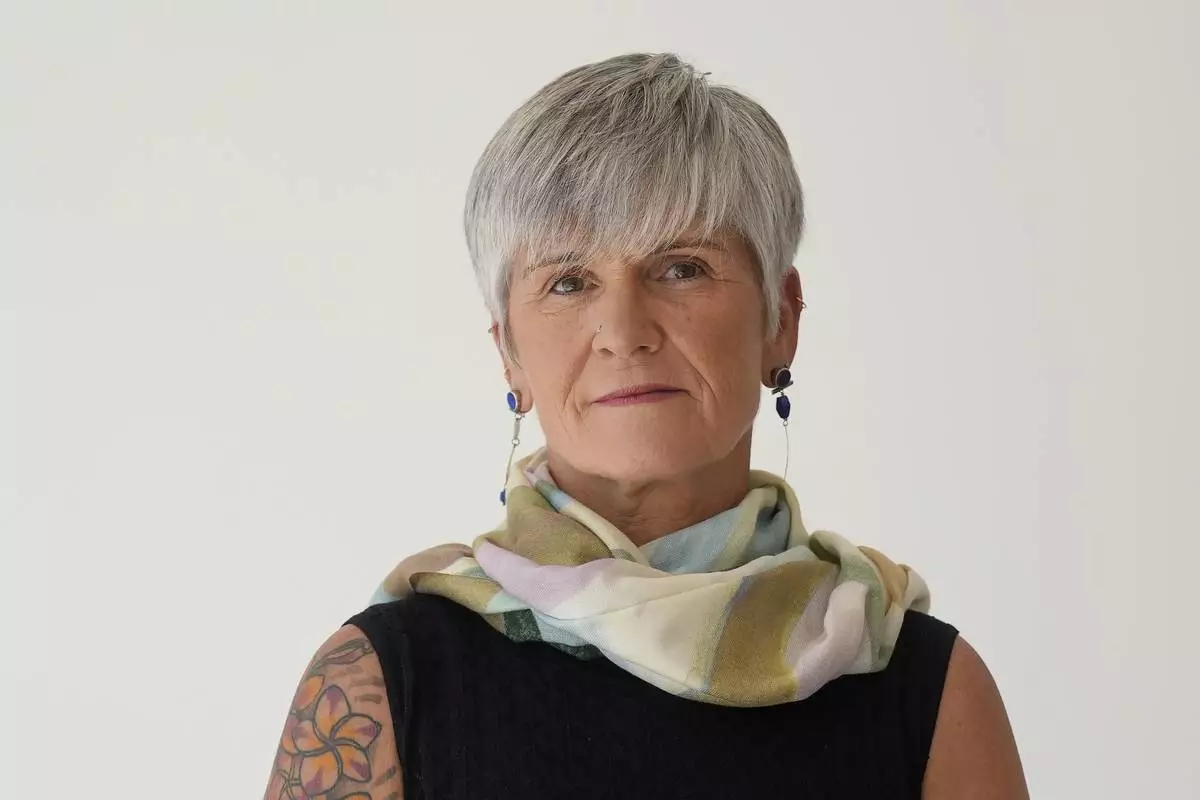
Marie Dageville poses for a portrait in San Carlos, Calif., Thursday, Nov. 14, 2024. (AP Photo/Jeff Chiu)
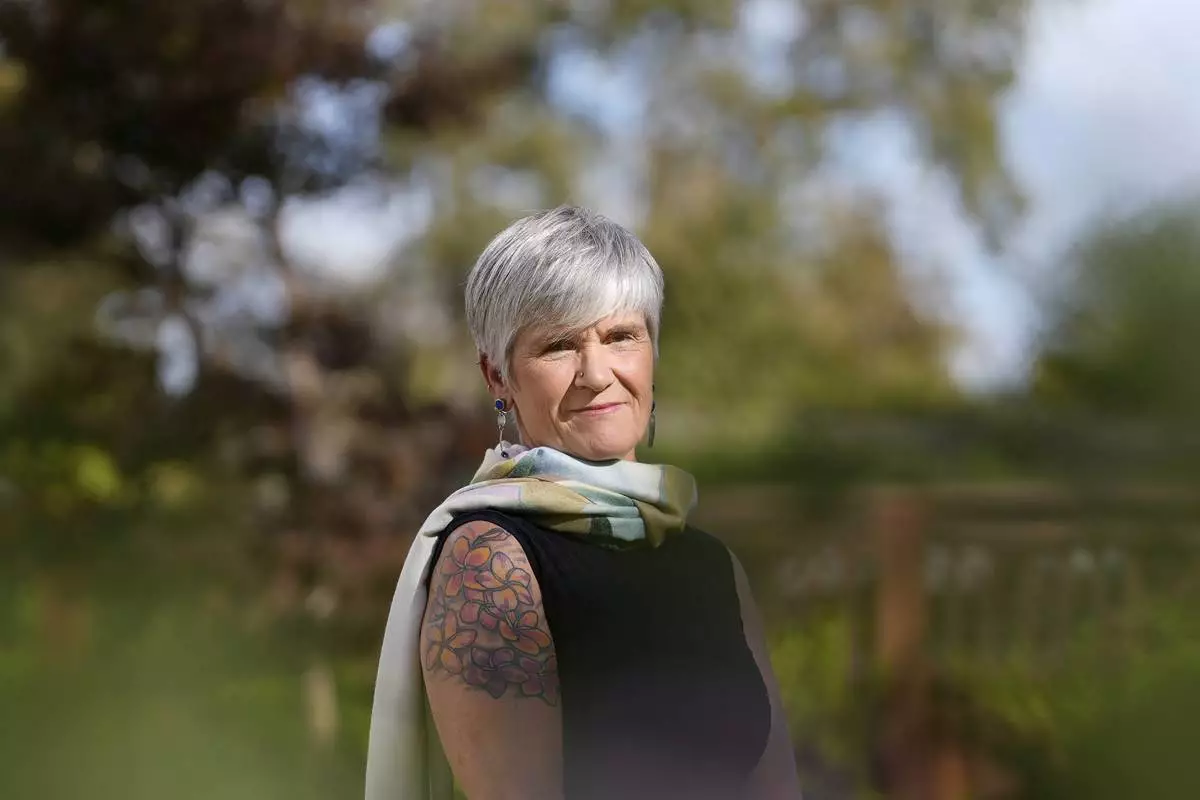
Marie Dageville poses for a portrait in San Carlos, Calif., Thursday, Nov. 14, 2024. (AP Photo/Jeff Chiu)
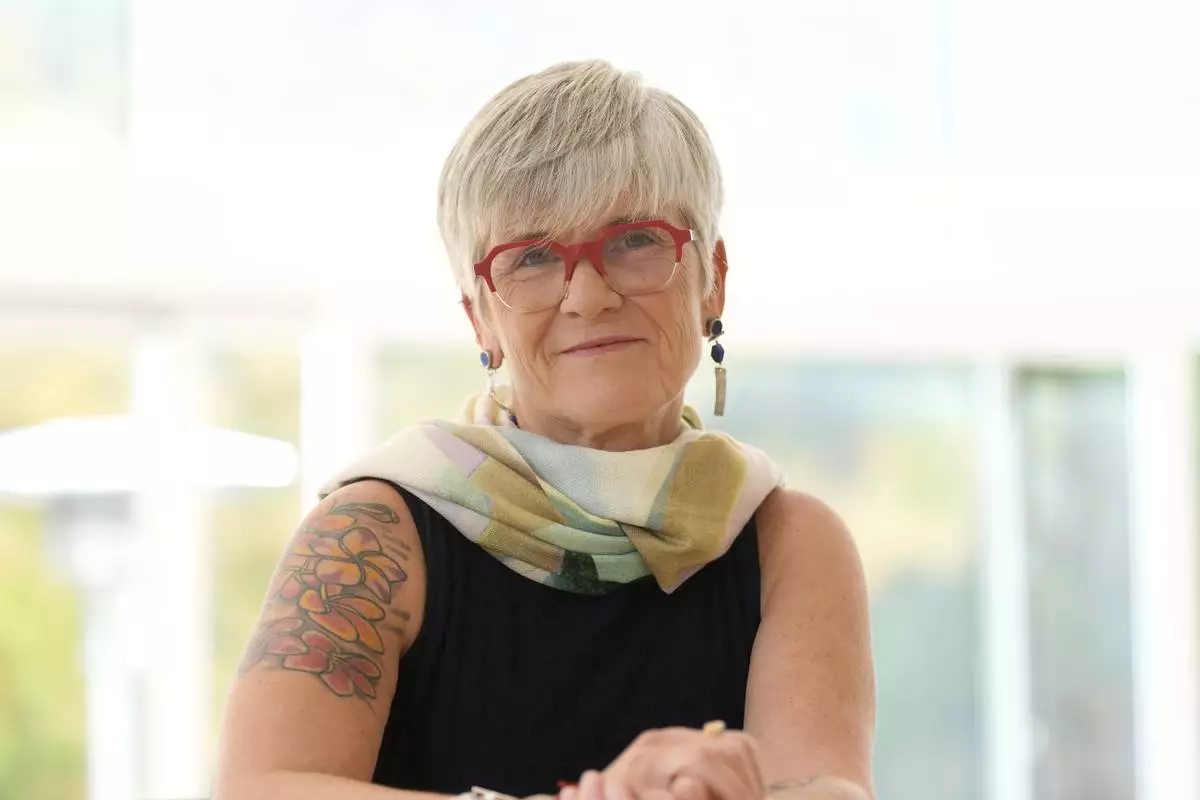
Marie Dageville poses for a portrait in San Carlos, Calif., Thursday, Nov. 14, 2024. (AP Photo/Jeff Chiu)