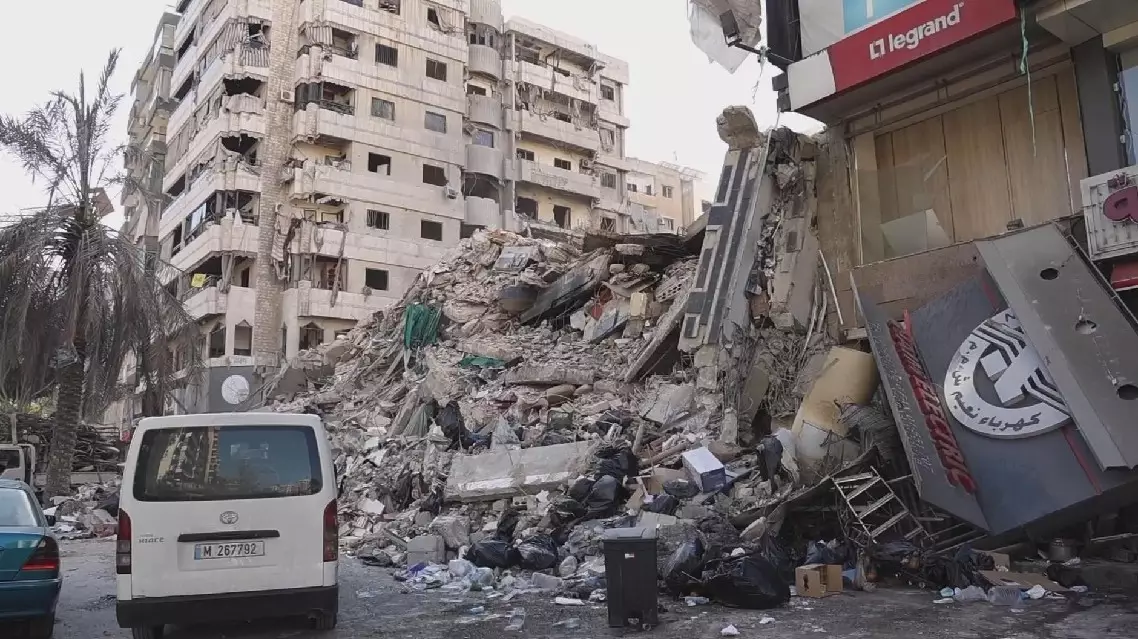
Residents in suburban Beirut have begun restoring their homes and businesses after a ceasefire agreement between Lebanon and Israel took effect last week.
Ali Hamadeh owns two fast-food restaurants in Dahieh, a suburb south of the Lebanese capital. His establishments narrowly escaped complete destruction after a bombing razed a neighboring building to the ground.
On the morning of November 12, shortly after the Israeli army issued an emergency evacuation order for the residents of a nearby building, two missiles struck the building, causing it to collapse instantly.
The blast was so powerful that it affected neighboring streets as well.
Several restaurants and shops on the ground floor of the building were buried under the rubble. Hamadeh's shops are still standing, but have suffered serious damage.
"(The neighboring building) was totally (destroyed). As you see, all the buildings have been hit," Hamadeh said.
The front door of his restaurant is now blocked by rubble, and the dining area on the second floor is in disarray, with power and water supplies temporarily interrupted. Hamadeh said that despite these challenges, he remains determined to renovate the space and reopen the restaurant.
"We will stay in this land, we will live and will show all the world that we are pure people that love life, actually. I'm not going to live anywhere (else). We are staying here," said the business owner.
Just days ago, the streets of Dahieh were empty and shrouded in fear. Now, with the cease-fire agreement in effect, they are gradually coming back to life.
"With the aid of other countries, resilient Lebanese residents have the courage to face such a huge disaster. Of course, we have begun to rebuild our homeland. Although we still sleep in the ruins and even eat dust, the important thing is that we have not given up our dignity," said Jihad Ayoub, a resident of Dahieh.
Lebanese residents begin lengthy task of rebuilding livelihoods
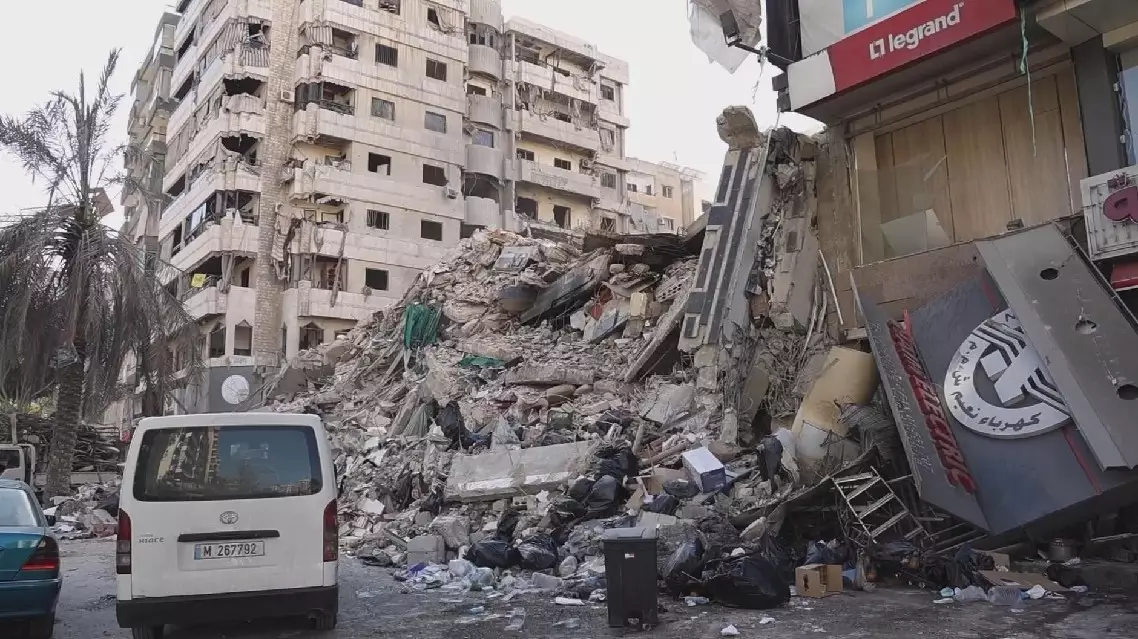
Lebanese residents begin lengthy task of rebuilding livelihoods