Nepali Prime Minister's ongoing visit to China marks a new beginning for the two countries, particularly in terms of economic development, said a senior leader of the Nepali Congress Party.
Nepali Prime Minister KP Sharma Oli is paying an official visit to China scheduled for Monday to Thursday, at the invitation of Chinese Premier Li Qiang.
Arjun Narasingha KC, a veteran Nepali Member of Parliament and senior leader of the Nepali Congress Party, is accompanying the Prime Minister's delegation on the visit to Beijing.
In an exclusive interview with China Global Television Network (CGTN) before the visit, he recalled the traditional friendship between the two countries, which, he said, demonstrated that Nepal is China's steadfast friend since the founding of the People's Republic of China.
"So we always give due importance to our relations with China. The Nepali Congress always give value to the relations with the Chinese people, at the same time, government-to-government relations, since the beginning, we have all the time the best relations," he said.
He emphasized that as a developing nation, Nepal's priority is to effectively leverage the advanced technologies and capital from its neighboring countries.
"I think it will be a new beginning between the two countries, so I'm very hopeful [for the future]. We are a developing nation so always our priority and trust is to properly capitalize on the new techniques and capital of our neighboring countries," he said.
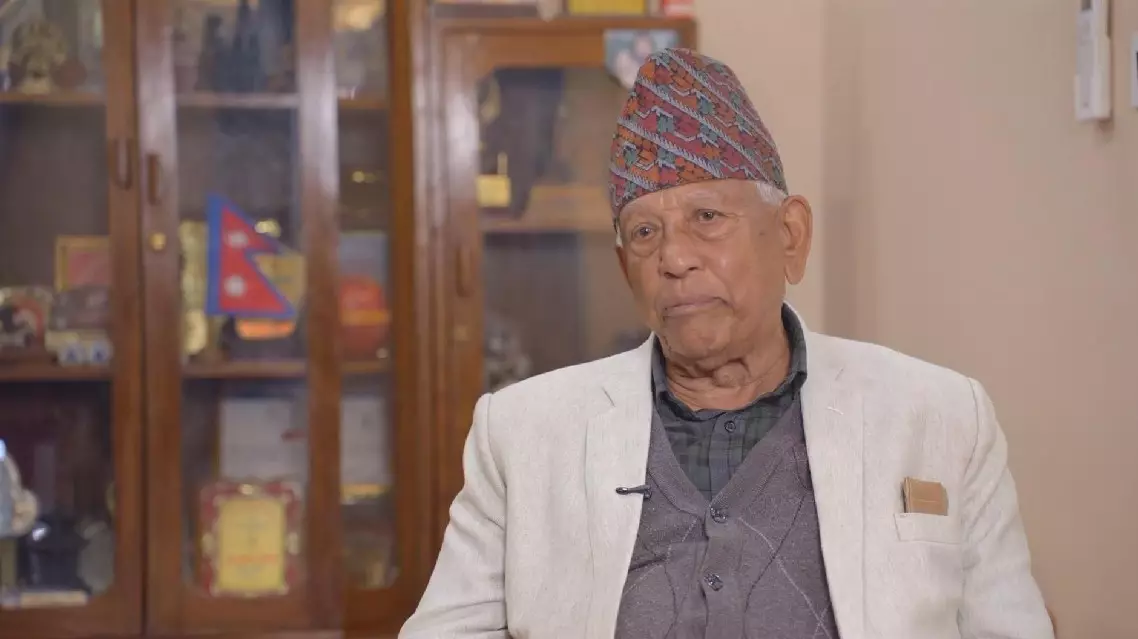
Nepali PM's visit to China marks new beginning of bilateral ties: senior official
China's commitment to its path of opening up will continue as a long-term national strategy and should increasingly be defined by inclusiveness, a national political advisor said Friday.
Zhou Hanmin, a member of the Standing Committee of the National Committee of the 14th Chinese People's Political Consultative Conference (CPPCC) and president of the Shanghai Public Diplomacy Association, made the remarks in an interview with China Media Group (CMG) during the annual political "two sessions" underway in Beijing.
"Opening-up is and has been a long-term national policy and a strategy ever since China opened itself up (to the world) some 48 years ago. Ever since China joined WTO (World Trade Organization), you could see it has fundamentally changed the formats of economic movements. So opening-up is a reference and also a driving force," he said.
Zhou stressed China must also invite less privileged nations to share in the prosperity of a more open world.
"Inclusiveness is one word that should be used to modify China's opening-up. I (previously) submitted a bill in CPPCC for the zero tariff for those least developed nations' exportation to China. Because for each and every China International Import Expo, you can see quite a large number of exhibitors coming from the least developed countries. We need to give them very genuine help. We are just in the situation of that. We just try to do not only with developed nations, but the Global South and rest of the countries, all together," he said.
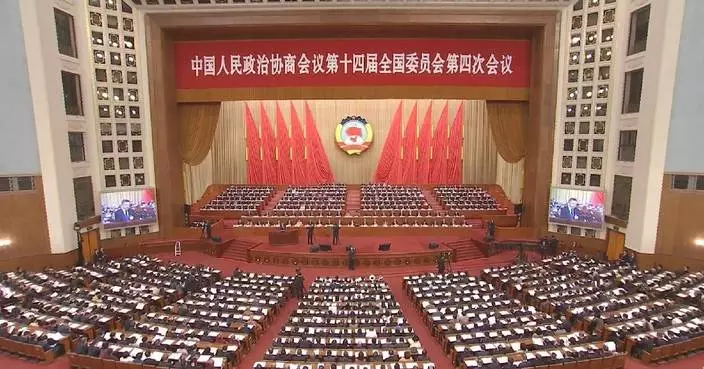
Zhou's comments come amid the ongoing "two sessions", the annual meetings of China's top legislature, the National People's Congress (NPC), and the top political advisory body, the National Committee of the CPPCC. Both bodies serve a five-year term and hold a plenary session each year, generally in March.
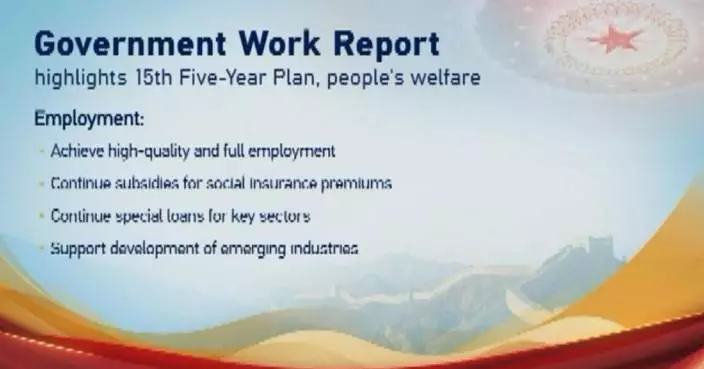
The fourth session of the 14th NPC and the fourth session of the 14th National Committee of the CPPCC kicked off in Beijing on Thursday and Wednesday, respectively. A main focus is the adoption of the country's 15th Five-Year Plan (2026-2030), a key blueprint guiding China's drive toward modernization. When asked about key signals from the plan that the international community should closely watch, Zhou outlined several key issues.
"We are now carrying on this Five-Year Plan in the most crucial period of time. We are going to generally modernize the country (in) another 10 years. In this five-year period of time, we need to focus more on creation. Creation not necessarily in the field of technology. Creation means the modernization of the governance, create lots of new things in the system and methods of governance. This is also important," Zhou said.
"The modernization of industrial systems, the further expansion of the ability of consumption, and we try to know very well the longevity, whatever solves people's daily needs. The last but not least, we try to understand fully international collaboration. Opening-up is still a driving force," he said.
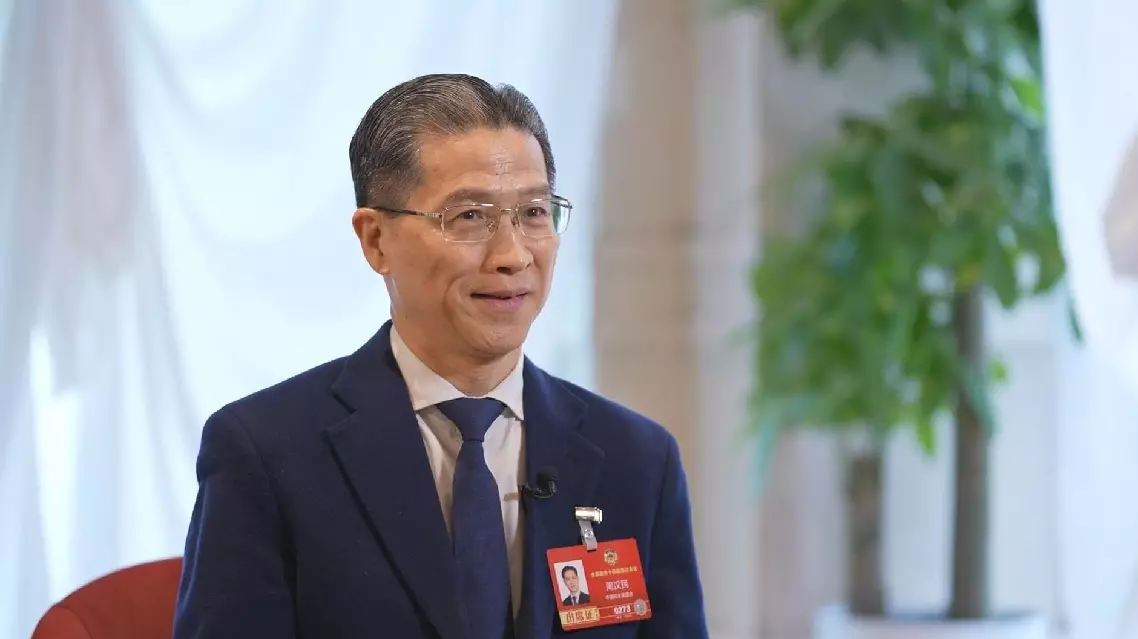
China's opening-up should continue path of inclusiveness: political advisor

China's opening-up should continue path of inclusiveness: political advisor