For nearly five decades, residents near the Atsugi air base in Japan's Kanagawa Prefecture have fought against the constant noise made by the U.S. and Japanese military aircraft.
Despite a recent court ruling which granted compensation, local plaintiffs have continued their battle for quieter skies, demanding an end to the "unbearable" disturbances.
The Naval Air Facility Atsugi, a shared facility between the U.S. military and Japan's Maritime Self-Defense Force, has long been a source of significant noise pollution for nearby communities. Over the past 46 years, residents have initiated multiple lawsuits seeking relief, but they still have no respite from the noise.
In late November, the Yokohama District Court ruled on the fifth lawsuit filed by the residents, ordering the Japanese government to provide financial compensation to those affected but rejecting a request for an injunction against nighttime and early morning flights. The plaintiffs said that this ruling does not address the core of their problem.
Shuji Oonami, leader of the plaintiffs in the fifth lawsuit, has spent years campaigning for the halting of U.S. military flights. In an interview with the China Central Television (CCTV) on Friday, he expressed his frustration over the ongoing situation, saying many locals are simply fed up with the noise.
"'Give us back our quiet skies.' This is the message we have expressed in the lawsuit, highlighting the public nuisance we are suffering. Here's a poster conveying the same message. The noise problem impacts children the most: making phone calls, going to and leaving school, spending time with family, and even trying to sleep, as is shown here. It's simply unbearable. The aircraft fly over several schools, and the noise is extremely loud," said Oonami in front of a poster conveying the same message.
Oonami's own home is located near the air base, and his daily life is haunted by the aircraft noise. He said the noise is still loud even after 22:00 at night.
In 1978, locals began to file the first noise lawsuit against the Atsugi base. Despite receiving some financial compensation in previous rulings, the constant roar of military aircraft has continued to disrupt their life. Over time, more and more residents have joined the rank of plaintiffs.
"We had over 70 people in the first lawsuit. The number increased to over 160 in the second lawsuit. After that, it grew to 5,000, then 7,000. Now, we have nearly 9,000 people. Many people support us, and many have joined our group of plaintiffs," said Oonami.
The latest court ruling, delivered on Nov. 20, acknowledged the noise damage and ordered the Japanese government to compensate the affected residents. However, the court rejected the request to restrict flights during early and late hours, a decision that Oonami and other plaintiffs find unacceptable.
In response, the plaintiffs filed an appeal to the Tokyo High Court on Tuesday, with hopes of securing a more favorable ruling.
"This is an unjust ruling. It completely ignores our concerns and has no regard for our sufferings. We will fight with all-out efforts. Depending on the situation, we may even take the case to the Supreme Court for a third trial. Therefore, we will have thorough discussions with the 8,000-plus plaintiffs and prepare for the next stage of the lawsuit," Oonami said.
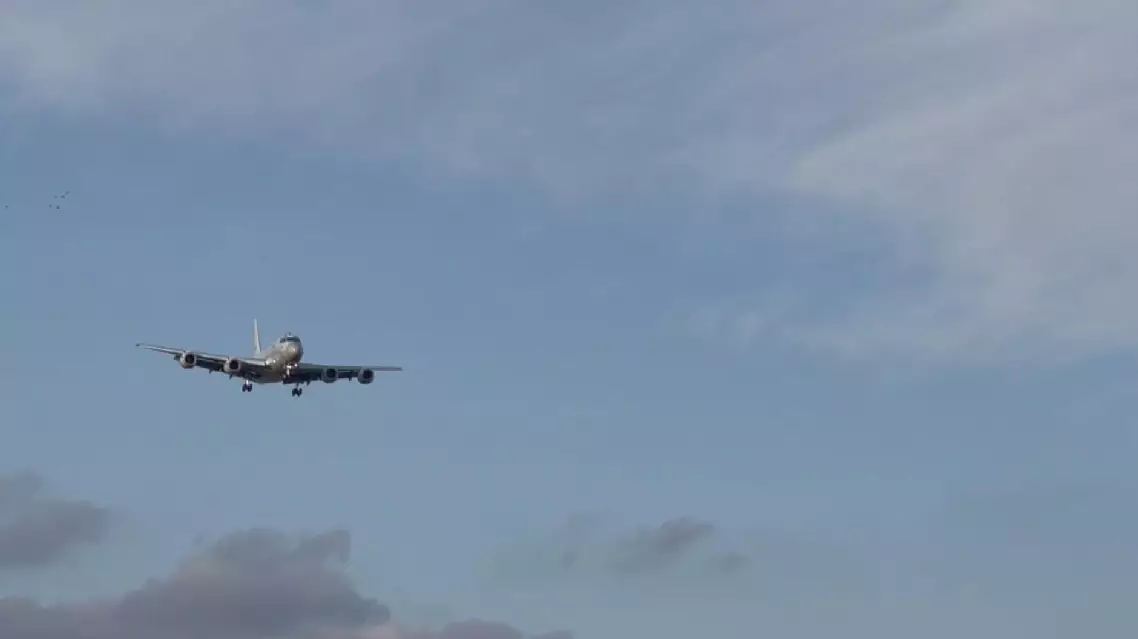
Japanese residents continue fighting against decades of US military jets noise