Chinese researchers have developed a biodegradable foam that is capable of removing 99.8 percent of microplastics in water sources that adversely affect health.
Small plastic particles in water have become one of the most concerning consumer pollutants due to their pervasive presence in water sources.
The researchers from Wuhan University and Huazhong University of Science and Technology developed a new reusable and biodegradable foam that can absorb microplastics in water with an efficiency of up to 99.8 percent in its first use.
This sustainable fibrous foam is made of chitin from squid bones and cellulose from cotton. It has a porous structure that can attract and interact with diverse microplastics commonly found in electronics, food packaging, textiles and other industrial products.
The team evaluated the foam's performance using samples from real-world water sources to see if the foam would work in water found in a natural setting.
"By testing in four real-water bodies, including irrigation water, lake water, seawater and pond water, we found that the material demonstrates good versatility. It can absorb up to 99.8 percent of microplastics in its first use, and can still maintain a removal rate of over 95 percent after being reused for five times," said Wu Yang, one of the researchers.
According to the researchers, the material's adsorptive capacity remains basically unaffected by inorganic particles, heavy metals, organic pollutants and microorganisms in water. It is also fully biodegradable, ensuring it not to cause secondary pollution in the environment.
"Our research reveals that the crystalline form of the chitin in squid bones has a higher reactivity, making it easier to transform into a foam and enabling it to absorb more microplastics. With China's significant squid catch, the abundant squid bones that are regarded as waste can be used as a raw material for extracting chitin to make more efficient all-biomass microplastic adsorptive foams," said Wu.
The team has already applied for a patent for this technology, hoping to bring it into real-world water treatment or home water purifiers in the near future.
"The application scenarios we are considering include in small lakes, water plants, even tap water pipes and household water purifiers, all of which are easily achievable," said Deng Hongbing, one of the researchers.

Chinese scientists develop biodegradable foam capable of removing microplastics from water
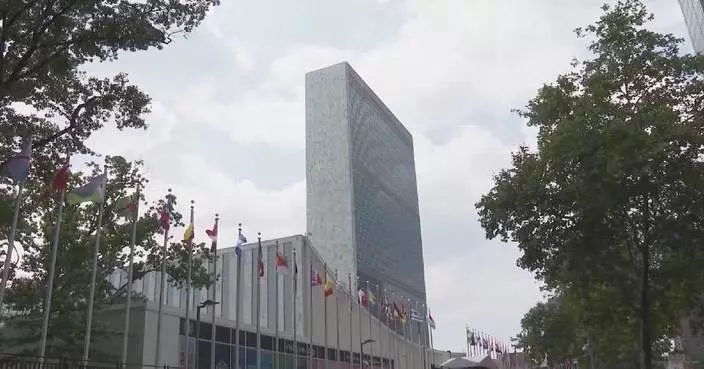
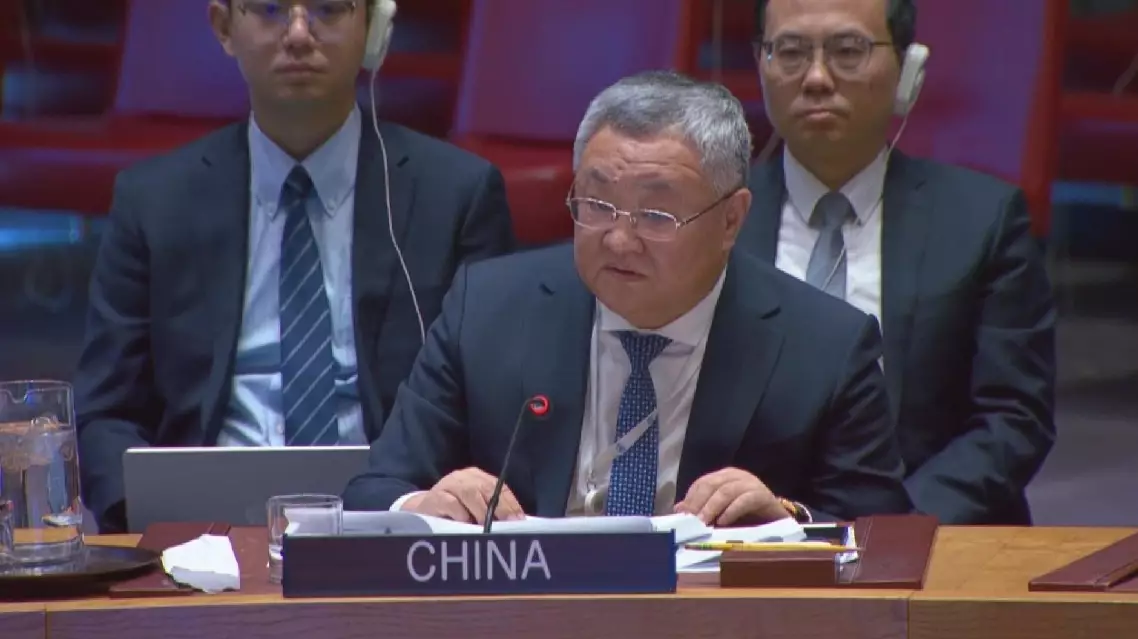
China's Permanent Representative to the United Nations (UN), Fu Cong, said that China supports the preservation of Yemen's national sovereignty, unity, and territorial integrity, and calls for political talks to address regional disputes
Fu made his statement at the 10105th meeting of the UN Security Council on the Middle East on Thursday.
"The international community should double its efforts and work together to promote an early political settlement of the Yemen issue. China supports the preservation of Yemen's sovereignty, unity, and territorial integrity. We urge all parties to address their differences through political dialogue, work towards early reconciliation and swift resumption of economic reconstruction. We urge all Yemeni parties to exercise calm and restraint, to refrain from the use of force or any actions that could reignite conflict, and to preserve stability on the ground. China will continue to work together with the international community to make unremitting efforts towards achieving a political settlement of the Yemeni issue and restoring peace and stability across the Middle East," Fu said.
During the meeting, the U.S. representative noted that ships bound for Houthi-controlled ports should strictly comply with the UN verification and inspection procedures to ensure full implementation of the arms embargo adopted in the UNSC Resolution 2216, with a deliberate emphasis on ships "originating from Chinese ports."
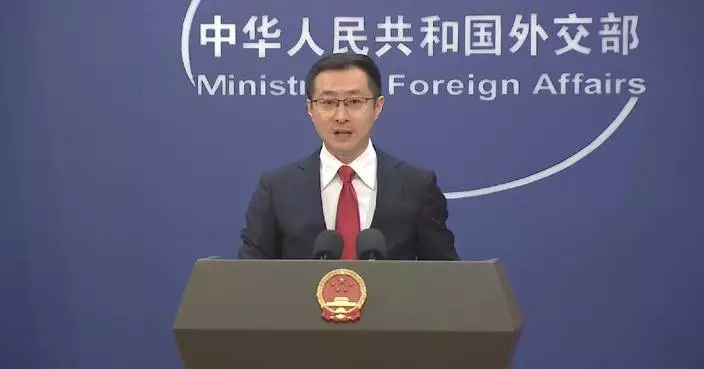
In response to the groundless innuendo, Fu emphasized that China has been implementing strict control over military and dual-use items, and the legal and normal commercial activities between Chinese companies and other countries should not be accused of.
"In response to the relevant statement by the U.S. representative, I wish to stress that China has been strictly upholding and implementing Council resolutions, and faithfully fulfilling its international obligations. China's approach to the export of military equipment has always been prudent and responsible. Our control of dual-use items has always been stringent. In the meantime, Chinese companies have the right under WTO rules and market principles to carry out normal commercial and trade cooperation with all countries. The U.S. representative, without presenting any evidence, has resorted to insinuation and groundless accusations against China. We find this regrettable, and we reject such accusations," Fu said.
China calls for political settlement of Yemen issue at Security Council meeting