A delegation of Russian naval officers had strengthened ties with their Chinese counterparts through activities such as sports and cultural exchange during their five-day friendly visit to a Chinese navy base in east China's Shandong Province started on Dec. 5.
The Russian flotilla, which comprises corvettes Aldar Tsydenzhapov, Rezkiy, and Gromkiy, and sea tanker Pechenga, arrived in the base in Qingdao City on Thursday. The visit is expected to deepen mutual understanding and friendship between the navies of the two countries.
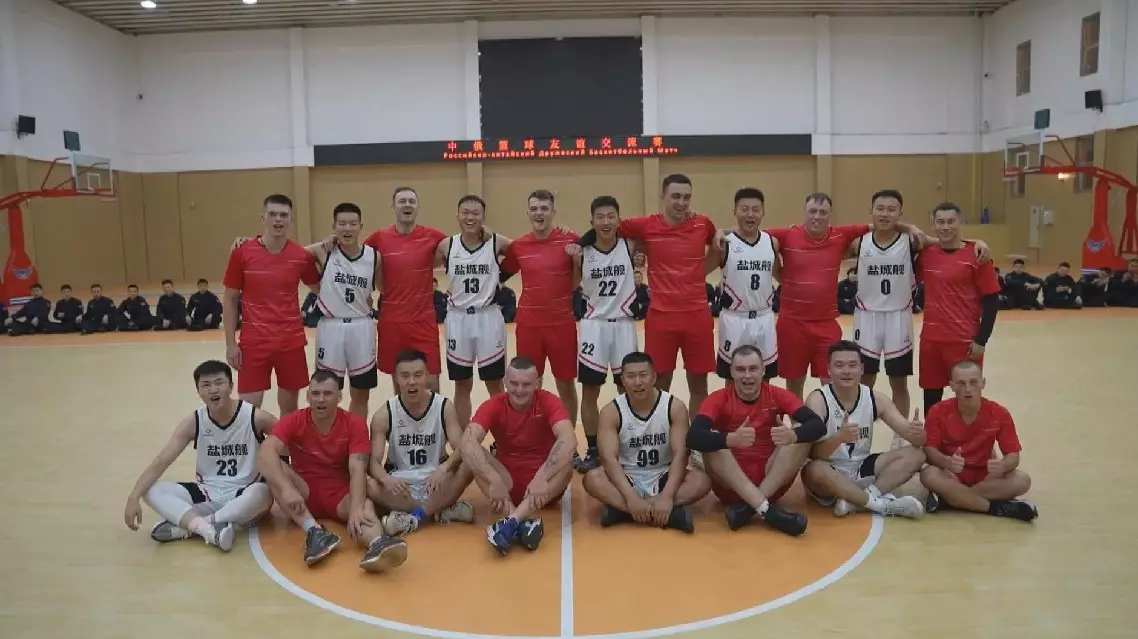
Among the highlights of the visit was a basketball friendship match, where both sides showcased their athletic prowess and teamwork spirit.
"I believe this match does not only demonstrate the sportsmanship of the two countries' sailors but also can be regarded as a platform for cultural exchange. I look forward to more opportunities for mutual exchanges like this. It can strengthen our relationships and expand cooperation while fostering friendship," said Chinese officer Cao Zhihao.
The delegation also visited the People's Liberation Army (PLA) Naval Museum, where they showed interest in many of the exhibits, including a piece of shrapnel extracted from the head of navy veteran Mai Xiande. The shrapenl is a reminder of the fierce naval battles against the Kuomintang navy about six decades ago, where Mai, serving as an engine technician on a naval vessel, displayed remarkable bravery. During the battle, shrapnel struck his forehead, causing a severe injury that left him temporarily blind. Despite the excruciating pain, he persevered, resolving equipment malfunctions while remaining at his post until the conflict concluded.
The museum also featured a gift from the Korean People's Army - a branch from the battlefield of Shangganling, measuring just 85 centimeters long, embedded with 35 pieces of artillery shrapnel. The battle of Shangganling, which took place in October 1952, is one of the most heroic battles in the War to Resist U.S. Aggression and Aid Korea.
"During their visit, I found that these foreign friends were quite interested (to know the history behind) the exhibited shrapnel that hit Mai Xiande's forehead and the withered branch from the Battle of Shangganling. They said that our explanations left a profound impression on them. This visit serves as an important channel for communication, allowing the foreign friends to better understand the development of the People's Navy from its humble beginnings to its current strong stature, while also promoting our naval culture," said Li Jing, a guide at the museum.
Officers and sailors of the two navies have also carried out reciprocal ship visits and had exchanges on professional skills during the visit.
Russian, Chinese naval officers strengthen ties through sports, cultural exchange