Skip to Content Facebook Feature Image

Bangladesh and India hold talks aimed at defusing escalating tensions

News

Bangladesh and India hold talks aimed at defusing escalating tensions
News

News

Bangladesh and India hold talks aimed at defusing escalating tensions

2024-12-09 21:23 Last Updated At:21:30

DHAKA, Bangladesh (AP) — The foreign secretaries of Bangladesh and India met Monday in Dhaka to discuss their strained relations, including the growing tensions after former Bangladeshi premier Sheikh Hasina fled into exile in India in August.

This is the first high-level visit by an Indian official since massive protests ended Hasina’s 15-year rule.

More Images
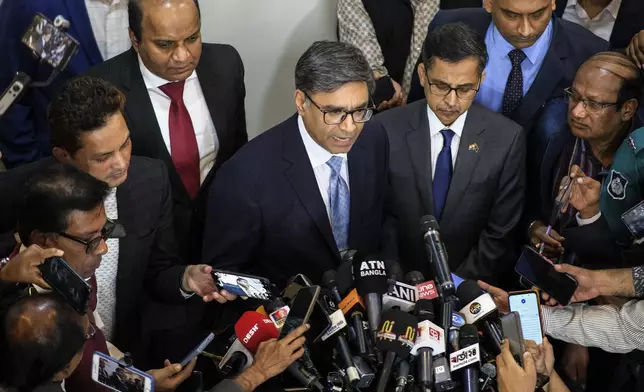
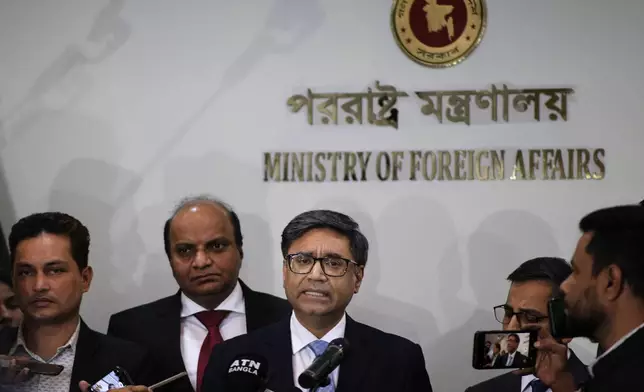
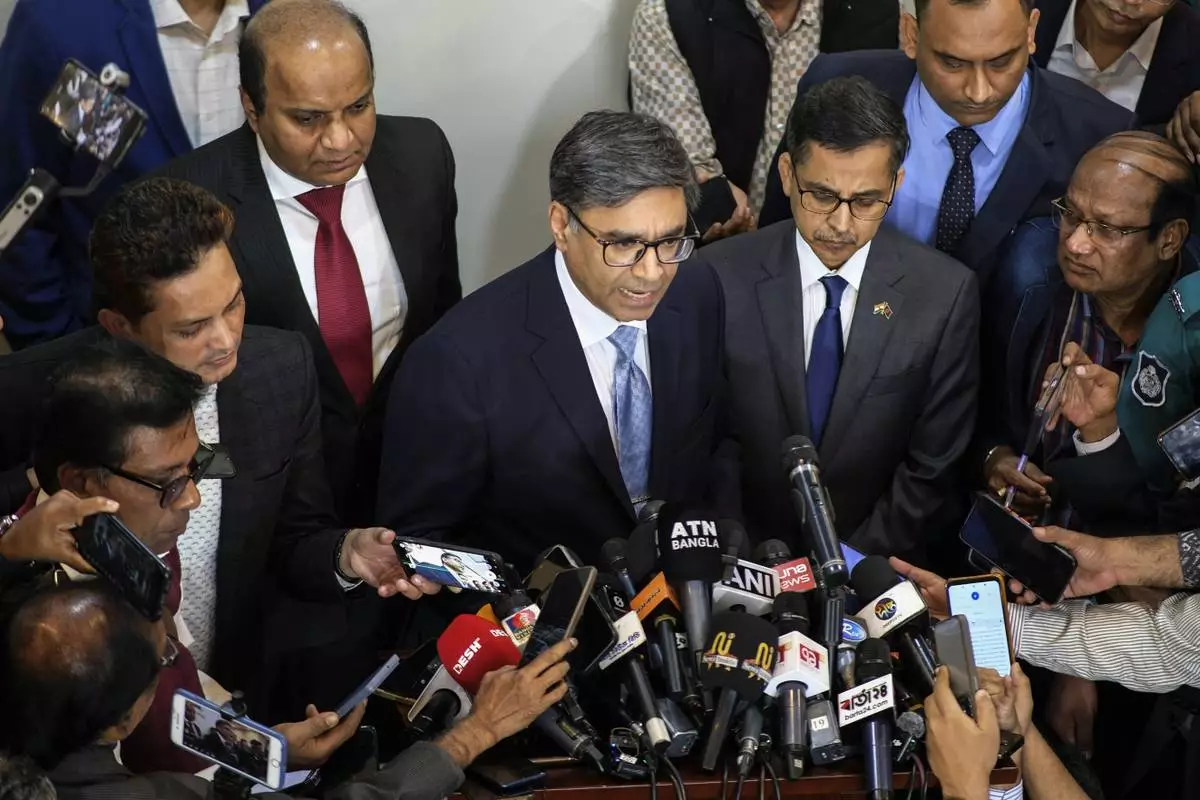
Indian Foreign Secretary Vikram Misra speaks to the media after meeting his Bangladeshi counterpart at the Ministry of Foreign Affairs in Dhaka, Bangladesh, Monday, Nov. 9, 2024. (AP Photo/Mahmud Hossain Opu)
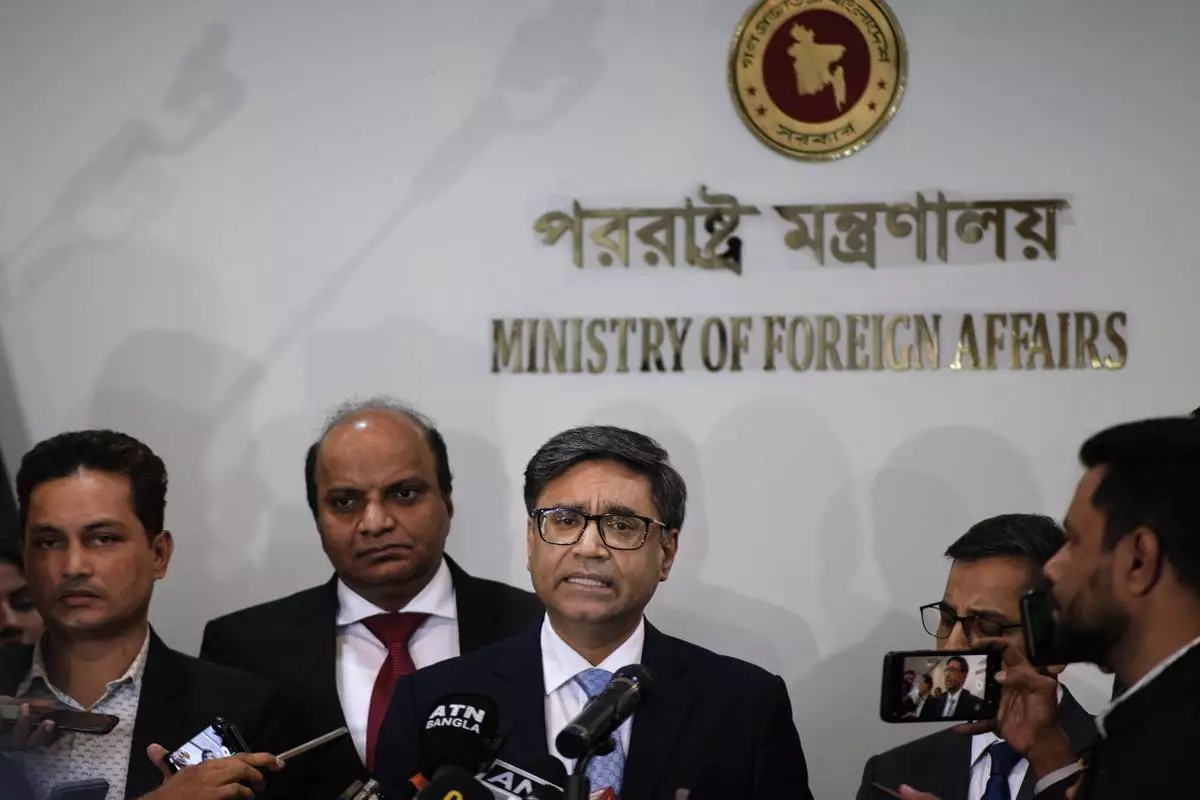
Indian Foreign Secretary Vikram Misra speaks to the media after meeting his Bangladeshi counterpart at the Ministry of Foreign Affairs in Dhaka, Bangladesh, Monday, Nov. 9, 2024. (AP Photo/Mahmud Hossain Opu)
Indian Foreign Secretary Vikram Misra speaks to the media after meeting his Bangladeshi counterpart at the Ministry of Foreign Affairs in Dhaka, Bangladesh, Monday, Nov. 9, 2024. (AP Photo/Mahmud Hossain Opu)

Indian Foreign Secretary Vikram Misra speaks to the media after meeting his Bangladeshi counterpart at the Ministry of Foreign Affairs in Dhaka, Bangladesh, Monday, Nov. 9, 2024. (AP Photo/Mahmud Hossain Opu)

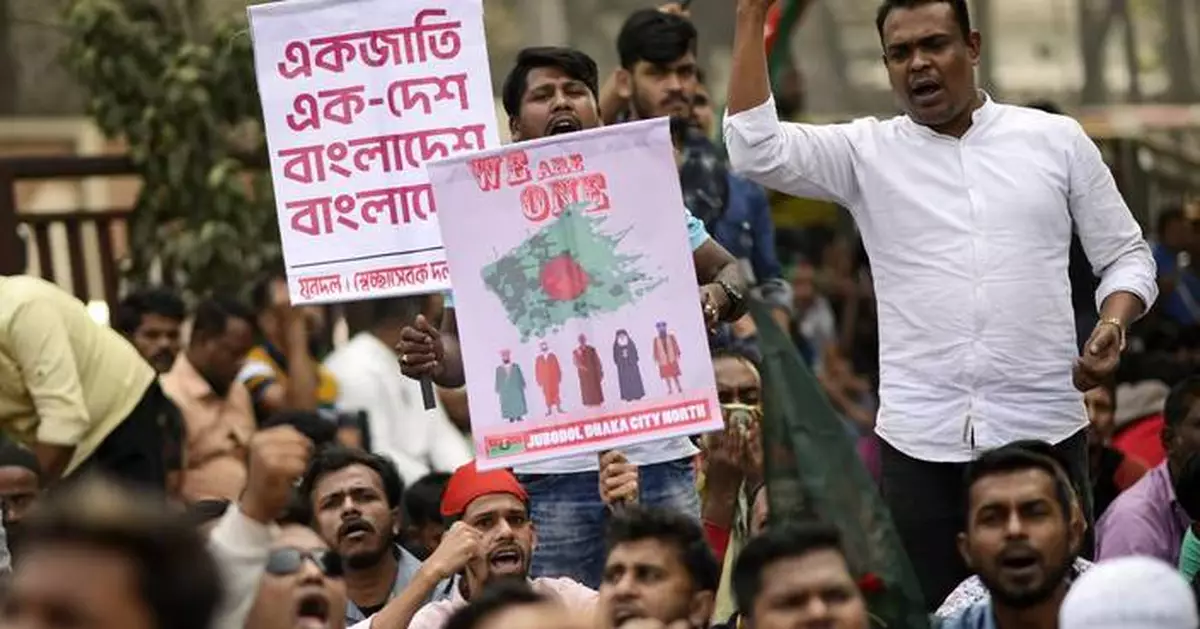
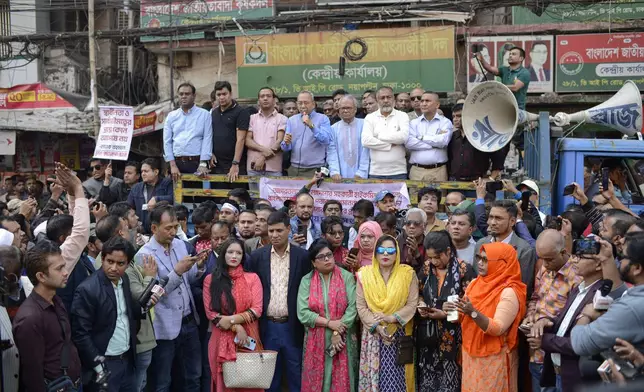
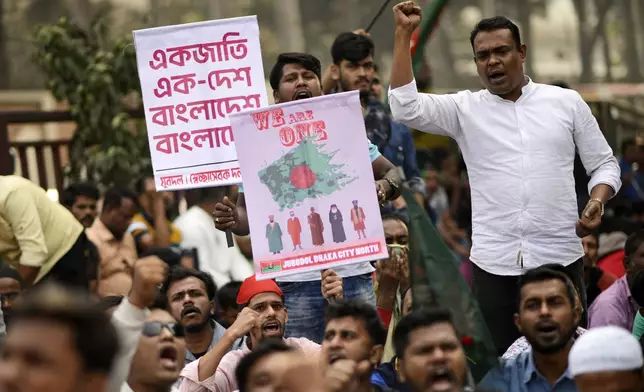
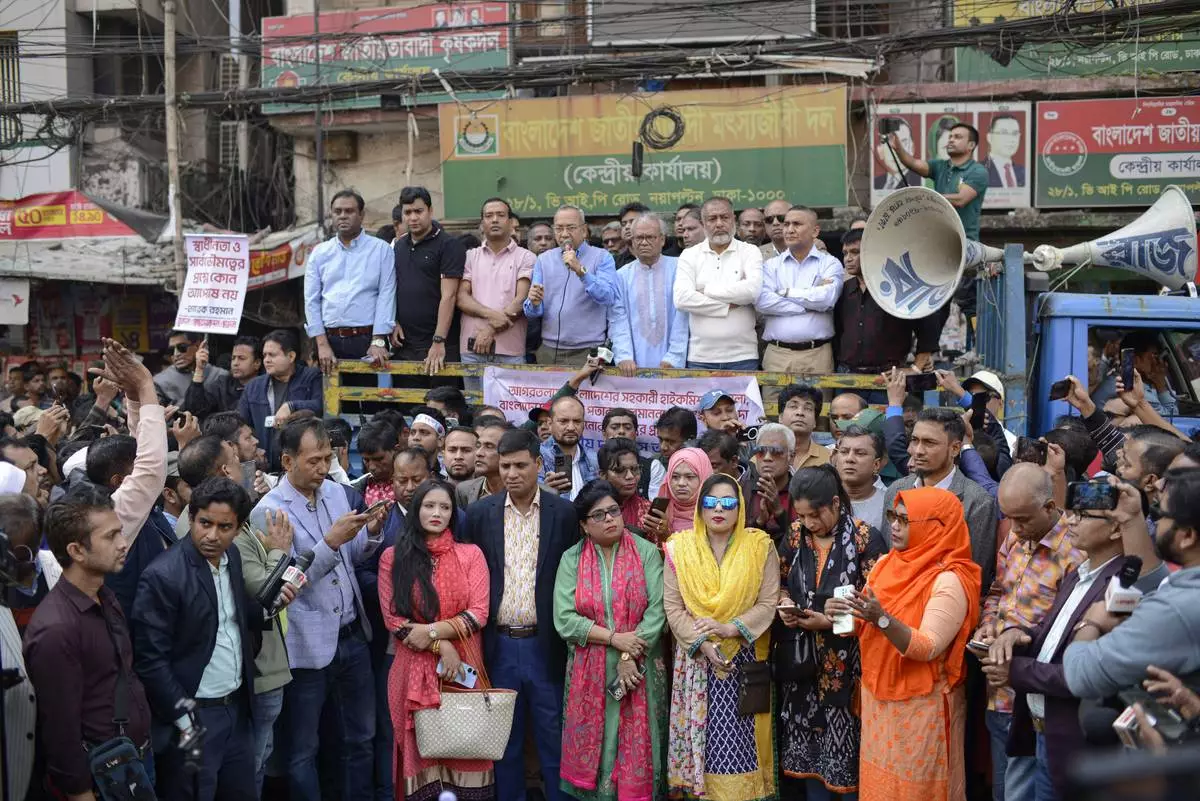
Supporters of Bangladesh's former Prime Minister Khaleda Zia and her Bangladesh Nationalist Party (BNP) participate in an anti-India protest in Dhaka, Bangladesh, Sunday, Dec. 8, 2024. (AP Photo/Mahmud Hossain Opu)
Supporters of Bangladesh's former Prime Minister Khaleda Zia and her Bangladesh Nationalist Party (BNP) participate in an anti-India protest in Dhaka, Bangladesh, Sunday, Dec. 8, 2024. (AP Photo/Mahmud Hossain Opu)

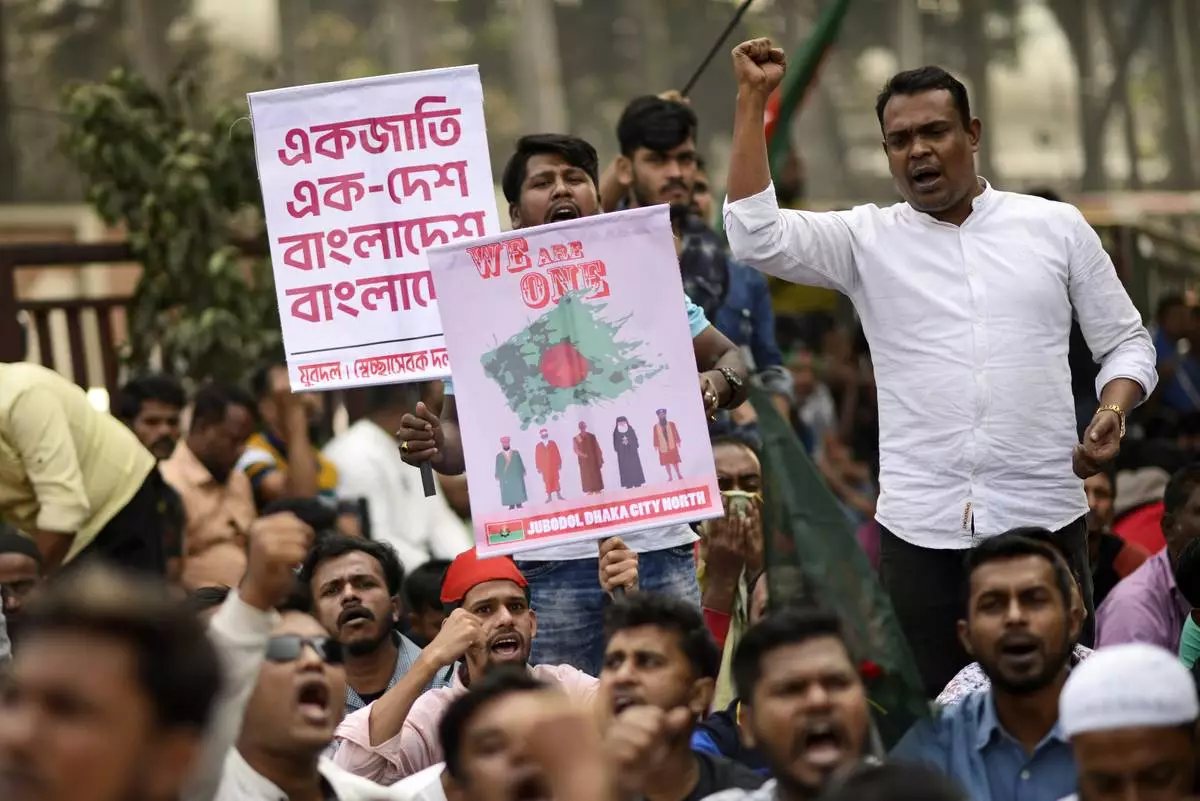
Supporters of Bangladesh's former Prime Minister Khaleda Zia and her Bangladesh Nationalist Party (BNP) shout slogans during an anti-India protest outside the Indian High Commission in Dhaka, Bangladesh Sunday, Dec. 8, 2024. A banner, rear, reads "One People, One Country, Bangladesh." (AP Photo/Mahmud Hossain Opu)

Supporters of Bangladesh's former Prime Minister Khaleda Zia and her Bangladesh Nationalist Party (BNP) shout slogans during an anti-India protest outside the Indian High Commission in Dhaka, Bangladesh Sunday, Dec. 8, 2024. A banner, rear, reads "One People, One Country, Bangladesh." (AP Photo/Mahmud Hossain Opu)

Tensions spiked further over the recent arrest of a Hindu spiritual leader in Bangladesh, currently run by the interim government led by Nobel laureate Muhammad Yunus. India also stopped issuing visas to Bangladeshis except for emergency medical visas after Hasina’s ouster while many Indian nationals taking part in infrastructure projects left Bangladesh because of security threats.

Alleged assaults targeting minority Hindus in Bangladesh and an attack on a Bangladesh diplomatic mission in India featured prominently in Monday's talks between the Indian Foreign Secretary Vikram Misri and his Bangladeshi counterpart, Mohammad Jashim Uddin.

After the meeting, Misri told reporters that there wasn't any reason for the mutually beneficial relationship between the two countries not to continue.

“To that end, therefore, I have underlined today India’s desire to work closely with the interim government of Bangladesh,” he said.

Misri also said he discussed with Uddin recent developments and relayed "concerns, including those related to the safety, security and welfare of the minorities.”

In a media statement later Monday, India's Ministry of External Affairs said that Misri highlighted New Delhi's support for “a democratic, stable, peaceful, progressive and inclusive Bangladesh.”

He also reiterated India’s willingness to build a positive and constructive relationship with Dhaka, based on mutual trust and respect and mutual sensitivity to each other’s concerns and interests, the statement added.

Separately, Bangladesh's Uddin told reporters that Bangladesh asked India not to interfere in its internal affairs, Dhaka-based Daily Star newspaper reported.

“We said people of all religions in Bangladesh freely practice their faiths. This is our internal affair. It is not expected (of other countries) to make comments on our internal affairs. We don’t do it for other countries,” the English-language daily quoted him as saying.

Following the ouster of Hasina, thought to be a trusted friend of India, minorities — particularly Hindus — have reported widespread attacks in the Muslim-majority nation of Bangladesh, which Yunus say are widely exaggerated.

Most Bangladeshi Hindus are thought to be supporters of Hasina’s secular Awami League party.

Last month's arrest of Hindu leader Chinmoy Das Prabhu — who led large rallies in recent months demanding better security for Hindus living in Bangladesh — further fueled more anger. Hindu leaders in Bangladesh said lawyers willing to stand for Prabhu seeking his bail were threatened, and earlier this month no lawyers appeared in court for him when a court was scheduled to hear his bail petition.

Hindus recently attacked a Bangladeshi diplomatic office in Agartala, the capital of the northeastern Indian state of Tripura, demanding his release. Protesters also burned Bangladeshi flags in Kolkata, the capital of India’s eastern state of West Bengal, triggering protests and marches by political parties including the Bangladesh Nationalist Party headed by Khaleda Zia, Hasina’s main political foe, and Islamist groups.

In Bangladesh, reports of the desecration of the Indian flag, with some burning it and others laying it on the floor for people to step on, strained relations further.

The Indian foreign secretary is expected to meet Yunus and Foreign Adviser Touhid Hossain, in courtesy calls, before leaving for New Delhi later Monday.
Indian Foreign Secretary Vikram Misra speaks to the media after meeting his Bangladeshi counterpart at the Ministry of Foreign Affairs in Dhaka, Bangladesh, Monday, Nov. 9, 2024. (AP Photo/Mahmud Hossain Opu)
Indian Foreign Secretary Vikram Misra speaks to the media after meeting his Bangladeshi counterpart at the Ministry of Foreign Affairs in Dhaka, Bangladesh, Monday, Nov. 9, 2024. (AP Photo/Mahmud Hossain Opu)
Indian Foreign Secretary Vikram Misra speaks to the media after meeting his Bangladeshi counterpart at the Ministry of Foreign Affairs in Dhaka, Bangladesh, Monday, Nov. 9, 2024. (AP Photo/Mahmud Hossain Opu)

Indian Foreign Secretary Vikram Misra speaks to the media after meeting his Bangladeshi counterpart at the Ministry of Foreign Affairs in Dhaka, Bangladesh, Monday, Nov. 9, 2024. (AP Photo/Mahmud Hossain Opu)

Supporters of Bangladesh's former Prime Minister Khaleda Zia and her Bangladesh Nationalist Party (BNP) participate in an anti-India protest in Dhaka, Bangladesh, Sunday, Dec. 8, 2024. (AP Photo/Mahmud Hossain Opu)
Supporters of Bangladesh's former Prime Minister Khaleda Zia and her Bangladesh Nationalist Party (BNP) participate in an anti-India protest in Dhaka, Bangladesh, Sunday, Dec. 8, 2024. (AP Photo/Mahmud Hossain Opu)

Supporters of Bangladesh's former Prime Minister Khaleda Zia and her Bangladesh Nationalist Party (BNP) shout slogans during an anti-India protest outside the Indian High Commission in Dhaka, Bangladesh Sunday, Dec. 8, 2024. A banner, rear, reads "One People, One Country, Bangladesh." (AP Photo/Mahmud Hossain Opu)
Supporters of Bangladesh's former Prime Minister Khaleda Zia and her Bangladesh Nationalist Party (BNP) shout slogans during an anti-India protest outside the Indian High Commission in Dhaka, Bangladesh Sunday, Dec. 8, 2024. A banner, rear, reads "One People, One Country, Bangladesh." (AP Photo/Mahmud Hossain Opu)
WASHINGTON (AP) — Venezuelan opposition leader María Corina Machado was at the White House on Thursday discussing her country's future with President Donald Trump even after he publicly dismissed her credibility to take over after an audacious U.S. military raid captured then-President Nicolás Maduro.

Trump has raised doubts about his stated commitment to backing democratic rule in Venezuela. His administration has signaled its willingness to work with acting President Delcy Rodríguez, who was Maduro’s vice president and, along with others in the deposed leader’s inner circle, remains in charge of day-to-day governmental operations.

In endorsing Rodríguez so far, Trump has sidelined Machado, who has long been a face of resistance in Venezuela and sought to cultivate relationships with Trump and key administration voices like Secretary of State Marco Rubio among the American right wing in a gamble to ally herself with the U.S. government.

White House press secretary Karoline Leavitt said Trump was expecting a positive discussion during the lunchtime meeting and called Machado “a remarkable and brave voice” for the people of Venezuela.

The White House said Machado sought the face-to-face meeting without setting expectations for what would occur. Her party is widely believed to have won 2024 elections rejected by Maduro. Machado previously offered to share with Trump the Nobel Peace Prize she won last year, an honor he has coveted.

Leavitt said Trump is committed to seeing Venezuela hold elections “one day,” but wouldn’t say when that might happen.

Machado plans to have a meeting at the Senate later Thursday. Trump has called her “a nice woman” while indicating they might not touch on major issues in their talks Thursday.

Her Washington swing began after U.S. forces in the Caribbean Sea seized another sanctioned oil tanker that the Trump administration says had ties to Venezuela. It is part of a broader U.S. effort to take control of the South American country’s oil after U.S. forces seized Maduro and his wife at a heavily guarded compound in the Venezuelan capital of Caracas and brought them to New York to stand trial on drug trafficking charges.

The White House says Venezuela has been fully cooperating with the Trump administration since Maduro’s ouster.

Rodríguez, the acting president, herself has adopted a less strident position toward Trump and his “America First” policies toward the Western Hemisphere, saying she plans to continue releasing prisoners detained under Maduro — a move thought to have been made at the behest of the Trump administration. Venezuela released several Americans this week.

Trump, a Republican, said Wednesday that he had a “great conversation” with Rodríguez, their first since Maduro was ousted.

“We had a call, a long call. We discussed a lot of things,” Trump said during an Oval Office bill signing. “And I think we’re getting along very well with Venezuela.”

Even before indicating the willingness to work with Venezuela's interim government, Trump was quick to snub Machado. Just hours after Maduro's capture, Trump said of Machado that “it would be very tough for her to be the leader. She doesn’t have the support within or the respect within the country.”

Machado has steered a careful course to avoid offending Trump, notably after winning last year’s Nobel Peace Prize, which Trump wanted to win himself. She has since thanked Trump. Her offer to share the peace prize with him was rejected by the Nobel Institute.

Machado’s whereabouts have been largely unknown since she went into hiding early last year after being briefly detained in Caracas. She briefly reappeared in Oslo, Norway, in December after her daughter received the Nobel Peace Prize on her behalf.

The industrial engineer and daughter of a steel magnate began challenging the ruling party in 2004, when the nongovernmental organization she co-founded, Súmate, promoted a referendum to recall then-President Hugo Chávez. The initiative failed, and Machado and other Súmate executives were charged with conspiracy.

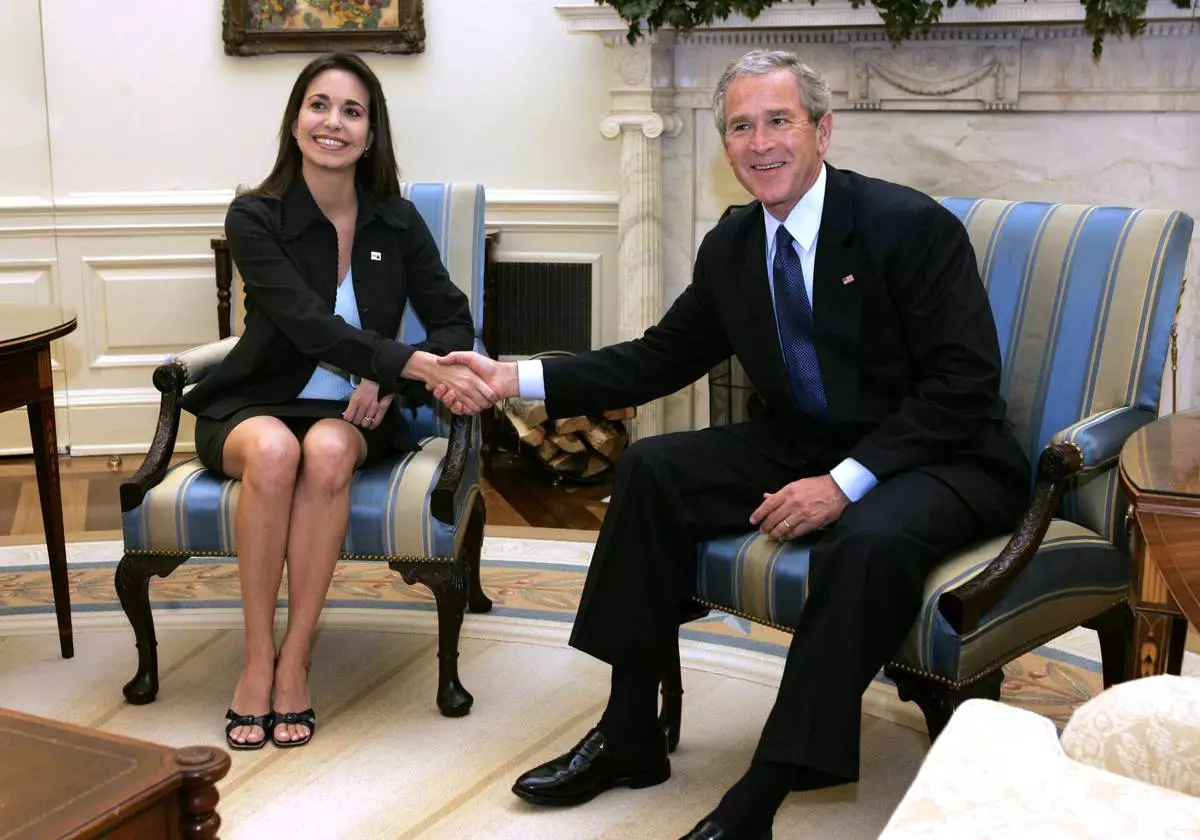
A year later, she drew the anger of Chávez and his allies again for traveling to Washington to meet President George W. Bush. A photo showing her shaking hands with Bush in the Oval Office lives in the collective memory. Chávez considered Bush an adversary.

Almost two decades later, she marshaled millions of Venezuelans to reject Chávez’s successor, Maduro, for another term in the 2024 election. But ruling party-loyal electoral authorities declared him the winner despite ample credible evidence to the contrary. Ensuing anti-government protests ended in a brutal crackdown by state security forces.

Garcia Cano reported from Caracas, Venezuela, and Janetsky from Mexico City. AP Diplomatic Writer Matthew Lee in Washington contributed to this report.

FILE - U.S. President George Bush, right, meets with Maria Corina Machado, executive director of Sumate, a non-governmental organization that defends Venezuelan citizens' political rights, in the Oval Office of the White House, Washington, May 31, 2005. (AP Photo/Charles Dharapak, File)

FILE - U.S. President George Bush, right, meets with Maria Corina Machado, executive director of Sumate, a non-governmental organization that defends Venezuelan citizens' political rights, in the Oval Office of the White House, Washington, May 31, 2005. (AP Photo/Charles Dharapak, File)

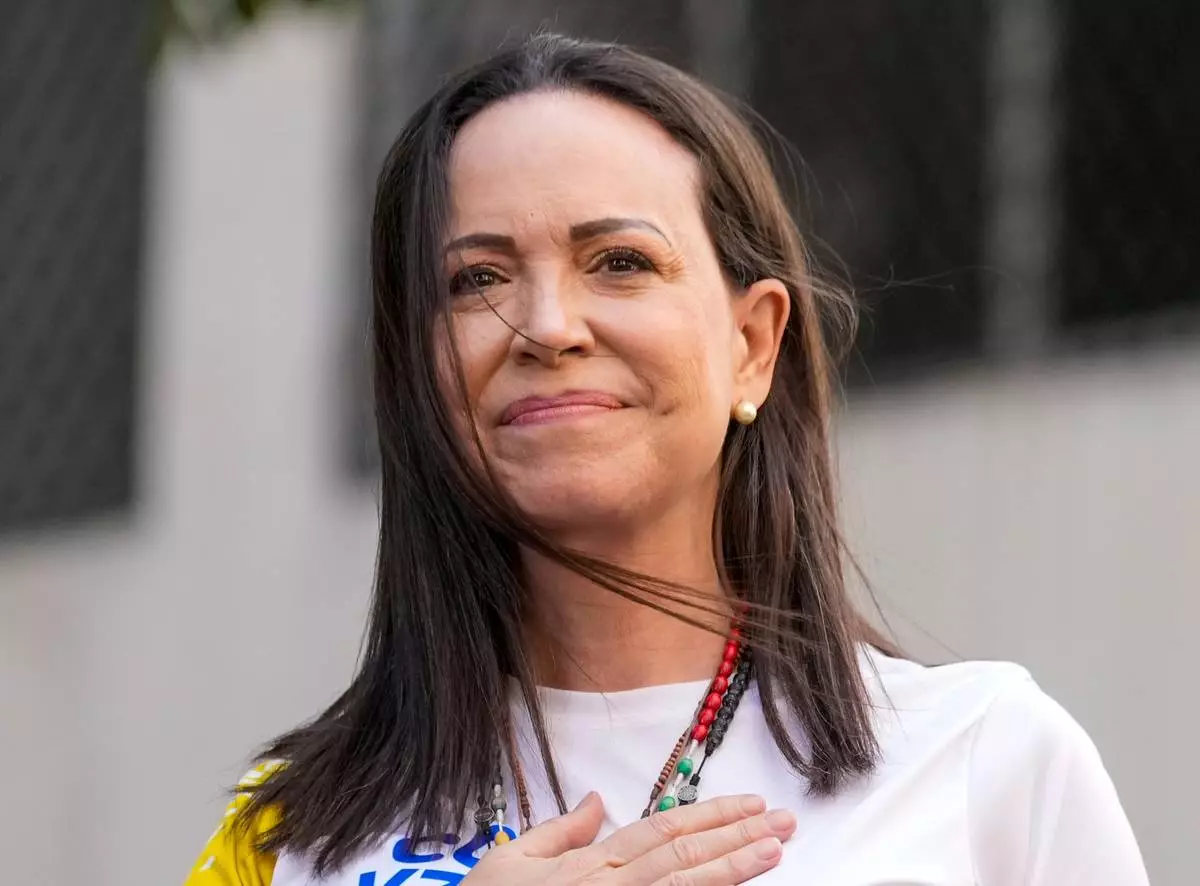
FILE - Opposition leader Maria Corina Machado gestures to supporters during a protest against President Nicolas Maduro the day before his inauguration for a third term, in Caracas, Venezuela, Thursday, Jan. 9, 2025. (AP Photo/Ariana Cubillos, file)

FILE - Opposition leader Maria Corina Machado gestures to supporters during a protest against President Nicolas Maduro the day before his inauguration for a third term, in Caracas, Venezuela, Thursday, Jan. 9, 2025. (AP Photo/Ariana Cubillos, file)

Recommended Articles