Skip to Content Facebook Feature Image

Trump announces outlines of health care plan he wants Congress to consider

News

Trump announces outlines of health care plan he wants Congress to consider
News

News

Trump announces outlines of health care plan he wants Congress to consider

2026-01-16 08:54 Last Updated At:09:00

WASHINGTON (AP) — President Donald Trump on Thursday announced the outlines of a health care plan he wants Congress to take up as Republicans have faced increasing pressure to address rising health costs after lawmakers let subsidies expire.

The cornerstone is his proposal to send money directly to Americans for health savings accounts so they can handle insurance and health costs as they see fit. Democrats have rejected the idea as a paltry substitute for the tax credits that had helped lower monthly premiums for many people.

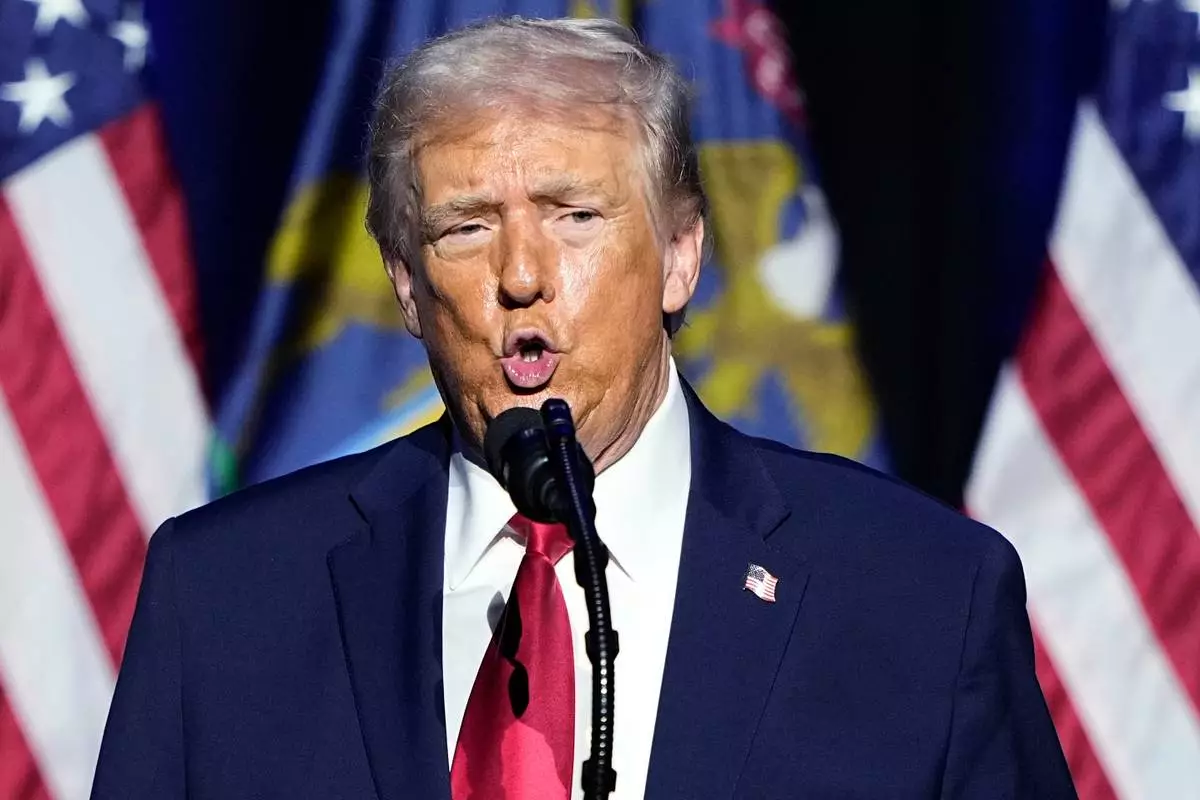
“The government is going to pay the money directly to you,” Trump said in a taped video the White House released to announce the plan. “It goes to you and then you take the money and buy your own health care.”

Trump's plan also focuses on lowering drug prices and requiring insurers to be more upfront with the public about costs, revenues, rejected claims and wait times for care.

Trump has long been dogged by his lack of a comprehensive health care plan as he and Republicans have sought to unwind former President Barack Obama’s signature legislation, the Affordable Care Act. Trump was thwarted during his first term in trying to repeal and replace the law.

When he ran for president in 2024, Trump said he had only “concepts of a plan” to address health care. His new proposal, short on many specifics, appeared to be the concepts of a plan.

Dr. Mehmet Oz, administrator of the Centers for Medicare and Medicaid Services, described it to reporters on a telephone briefing as a “framework that we believe will help Congress create legislation.”

A White House official who was not authorized to speak publicly and described some details on condition of anonymity said the administration had been discussing the proposal with allies in Congress, but was unable to name any lawmakers who were working to address the plan.

Sen. Bill Cassidy of Louisiana, the Republican chair of the Senate health committee, said in a social media post praising Trump's plan that his committee “has and will take action on the President's affordability agenda.”

The White House did not offer any details about how much money it envisioned being sent to consumers to shop for insurance, or whether the money would be available to all “Obamacare” enrollees or just those with lower-tier bronze and catastrophic plans.

The idea mirrors one floated among Republican senators last year. Democrats largely rejected it, saying the accounts would not be enough to cover costs for most consumers. Currently, such accounts are used disproportionately by the wealthiest Americans, who have more income to fund them and a bigger incentive to lower their tax rate.

White House press secretary Karoline Leavitt was asked Thursday whether the president could guarantee that under his plan, people would be able to cover their health costs. She did not directly answer, but said, “If this plan is put in place, every single American who has health care in the United States will see lower costs as a result.”

Enhanced tax credits that helped reduce the cost of insurance for the vast majority of Affordable Care Act enrollees expired at the end of 2025 even though Democrats had forced a 43-day government shutdown over the issue.

Sen. Bernie Moreno, R-Ohio, has been leading a bipartisan group of 12 senators trying to devise a compromise that would extend those subsidies for two years while adding new limits on who can receive them. That proposal would create the option, in the second year, of a health savings account that Trump and Republicans prefer.

The White House official denied that Trump was closing the door completely on those bipartisan negotiations, and said the White House preferred to send money directly to consumers.

Trump’s plan comes months after the Republicans’ big tax and spending bill last year cut more than $1 trillion over a decade in federal health care and food assistance, largely by imposing work requirements on those receiving aid and shifting certain federal costs to the states.

Democrats have blasted those cuts as devastating for vulnerable people who rely on programs such as Medicaid for their health care. The GOP bill included an infusion of $50 billion over five years for rural health programs, an amount experts have said is inadequate to fill the gap in funding.

The White House said Trump's new proposal will seek to bring down premiums by fully funding cost-sharing reductions, or CSRs, a type of financial help that insurers give to low-income ACA enrollees on silver-level, or mid-tier plans.

From 2014 until 2017, the federal government reimbursed insurance companies for CSRs. In 2017, the first Trump administration stopped making those payments. To make up for the lost money, insurance companies raised premiums for silver-level plans. That ended up increasing the financial assistance many enrollees got to help them pay for premiums.

As a result, health analysts say that while restoring money for CSRs would likely bring down silver-level premiums, as Trump says, it could have the unwelcome ripple effect of increasing many people’s net premiums on bronze and gold plans.

Oz said Trump's plans also seeks to have certain medications made available over the counter instead of by prescription if they are deemed safe enough. He mentioned higher-dose nonsteroidal anti-inflammatory drugs and peptic ulcer drugs as two examples.

It was unclear whether the White House is asking Congress to take steps to make more prescription drugs available over the counter. For decades, the Food and Drug Administration has had the ability to do that.

The heartburn drug Prilosec, as well as numerous allergy medications, are among those the FDA has approved for over-the-counter sales. The FDA only approves such changes if studies show patients can safely take the drug after reading the package labeling. Companies must apply for the switch.

The White House said Trump’s plan would also codify his efforts to lower drug prices by tying prices to the lowest price paid by other countries.

Trump has already struck deals with a number of drugmakers to get them to lower the prices. As part of that, the drugmakers have agreed to sell pharmacy-ready medicines directly to consumers who can shop online at the White House's website for selling drugs directly to consumers, TrumpRx.gov.

TrumpRx did not yet have any drugs listed on Thursday. Oz said drugs will be available on the website at the end of the month.

AP Health Writer Matthew Perrone contributed to this report.
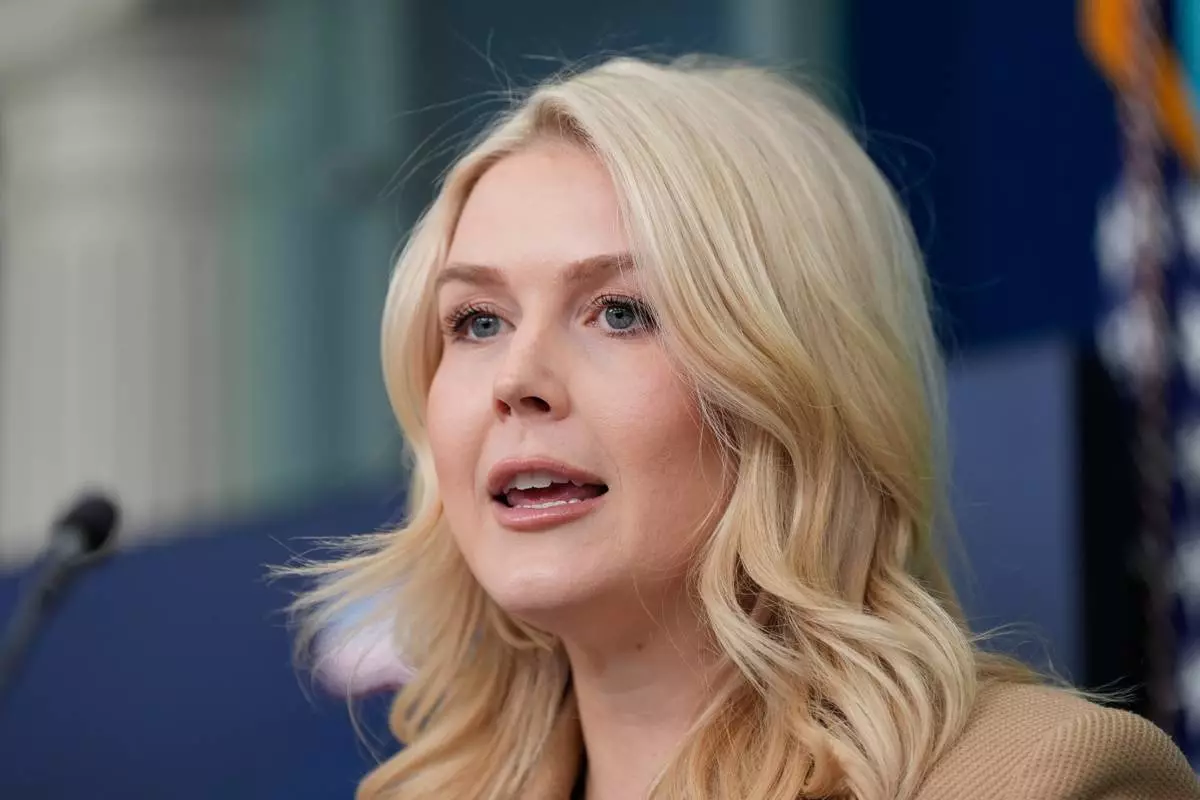
White House press secretary Karoline Leavitt speaks with reporters in the James Brady Press Briefing Room at the White House, Thursday, Jan. 15, 2026, in Washington. (AP Photo/Alex Brandon)
White House press secretary Karoline Leavitt speaks with reporters in the James Brady Press Briefing Room at the White House, Thursday, Jan. 15, 2026, in Washington. (AP Photo/Alex Brandon)

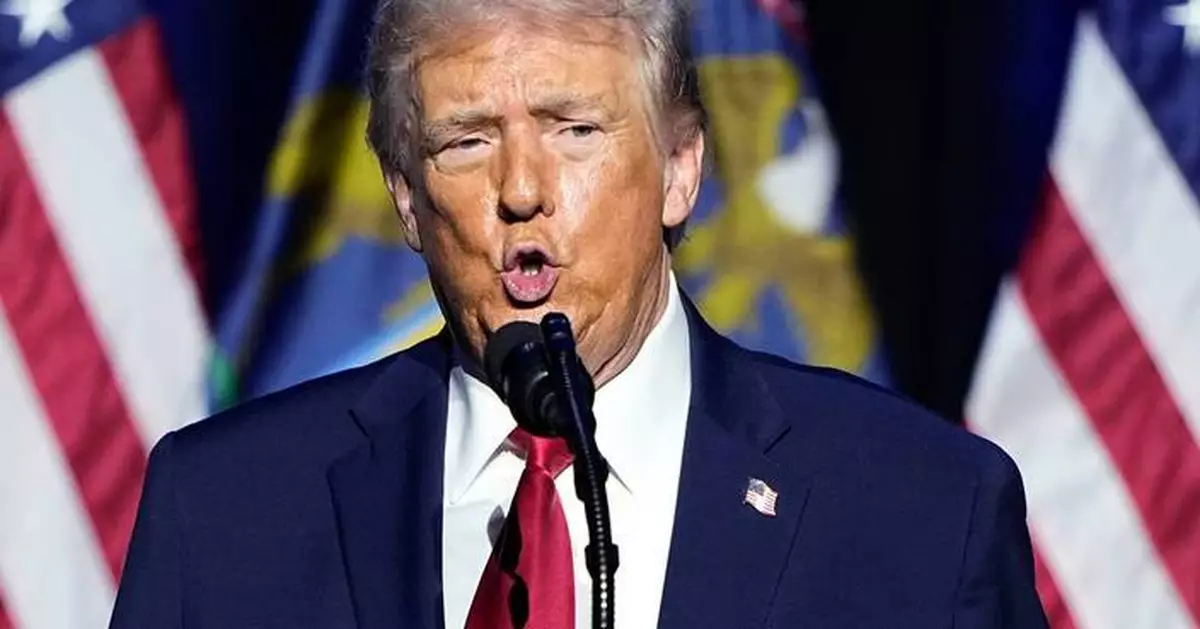
President Donald Trump speaks at the Detroit Economic Club, Tuesday, Jan. 13, 2026 in Detroit. (AP Photo/Ryan Sun)
President Donald Trump speaks at the Detroit Economic Club, Tuesday, Jan. 13, 2026 in Detroit. (AP Photo/Ryan Sun)
ANCHORAGE, Alaska (AP) — A state appeals court will decide whether to dismiss felony voter misconduct charges against an Alaska resident born in American Samoa, one of numerous cases that has put a spotlight on the complex citizenship status of people born in the U.S. territory.

The Alaska Court of Appeals heard arguments Thursday in the case against Tupe Smith, who was arrested after winning election to a regional school board in 2023. Smith has said she relied on erroneous information from local election officials in the community of Whittier when she identified herself as a U.S. citizen on voter registration forms.

American Samoa is the only U.S. territory where residents are not automatically granted citizenship by being born on American soil and instead are considered U.S. nationals. Paths to citizenship exist, such as naturalization, though that process can be expensive and cumbersome.

American Samoans can serve in the military, obtain U.S. passports and vote in elections in American Samoa, but they cannot hold public office in the U.S. or participate in most U.S. elections.

Smith's attorneys have asked the appeals court to reverse a lower court's decision that let stand the indictment brought against her. Smith's supporters say she made an innocent mistake that does not merit charges, but the state has argued that Smith falsely and deliberately claimed citizenship.

State prosecutors separately have brought charges against 10 other people from American Samoa in Whittier, including Smith’s husband, Michael Pese.

Thursday's arguments centered on the meaning of the word intentionally.

Smith “and others like her who get caught up in Alaska’s confusing election administration system and do not have any intent to mislead or deceive should not face felony voter misconduct charges,” one of her attorneys, Whitney Brown, told the court.

But Kayla Doyle, an assistant attorney general, said that as part of ensuring election integrity, it's important that oaths being relied upon are accurate.

About 25 people gathered on a snowy street outside the Anchorage courthouse before Thursday’s hearing to support Smith. Some carried signs that read, ”We support Samoans.”

State Sen. Forrest Dunbar, a Democrat who attended the rally, said the Alaska Department of Law has limited resources.

“We should be going after people who are genuine criminals, who are violent criminals, or at least have the intent to deceive,” he said.

In a court filing in 2024, one of Smith's previous attorneys said that when Smith answered questions from the Alaska state trooper who arrested her, she said she was aware that she could not vote in presidential elections but was “unaware of any other restrictions on her ability to vote."

Smith said she marks herself as a U.S. national on paperwork. But when there was no such option on voter registration forms, she was told by city representatives that it was appropriate to mark U.S. citizen, according to the filing.

Smith “exercised what she believed was her right to vote in a local election. She did so without any intent to mislead or deceive anyone,” her current attorneys said in a filing in September. “Her belief that U.S. nationals may vote in local elections, which was supported by advice from City of Whittier election officials, was simply mistaken.”

The state has said Smith falsely and deliberately claimed citizenship. Prosecutors pointed to the language on the voter application forms she filled out in 2020 and 2022, which explicitly said that if the applicant was not at least 18 years old and a U.S. citizen, “do not complete this form, as you are not eligible to vote.”

The counts Smith was indicted on “did not have anything to do with her belief in her ability to vote in certain elections; rather they concerned the straightforward question of whether or not Smith intentionally and falsely swore she was a United States citizen,” Doyle said in a court filing last year.

One of Smith's attorneys, Neil Weare, co-founder of the Washington-based Right to Democracy Project, has said the appeals court could dismiss the case or send it back to the lower court “to consider whether the state can meet the standard it has set forth for voter misconduct.” The state also could decide to file other charges if the case is dismissed, he said.

The court did not give a timeline for when it would issue a ruling.

Bohrer reported from Juneau, Alaska.

State Sen. Forrest Dunbar, left, stands with supporters of Tupe Smith gathered Thursday, Jan. 15, 2026, outside the Boney Courthouse in Anchorage, Alaska, ahead of the Alaska Court of Appeals hearing a challenge to the voter misconduct case brought against American Samoa native Tupe Smith by the state. (AP Photo/Mark Thiessen)

State Sen. Forrest Dunbar, left, stands with supporters of Tupe Smith gathered Thursday, Jan. 15, 2026, outside the Boney Courthouse in Anchorage, Alaska, ahead of the Alaska Court of Appeals hearing a challenge to the voter misconduct case brought against American Samoa native Tupe Smith by the state. (AP Photo/Mark Thiessen)

Supporters of Tupe Smith gather outside the Boney Courthouse in Anchorage, Alaska, Thursday, Jan. 15, 2026, ahead of the Alaska Court of Appeals hearing a challenge to the voter misconduct case brought against American Samoa native Tupe Smith by the state. (AP Photo/Mark Thiessen)

Supporters of Tupe Smith gather outside the Boney Courthouse in Anchorage, Alaska, Thursday, Jan. 15, 2026, ahead of the Alaska Court of Appeals hearing a challenge to the voter misconduct case brought against American Samoa native Tupe Smith by the state. (AP Photo/Mark Thiessen)

Michael Pese and his wife, Tupe Smith, stand outside the Boney Courthouse in Anchorage, Alaska, Thursday, Jan. 15, 2026, ahead of the Alaska Court of Appeals hearing a challenge to the voter fraud case brought against her by the state. (AP Photo/Mark Thiessen)

Michael Pese and his wife, Tupe Smith, stand outside the Boney Courthouse in Anchorage, Alaska, Thursday, Jan. 15, 2026, ahead of the Alaska Court of Appeals hearing a challenge to the voter fraud case brought against her by the state. (AP Photo/Mark Thiessen)

Michael Pese, left, his wife, Tupe Smith, and their son Maximus pose for a photo outside the Boney Courthouse in Anchorage, Alaska, Thursday, Jan. 15, 2026, ahead of the Alaska Court of Appeals hearing a challenge to the voter fraud case brought against her by the state. (AP Photo/Mark Thiessen)

Michael Pese, left, his wife, Tupe Smith, and their son Maximus pose for a photo outside the Boney Courthouse in Anchorage, Alaska, Thursday, Jan. 15, 2026, ahead of the Alaska Court of Appeals hearing a challenge to the voter fraud case brought against her by the state. (AP Photo/Mark Thiessen)

FILE - Tupe Smith poses for a photo outside the school in Whittier, Alaska, May 13, 2025. (AP Photo/Mark Thiessen, File)

FILE - Tupe Smith poses for a photo outside the school in Whittier, Alaska, May 13, 2025. (AP Photo/Mark Thiessen, File)

Recommended Articles