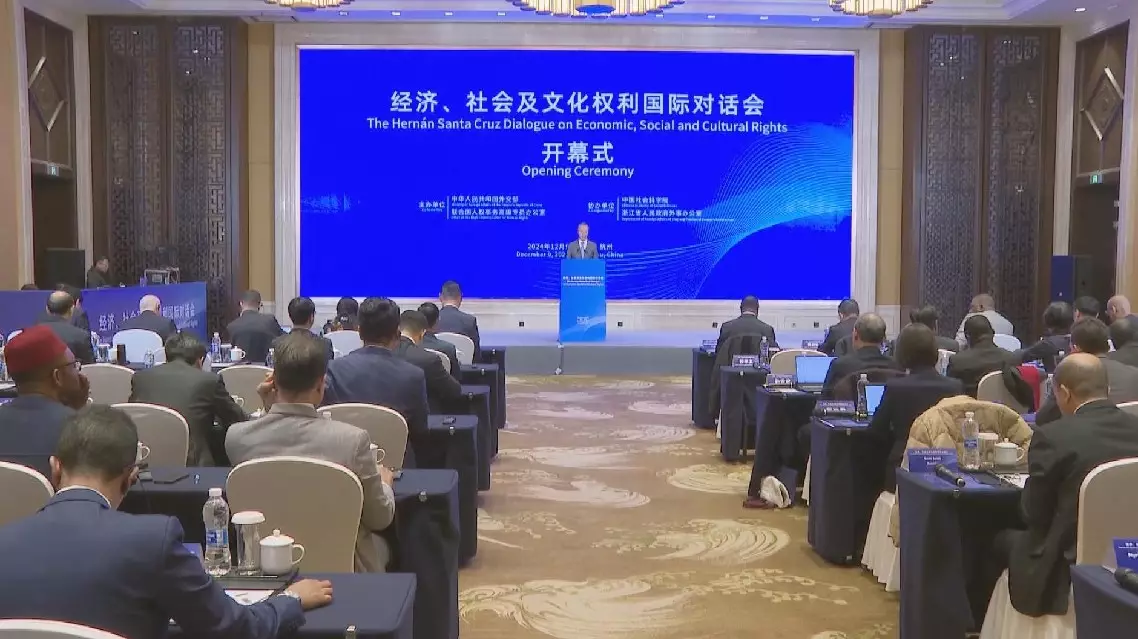
The Hernán Santa Cruz Dialogue on Economic, Social and Cultural Rights was held jointly by the Ministry of Foreign Affairs of China and the Office of the United Nations High Commissioner for Human Rights (OHCHR) in Hangzhou City of east China's Zhejiang Province on Monday.
The dialogue, named after Chilean diplomat Hernán Santa Cruz, is an international event that stimulates discussions among opinion leaders and policy-makers on economic, social and cultural rights, as well as the 2030 UN Agenda.
Chinese Foreign Minister Wang Yi said in a written message to the dialogue that China will continue to work with all countries and UN agencies to pursue the common values of humanity, safeguard human rights with security, promote human rights with development, and advance human rights with cooperation, to contribute to the sound and sustainable development of the global human rights cause.
The world is undergoing profound transformation on a scale not seen in a century, with geopolitical conflicts flaring up, global economic recovery remaining weak and deficit in human rights governance widening, Wang said.
He said it is important to uphold true multilateralism, adhere to a people-centered approach, and strengthen solidarity and coordination.
Senior officials from nearly 50 countries and regions, as well as UN experts and OHCHR officials, participated in the dialogue.
Seraphine Knado, a human rights specialist at the African Union Commission, called for equal access to education in Africa, saying this is essential for economic development on the continent.
"We have a good percentage of African people that don't have access to education, particularly children. And we need to make sure that each individual has access to quality education. And this is what will build that person for contributing his potential to the economic development of our countries. For Africa, this would be the most important thing to achieve in terms of achieving our visions set in the Agenda 2063, which is our agenda for Africa we want," she said.
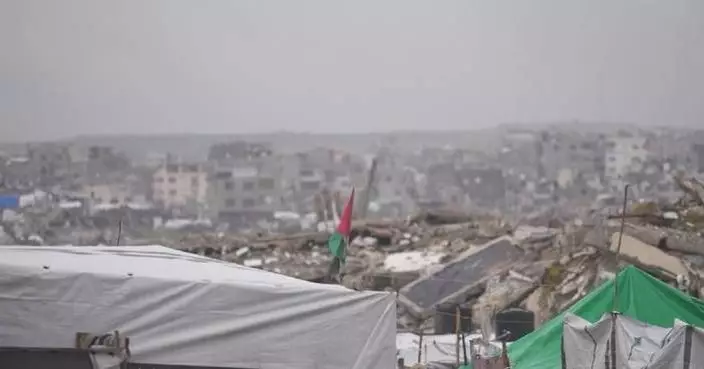
Karam Alkhaldi, a diplomatic attaché of the Palestinian Ministry of Foreign Affairs and Expatriates, said the conflict in the Gaza Strip highlighted the need to find powerful enforcement mechanisms after the U.S. once again vetoed a Gaza ceasefire resolution at the UN Security Council last month.
"We are talking about Gaza becoming uninhabitable. We cannot talk about the social, economic and cultural rights, because it has been systematically destroyed. The war is not only on Gaza, it's on all the Palestinian occupied territory. Right now, we are talking about a law-based order that is under a real threat. However, we've seen the UN Security Council voting. All the states voted for a ceasefire, and the U.S. used its veto again. So, we need to find enforcement mechanisms in order to stop this bloodshed," he said.
China hosts UN-led dialogue on economic, social and cultural rights