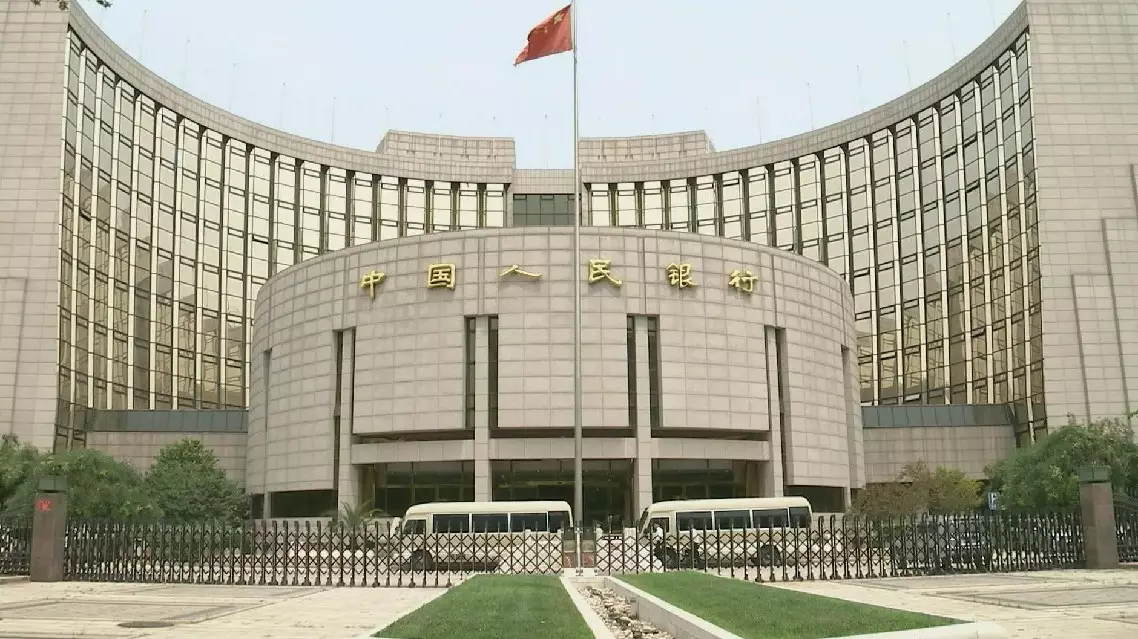
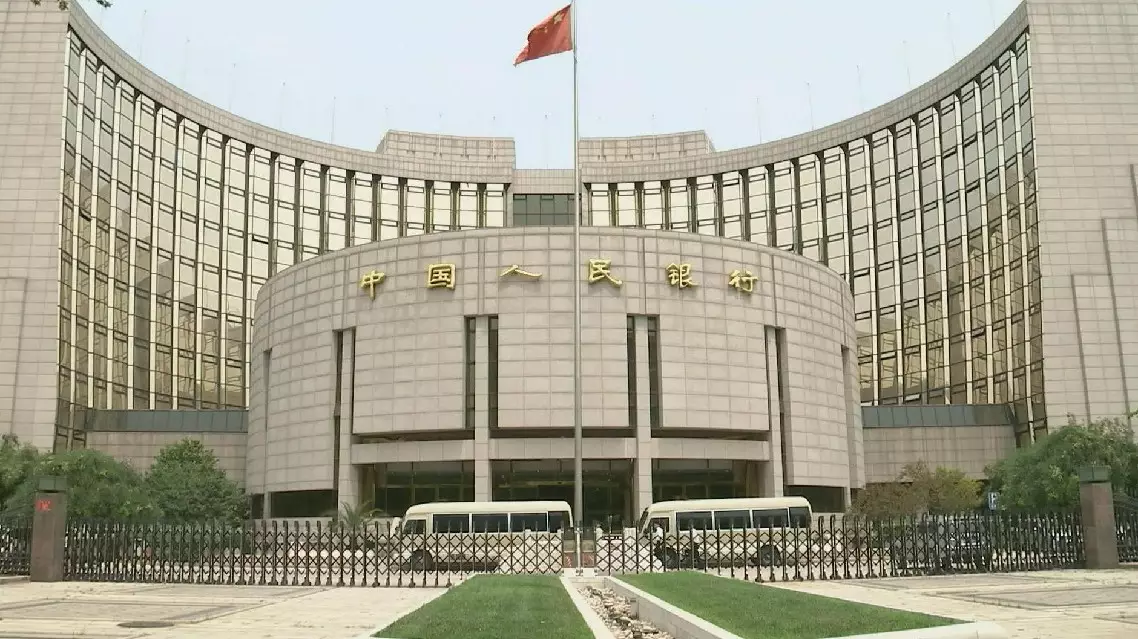
China will adopt a moderately loose monetary policy next year in a first easing of its stance in some 14 years, alongside a more proactive fiscal policy to spur economic growth.
The policy shift was announced at a meeting held by the Political Bureau of the Communist Party of China (CPC) Central Committee in Beijing on Monday to analyze and study the economic work of 2025.
Experts noted that the monetary policy shift aligns with the current domestic economic situation.
"China's internal and external environments have undergone significant changes so far. Domestically, effective demand remains insufficient, and businesses are under considerable strain. At the same time, developed economies in Europe and America have begun to transition toward monetary easing. Against such a backdrop, China's central government has adjusted its monetary policy to better align with current realities, which builds on earlier measures like rate cuts," said Dong Ximiao, chief researcher at Merchants Union Consumer Finance Company.
The new policy stance also underscores the government's efforts to strengthen market expectations.
"This shift in monetary policy is also a major manifestation of the government's strengthening of control over expectations. When a monetary policy is made more transparent, both its comprehensibility and credibility will increase. As a result, the market will spontaneously form stable expectations over future monetary policy movements, and market players can have better decision-making. Therefore, significantly amplified effects of the monetary policy shift can be expected," said Wang Qing, chief macro analyst of Golden Credit Rating.
So far this year, the People's Bank of China (PBOC) -- China's central bank -- has intensified the implementation of its monetary policy, released sufficient liquidity to the market, and promoted a significant reduction in society's comprehensive financing costs, further improving the quality and effectiveness of financial support for the real economy.
Two cuts to the reserve requirement ratio (RRR) have released over 2 trillion yuan (280 billion U.S. dollars) in long-term liquidity, while various monetary tools have been applied to ensure ample liquidity and guide financial institutions to support the real economy.
Official data showed that the Broad Money Supply (M2) has surpassed 300 trillion yuan (41.38 trillion U.S. dollars) so far this year. In the first three quarters of this year, major financial institutions disbursed over 110 trillion yuan (15.17 trillion U.S. dollars) in loans, an increase of nearly 8 trillion yuan (1.1 trillion U.S. dollars) over the same period in 2023. Beyond quantitative growth, there has been notable structural optimization in financial lending.
Loans to specialized, sophisticated, characteristic and novel enterprises that produce new and unique products reached 4.23 trillion yuan (583.4 billion U.S. dollars) in the first ten months of this year, up 13.6 percent year on year. Loans to sci-tech small and medium-sized enterprises (SMEs) grew 21 percent year on year to 3.17 trillion yuan (437.2 billion U.S. dollars).
The central bank has also introduced new tools such as government bond transactions and outright reverse repos to expand its monetary policy toolkit, which now comprises nearly 20 structural instruments.
A core focus of China's monetary policy has been reducing interest rates. So far this year, the Loan Prime Rate (LPR) - a key benchmark for lending rates - was cut three times. The one-year LPR has dropped by 35 basis points, while the five-year LPR, which influences the pricing of mortgages, has fallen by 60 basis points. As a result, mortgage rates for households have hit record lows.
Since September this year, the PBOC has introduced a series of adjustments to housing-related financial policies and launched two new tools to stabilize the capital market. These efforts have received positive responses from the market.
"Since the beginning of this year, the overall volume of financing has grown steadily, the credit structure has kept improving, and loan interest rates have significantly declined. This has not only met the financing needs of the real economy but also continuously reduced the overall financing costs, boosted market confidence and expectations, stimulated enterprises' willingness to invest, and enhanced residents' consumption capacity, which has powerfully and effectively supported economic recovery, growth, and high-quality development," Dong said.
China vows moderately loose monetary policy in 2025 to spur economic growth
China vows moderately loose monetary policy in 2025 to spur economic growth