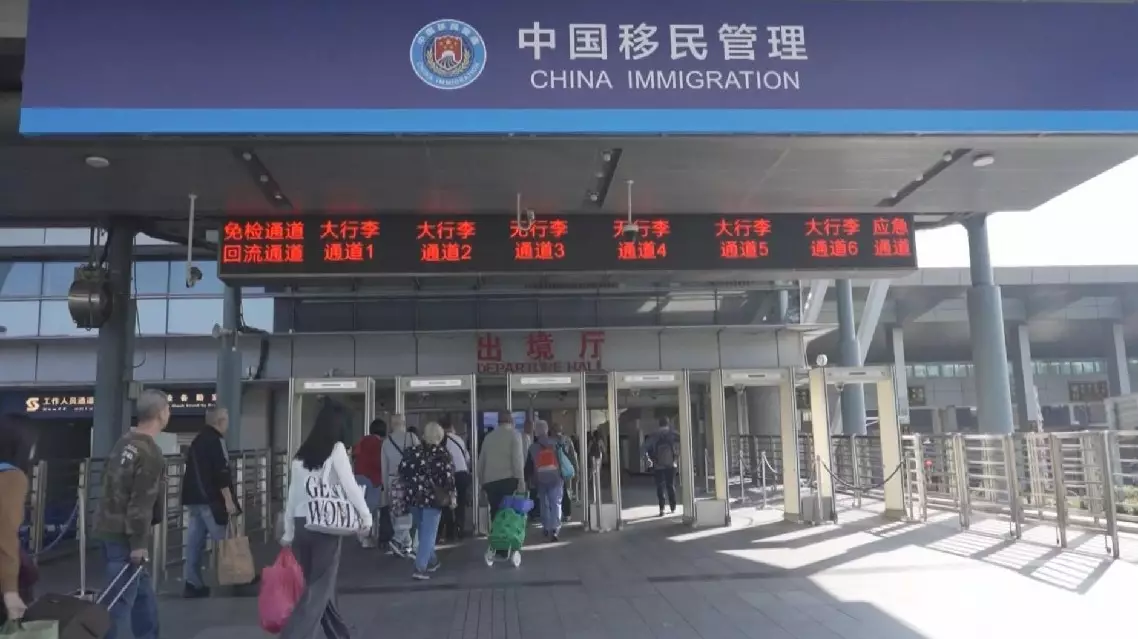
Hong Kong saw a nearly 30 percent rise in mainland visitors on Saturday, as new multi-entry permits for residents of Shenzhen in south China's Guangdong Province boosted travel during the first weekend of implementation.
Data from the Hong Kong Special Administrative Region (HKSAR) government shows that Hong Kong welcomed around 145,000 mainland visitors on Saturday, the first weekend after introducing multi-entry permits for Shenzhen residents, marking a 28.5 percent increase compared to the average weekend visitor numbers in November.
The permits, open for applications since Dec. 1, 2024, allow holders unlimited visits to the city within a year, with each stay capped at seven days.
December traditionally marks a peak tourism season for Hong Kong, with shopping centers and attractions rolling out discounts and themed activities.
The new policy has further motivated Shenzhen residents to visit Hong Kong for shopping and leisure.
"Our usual sales at other stores by mid-afternoon, around 15:00 to 16:00, range from 500 to 800 pastries. But since the policy launch, sales at our West Kowloon store during the same period have soared to 1,500 to 2,000 pastries," said Wong Wai-leung, CEO of a Hong Kong retailer.
The benefits extend beyond retail. The restaurant and tourism sectors have also embraced the surge in foot traffic brought by the policy.
"We hope to promote our unique culinary culture to mainland tourists," said Simon Wong Ka-wo, president of the Hong Kong Federation of Restaurants and Related Trades.
"Shenzhen residents with multi-entry permits can visit not only for shopping, dining, and seeing friends but also to experience major events held in Hong Kong. In 2025, new venues will open, hosting concerts and large-scale performances, which I believe will attract even more Shenzhen visitors," said Timothy Chui, trade director of Travel Industry Council of Hong Kong.
New border rules spur surge in mainland tourists to Hong Kong
New border rules spur surge in mainland tourists to Hong Kong