DOVER, Del. and EPALINGES, Switzerland, Dec. 11, 2024 /PRNewswire/ -- Pilatus Biosciences Inc. announced that the U.S. Food and Drug Administration (FDA) has granted Orphan Drug Designation (ODD) to its leading molecule, PLT012, for treating liver and intrahepatic bile duct cancer (HCC/ICCA). Achieved in November 2024, this designation marks a crucial advancement in developing innovative therapies for patients facing these challenging cancers. Dr. Raven Lin, CEO, emphasized the company's commitment to addressing urgent medical needs, while Prof. Ping-Chih Ho highlighted PLT012's unique therapeutic approach targeting the tumor microenvironment. Pilatus is actively working with regulatory authorities to expedite PLT012's development and availability.
Pilatus Biosciences, a preclinical-stage biopharmaceutical company spun out from the Ludwig Institute for Cancer Research (Lausanne), is leading the development of first-in-class biologics targeting metabolic checkpoints. Supported by the Cancer Research Institute (New York), the company employs a pioneering approach to immunometabolism, reprogramming the immune microenvironment to combat cancer effectively.
"We are honored to receive Orphan Drug Designation for PLT012, a milestone that reflects our dedication to addressing the urgent need for innovative therapies in liver and intrahepatic bile duct cancer," said Dr. Raven Lin, CEO and Co-founder of Pilatus Biosciences. Prof. Ping-Chih Ho, Chair of the Scientific Advisory Board and Co-founder of Pilatus Biosciences, added, "PLT012 leverages metabolic checkpoint targeting to reprogram the tumor microenvironment (TME), offering a unique therapeutic approach. This designation highlights the promising scientific discoveries and results we have achieved in addressing the underserved area. It further motivates us to accelerate PLT012's development and collaborate globally to bring this promising treatment to patients with limited options."
Currently, Pilatus Biosciences is advancing the development of PLT012, actively engaging with regulatory authorities and stakeholders to expedite the availability of this promising therapy.
About PLT012
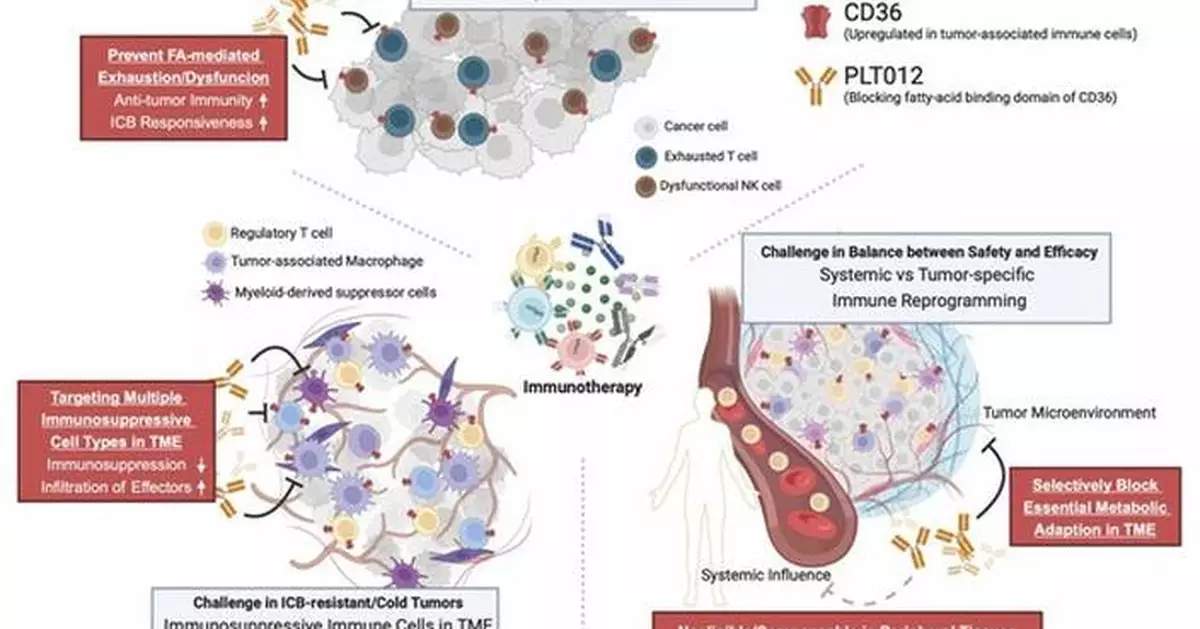
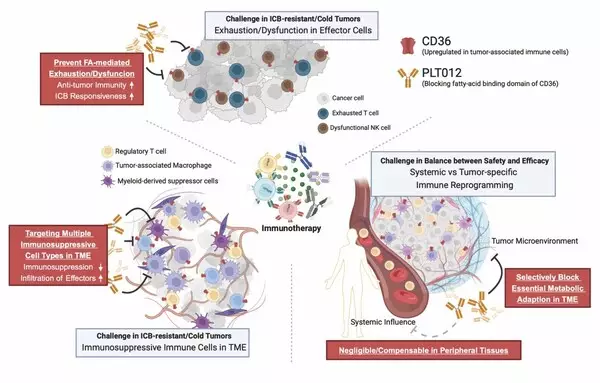
PLT012, is a humanized anti-CD36 antibody with a unique dual mechanism of action (MOA): it simultaneously disarms immunosuppressive cell populations and amplifies effector T cell functions. PLT012 has shown potential against multiple tumors with unmet medical needs. It is set to advance to its first U.S. IND submission and first patient dosing in 2025. As a monotherapy, PLT012 demonstrates remarkable anti-tumor efficacy in both immune 'hot' and 'cold' tumor models with a significant augmentation in GzmB-expressing CD8+ T cells and reductions in both intratumoral Tregs and pro-tumorigenic macrophage. Additionally, PLT012 treatment alters the exhaustion features of cytotoxic CD8+ T cells by increasing the populations of progenitor- (Texprog) and tumoricidal activities in terminal-exhausted T cells (Texterm), highlighting enhanced anti-tumor immunity when combined with immune checkpoint blockade therapies, such as PD-1 or PD-L1 inhibitors.
About Orphan Drug Designation
The FDA's Orphan Drug Designation (ODD) program provides orphan status to drugs defined as those intended for the treatment, diagnosis or prevention of rare diseases that affect fewer than 200,000 people in the United States. ODD qualifies the sponsor of the drug for certain development incentives, including tax credits for qualified clinical testing, prescription drug user fee exemptions and 7 years marketing exclusivity upon FDA approval.
About Liver and Intrahepatic Bile Duct Cancer (HCC/ICCA)
Primary liver cancer first occurs in either the liver or the intrahepatic bile ducts. The two most common types of liver and intrahepatic bile duct cancer are hepatocellular carcinoma (HCC, 80-90% of cases), and intrahepatic cholangiocarcinoma (ICCA, 10-15% of cases). In HCC and ICCA, metabolic reprogramming plays a crucial role in promoting tumor progression by modifying the TME to support tumor growth and immune evasion.
For HCC, the most common first-line systemic therapies include either a combination of a PD-L1 inhibitor and a VEGF inhibitor or a combination of a PD-L1 inhibitor and a CTLA-4 inhibitor. Most patients will require multiple lines of treatment, as the recurrence rate of HCC has been reported to be as high as 88%. Second-line treatments for HCC are primarily multiple tyrosine kinase receptor inhibitors, even the incidence of a second HCC recurrence is 50%-70%. Additional lines of treatment may be administered if the patient can tolerate a second-line therapy with a different MOA than those previously administered.
PLT012 emerges as a promising candidate, demonstrating dual MOA that synergizes with existing treatments and provide immune-stimulating effects in the TME, potentially enhancing therapeutic outcomes.
About Pilatus Biosciences Inc.:
Pilatus Biosciences is pioneering in discovering and developing first-in-class antibodies and bifunctional proteins that target metabolic checkpoints, with the goal of driving immuno-microenvironment reprogramming to combat cancer.
With deep expertise in immunometabolism research, Pilatus Biosciences partners with leading cancer research institutions and hospitals worldwide. To strengthen its R&D capabilities, the company established a lab in Taiwan in July 2024, focused on supporting early clinical development and biomarker discovery.
Pilatus Biosciences operates globally, utilizing a cross-border functional team and fostering external collaborations to maintain an agile, cost-efficient development platform, driving its efforts to create groundbreaking therapies.
For more information about Pilatus Biosciences and its work in the field of oncology, please visit https://www.pilatusbio.com/.
** The press release content is from PR Newswire. Bastille Post is not involved in its creation. **
Pilatus Biosciences Inc. Secures FDA Orphan Drug Designation for PLT012: A Breakthrough in Liver and Intrahepatic Bile Duct Cancer Treatment