China's economy has maintained a generally stable growth in 2024, with impressive achievements made in the development of manufacturing and new quality productive forces, said economists.
The Political Bureau of the CPC Central Committee held a meeting on Dec 9 to analyze and study economic work in 2025. The meeting noted that the year 2024 marks the 75th anniversary of the founding of the People's Republic of China and a critical year for achieving the goals and tasks of the 14th Five-Year Plan (2021-2025).
From a macro perspective, China's economic operation has maintained generally stable with steady progress in 2024, and the main goals of social and economic development will be successfully achieved.
"In 2024, China's macro-economy have shown signs of stabilization on the basis of continued structural adjustment, and with the growth rate, the country will be able to achieve the annual target of around 5 percent," said Liu Yuanchun, President of Shanghai University of Finance and Economics.
In 2024, China's industrial structure has continued to upgrade in high-quality development, laying a solid foundation for the stable economic development.
In the first three quarters, the added value of industrial enterprises above designated size (those with annual main business revenue of 20 million yuan or more) increased by 5.8 percent year on year. Among them, the added value of equipment manufacturing and high-tech manufacturing industries above designated size increased by 7.5 percent and 9.1 percent year on year, respectively.
"Our manufacturing industry has maintained a relatively strong growth, and the strongest performing industries among them are high-tech manufacturing and high-end equipment manufacturing," said Wu Sa, deputy director of the Chinese Academy of Macroeconomic Research.
In 2024, China has witnessed steady development of new quality productive forces
Wu said that it not only promoted the development of emerging industries and future industries, but also empowered traditional industries and provided new impetus for the construction of a modern industrial system.
"For example, at the Zhuhai Air Show that just ended, we saw the debut of many high-tech products, including humanoid robots and dog robots, as well as some low-altitude economic and low-altitude aircraft. These are all very vivid examples of the development of our new quality productive forces. It not only simply indicates the success of these products, but also indicates that we have laid a more solid foundation for building a modern industrial system, and the overall momentum and driving mechanism of development have become better," Wu said.
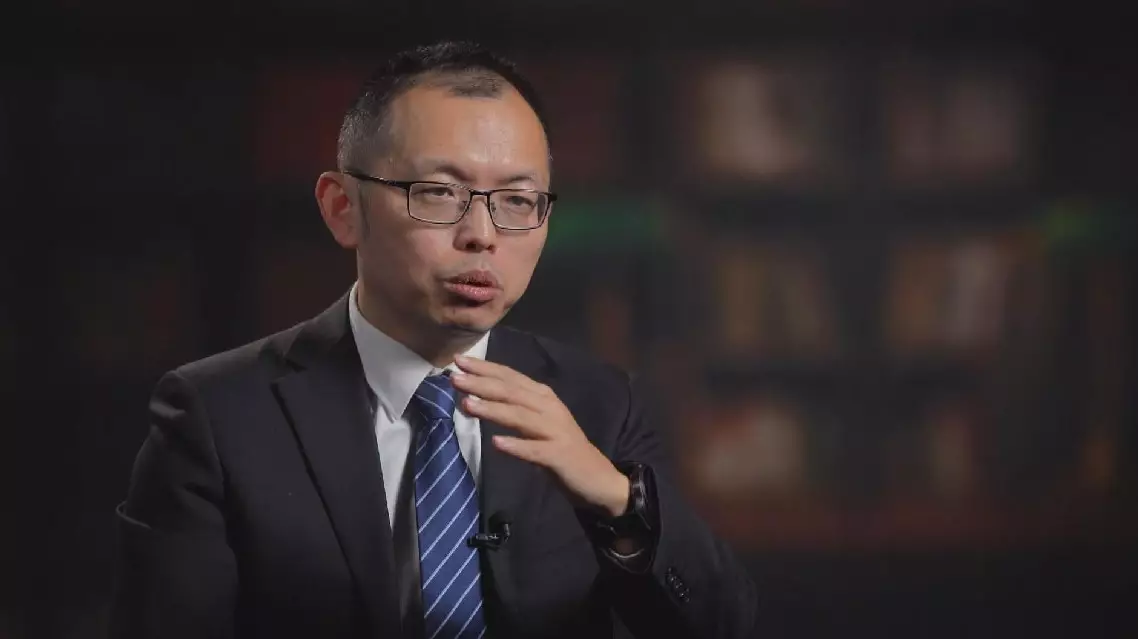
China's economy maintains stable growth in 2024 with impressive achievements: economists

Ghanaian President John Dramani Mahama has underscored the need for the international community to properly recognize the historical injustices committed against Africa and support efforts to advance reparations for Africans and people of African descent.
Mahama made the remarks in an interview with the China Media Group (CMG) which was aired Friday and recorded during the Ghanaian President's trip to Beijing in October.
Earlier this year, Mahama had issued a call for collective action in securing justice for Africans and individuals of African descent through reparations at the 38th Ordinary Session of the African Union.
Located in West Africa along the northern shore of the Gulf of Guinea and bordered by the Atlantic Ocean to the south, Ghana boasts a more than 500-km coastline and abundant agricultural, fishery, forestry and mineral resources. Yet its history, like much of the African continent, has been deeply scarred by centuries of foreign aggression.
From the 15th century onward, Western colonial powers invaded coastal areas of what is now Ghana, plundering resources and conducting the slave trade, casting a long colonial shadow over the African continent which hung for centuries.
In 1955, the successful convening of the Bandung Conference -- which gathered representatives of Asian and African states in Indonesia -- ignited a new wave of national liberation movements these continents, accelerating the collapse of the global colonial system.
Ghana's independence in 1957 lit the first torch of freedom in sub-Saharan Africa and was hailed as the dawn of Africa's awakening.
Africa's first tragedy, the transatlantic slave trade, constituted an extremely grave atrocity, Mahama said.
During that period, an estimated 12 to 15 million Africans were forcibly taken from the continent and sent to the Caribbean, the Americas and Europe. They contributed to the building of modern Western civilization, yet received no compensation for their labor, whether working on sugar plantations or constructing railways, roads and bridges, he noted.
Mahama outlined his wish that the United Nations takes action to recognize the slave trade as "the greatest crime against humanity" and takes steps to ensure reparations are paid back to the descendants of those who suffered.
"We believe that first and foremost, it should be recognized as the greatest crime against humanity. We must condemn the activity of slavery of the people who were shipped to what I call the 'New World', that's the Western world. It's estimated that as many as 2 million did not arrive at the destination because they were either too sick or they died on board, and they were just tossed over into the ocean. That was genocide. And so it's an issue that the first step is for us to accept. And so Ghana wants to move a motion in the UN next year asking the world to recognize the slave trade as the greatest crime against humanity. And so we'll continue to push on the African [Union] Champion on Reparations when I spoke even at the UN, I raised the issue of reparations and so I do think that that is to do with slavery," he said.
Mahama also stressed the impact of colonialism, which further entrenched injustice and led to global inequality as African nations were ruthlessly exploited.
"With regards to colonialism, the Berlin Conference (1884–1885) partitioned Africa and the European nations took colonies in Africa, ran those colonies, exploited their natural resources and transferred those natural resources, oil palm, gold, minerals, cocoa and other products, to develop their countries. And it's only from the late 1950s that countries like Ghana got independent. And so that was an injustice. Colonialism was an injustice against African countries," he said.
Ghanaian president urges reparative justice for Africa, citing slavery, colonial exploitation