The China State Shipbuilding Corporation (CSSC) debuted a smart farm designed for ship applications at the Marintec China 2025, the world's largest maritime exhibition held in Shanghai this week.
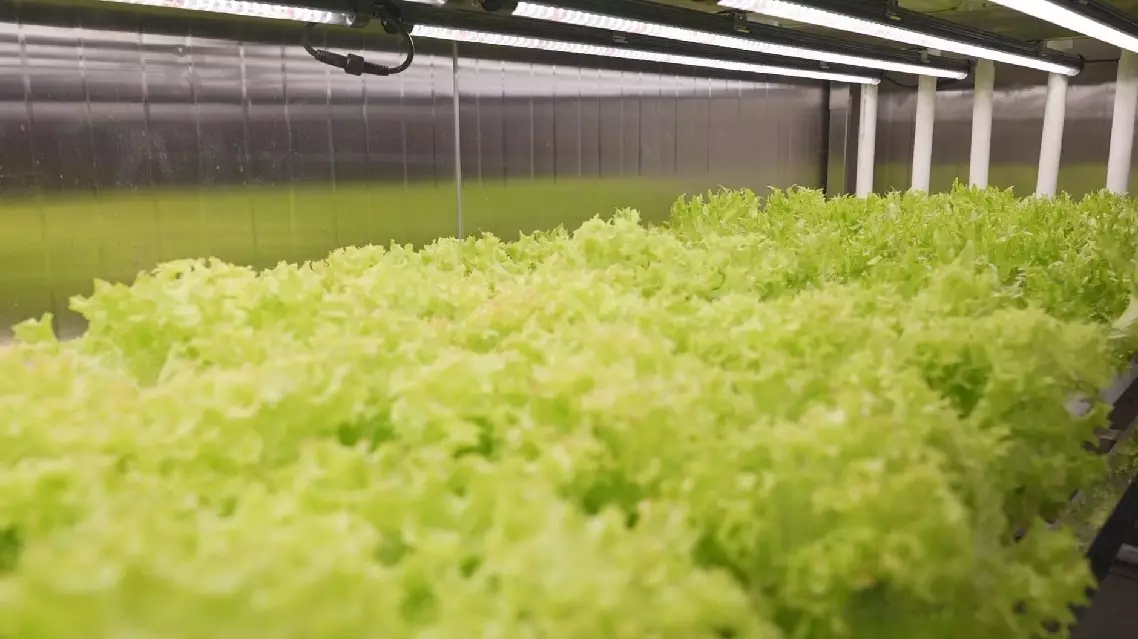
Featuring a "vegetable-mushroom symbiosis" system, the shipboard hybrid smart cultivation facility enables year-round cultivation of edible fungi, vegetables and fruits.
"By letting vegetables absorb carbon dioxide and mushrooms release it, the system allows both to grow in the same chamber and forms an efficient air-circulation loop inside a sealed space. This smart idea cuts the heavy energy use that normally comes from big temperature differences at sea and the constant need for ventilation on ships," said Chang Yu, vice president of CSSC International Engineering Company.
Boasting pesticide-free cultivation, the facility can grow over 120 varieties of mushrooms, vegetables and fruits, ensuring both product diversity and high standards of safety, cleanliness and quality.
It also marks a significant improvement in efficiency. The current global energy consumption level among similar products stands at approximately 10 kilowatt-hours of electricity per kilogram of vegetables produced, but the innovative Chinese product can use less than 6 kilowatt-hours per kilogram of vegetables.
"Using roughly 30 kilowatt-hours a day, it can grow about five kilograms of lettuce and five kilograms of mushrooms. That means the real energy cost is only about three kilowatt-hours per kilogram, far lower than the current global standard," Chang said.
This marine intelligent farm has drawn crowds of visitors at the exhibition, including shipowners who are already in talks about installing the system on their vessels.
"This is the solution. [There's] no need to bring food for a long time. The crew can get instantly the fresh food. This is fresh food not only good for health, this is for their mental refreshment," said ABM Zahidul Islam, chairman of Water Birds Limited, a thermoplastic piping manufacturer in Bangladesh.
This new product will overcome barriers related to geography, climate and resources, also serving as a source of fresh, healthy vegetables for residents of water-scarce islands and arid inland regions.
"As part of the world's largest shipbuilding group, we draw on CSSC's strengths in equipment development and system integration to serve the global maritime sector. Our original intention in developing this was simple: to put people first. Through technological innovation, we hope to improve lives and make the 'green' that once seemed out of reach on the ocean dining table truly within reach," said Yang Wenwu, chairman of CSSC International Engineering Company.
As a crucial platform to gather global innovation resources and promote decarbonization in the maritime industry, this year's Marintech China ran from Tuesday to Friday, attracting over 2,200 enterprises from 16 countries and regions.
China unveils smart shipboard farm to supply offshore workers with fresh produce