China is expected to complement more proactive macroeconomic policies in the coming year, some economic experts said when they shared their opinions on the country's economic policies following the conclusion of the two-day Central Economic Work Conference in Beijing on Thursday.
Policymakers proposed that the economic work in 2025 should adhere to the principles of pursuing progress while ensuring stability, promoting stability through progress, upholding fundamental principles and breaking new ground, establishing the new before abolishing the old, promoting systemic integration and making coordinated efforts to enrich policy toolbox, and enhance the foresight, pertinence, and effectiveness of macroeconomic policies.
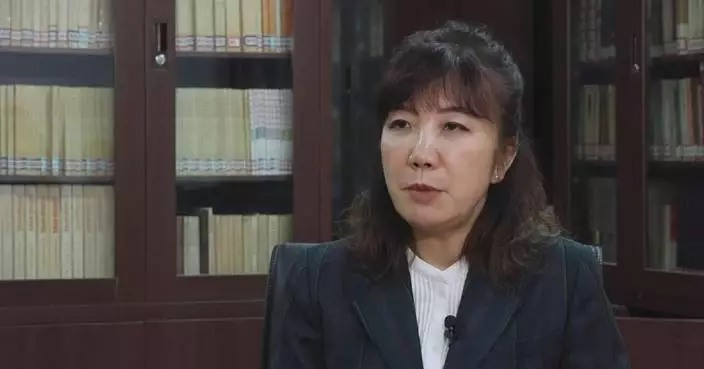
"The general requirement of China's macroeconomic policy is to make more proactive and effective macroeconomic regulations. In the past, we usually used one to three phases to describe such a requirement, but this year we used six phases. What does it mean? It means that the economic situation next year will be more complicated, and it also means that we must be more proactive and make good overall balance in our economic work next year. For example, the two requirements 'upholding fundamental principles and breaking new ground', and 'establishing the new before abolishing the old', are close integration between policy and reform methodology," said Dong Yu, executive vice president of the China Institute for Development Planning at Tsinghua University.
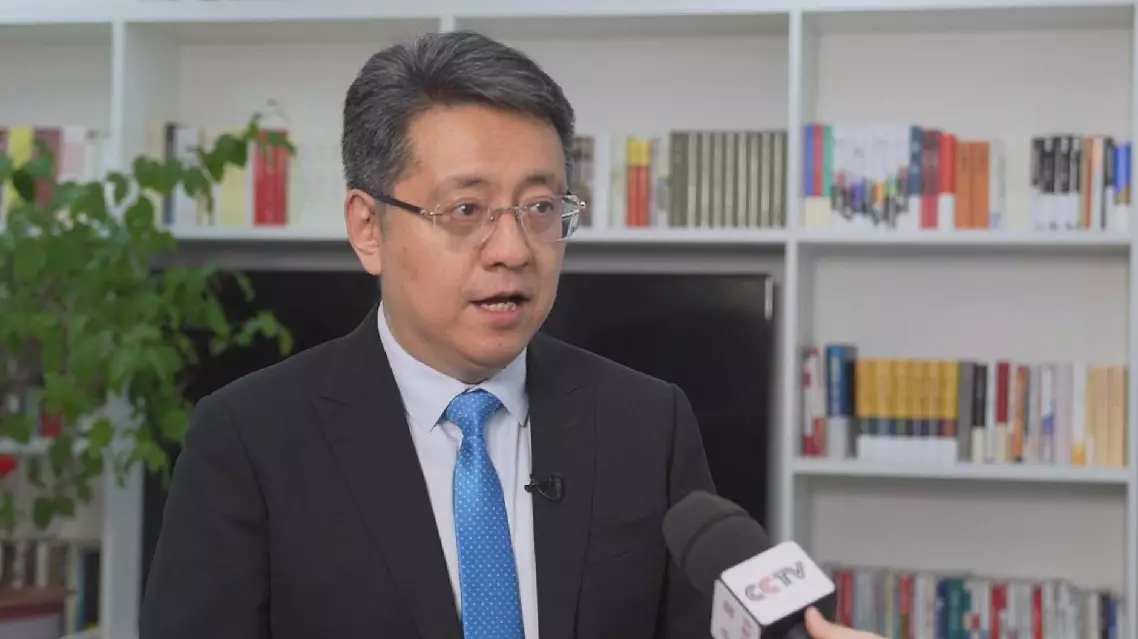
"In the conference, policymakers particularly emphasized the need to stabilize the property market and the stock market, boost confidence, and improve expectations. They also clearly stated the need to guard against and resolve risks in key areas and external shocks. These statements have never been mentioned before. This sent a signal to the whole society that the Chinese Communist Party (CPC) Central Committee has increased domestic macroeconomic policy support in order to continuously stabilize and improve China's economy, and hedge against the possible adverse effects of external shocks next year," said Bi Jiyao, vice president of the Chinese Academy of Macroeconomic Research.
Policymakers also stressed the need to strengthen coordination and cooperation among fiscal, monetary, employment, industrial, regional, trade, environmental protection, and regulatory policies and reform and opening-up measures.
"The statement of 'establish integrated economic system and make coordinated efforts' mainly emphasizes that the country's fiscal policy, monetary policy, industrial policy, and regional policy should cooperate with each other to jointly enhance the consistency of macroeconomic policy, and promote the continued recovery of China's economy," said Bi.
China to implement more proactive macroeconomic policies in 2025: experts
International guests who have dedicated their lives to historical truth joined China's 12th national memorial event honoring the hundreds of thousands of victims killed by Japanese troops in the Nanjing Massacre during World War II.
The memorial was held on Saturday at the public square of the Memorial Hall of the Victims in Nanjing Massacre by Japanese Invaders in Nanjing, capital of east China's Jiangsu Province. China's national flag was flown at half-mast in the presence the crowd that included survivors of the massacre, local students, and international guests.
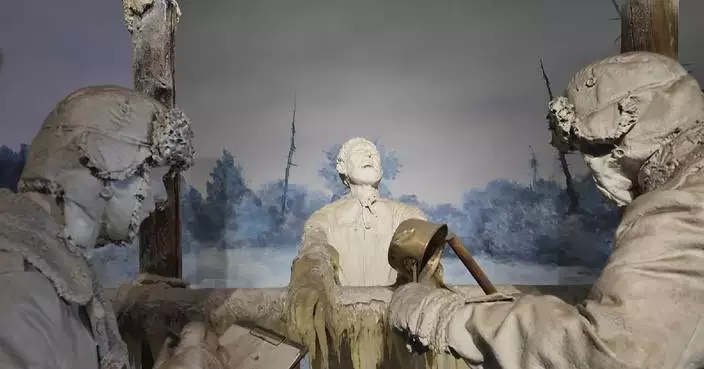
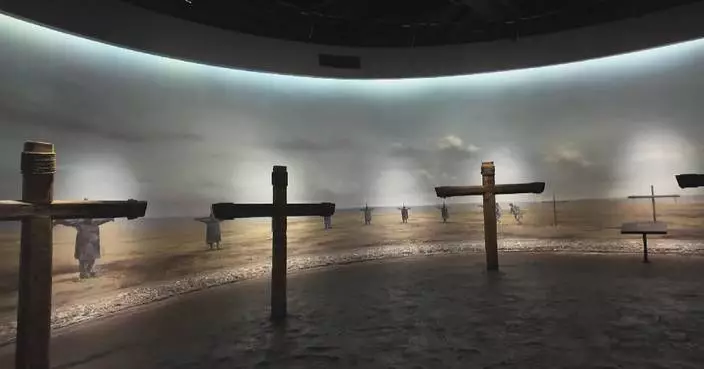
In one of the most barbaric episodes during WWII, the Nanjing Massacre took place when Japanese troops captured the then-Chinese capital Nanjing on Dec 13, 1937. Over the course of six weeks, they proceeded to kill approximately 300,000 Chinese civilians and unarmed soldiers.
Joining the crowd was Christoph Reinhardt, the great-grandson of John Rabe (1882-1950) who was then a representative of German conglomerate Siemens in the war-ravaged Nanjing. During the Nanjing Massacre, Rabe set up an international safety zone with other foreigners, and they together saved the lives of around 250,000 Chinese people between 1937 and 1938 from the Japanese invaders.
Throughout the massacre, Rabe continued to keep a diary. To this day, all his pages remain one of the most comprehensive historical records of the atrocities committed by the Japanese aggressors.
Sayoko Yamauchi, who was also in the crowd of mourners, arrived in Nanjing on Friday from Japan's Osaka to attend Saturday's ceremony, just as she has done almost every year since China designated Dec 13 as the National Memorial Day for the Victims of the Nanjing Massacre in 2014.
Yamauchi's grandfather was one of the Japanese soldiers who invaded Nanjing in January 1938. However, since first setting foot in Nanjing in 1987, she has dedicated herself to uncovering and spreading the truth about Japan's history of aggression and enlightening the Japanese public about their country's wartime atrocities.
In 2014, ahead of China's first National Memorial Day for the Victims of the Nanjing Massacre, Yamauchi, along with 10 other individuals, received an award for her special contribution to the Memorial Hall of the Victims in the Nanjing Massacre by Japanese Invaders.
By attending the grand memorial event, Reinhardt and Yamauchi both said they hope to convey a message of remembering history and cherishing peace.
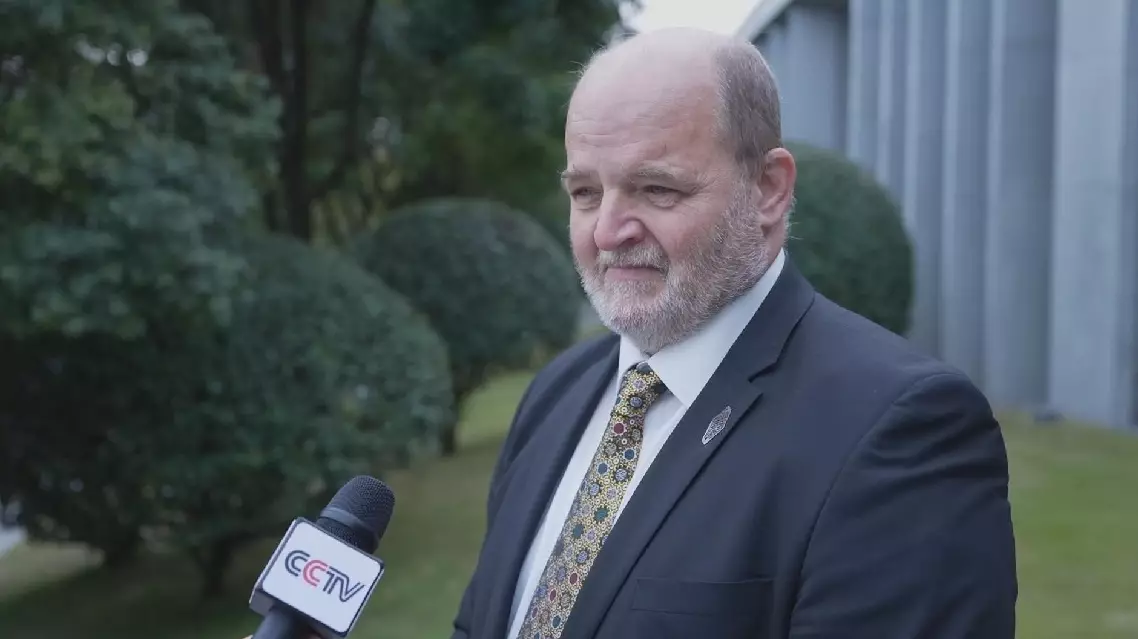
"This is my fifth visit to China, and Nanjing, and the third times I visited the ceremony. I have a wish that these survivors survive again and again and again. But my other wish is that the families of the survivors, that they transport the information, the right intention like their ancestors, because anyone must hold a hand (during) this remembering," Reinhardt told China Central Television (CCTV) in an interview before the event began on Saturday.
"Our delegation is on its 20th visit to China, coming to Nanjing to express our heartfelt condolences to those who perished 88 years ago, to remember this history, and to reflect on what we can do for a new future. That's why we are here," Yamauchi told CCTV on board the bus that took her to a local hotel in Nanjing on Friday evening.
Int'l guests call for remembering history at China's national event honoring Nanjing Massacre victims