A Chinese researcher from Changzhou University has acquired two photo albums from Japan, providing new evidence of war crimes related to the 1937 Nanjing Massacre perpetrated by the invading Japanese troops, the university said on Monday.
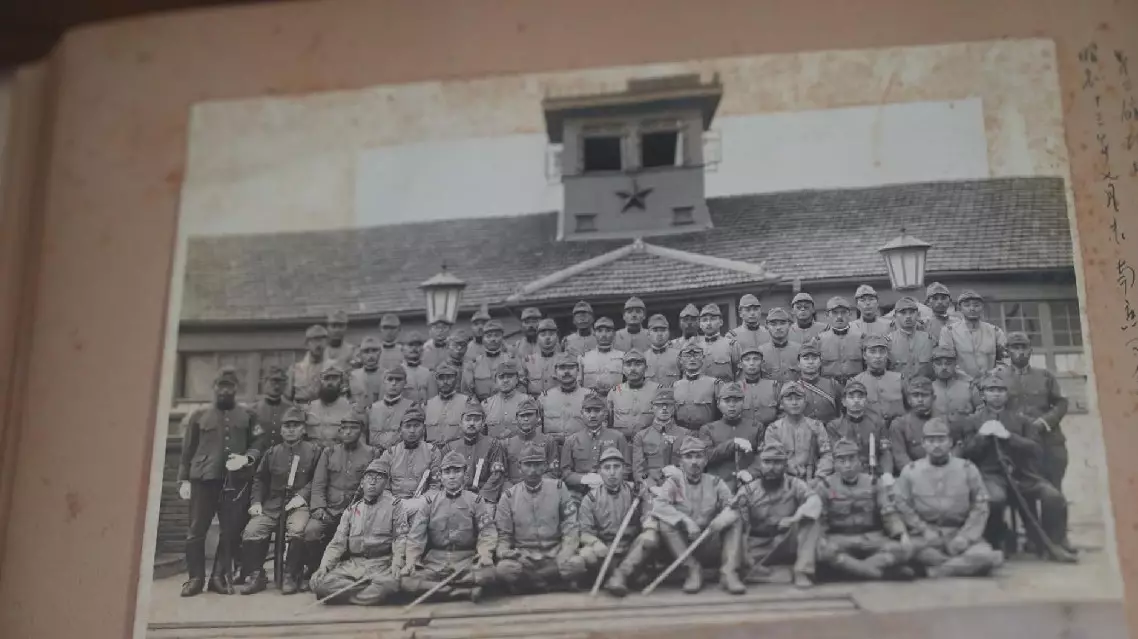
One album, containing 73 photos, was taken during Nanjing's occupation. Among them are photos documenting the routine operations of a Japanese military organization located near Xiaguan Wharf in Nanjing, now revealed for the first time.
During the Nanjing Massacre, the organization was not only responsible for logistical support for the invaders but also had a secret task - destroying the bodies of the massacre victims to erase evidence, according to Lu Yanming, a researcher from Changzhou University.
"This time we found a group photo of important commanders at the anchorage, along with the photos of the anchorage's buildings and documentation of its regular operations. This is something we had not found before, filling a gap in previous research," said Lu.
The other photo album focuses on the Japanese military's systematic investigations of Chinese defense structures in Nanjing. It contains more than 150 photographs, mostly taken shortly after the fall of Nanjing, showing Chinese air defense facilities that were constructed to protect the city.
These facilities included observation posts, ammunition depots and defensive networks that were crucial to Chinese defense efforts during the early stages of the invasion. Nearly all of the photos have corresponding captions and codes at the bottom.
Many of the air defense facilities depicted in the photos were classified as top-secret projects at that time.
"Among the photos depicting the devastation of the Xiaguan Wharf, we found one showing the bodies of the victims. It is a very shocking and rare image," said Lu.
Lu has been researching historical materials related to the Nanjing Massacre for 15 years. The two photo albums unveiled this time were acquired by him through international channels for cultural relics exchange and collection.
The themes of the two albums are very specific, focusing on subjects rarely or never seen in earlier photos, such as panoramic and detailed views of the Nanjing anchorage headquarters, group photos of its staff, work scenes at the site, and secret air defense facilities built by Chinese soldiers and civilians before the fall of Nanjing.
By consulting relevant documents and correlating the scenes in the albums with real locations, as well as analyzing the relationships of the individuals depicted, Lu has confirmed the authenticity of the albums.
"I now believe that these two albums belong to a Japanese invader during the war. Both the photos themselves and the logical connections between them support this conclusion. Moreover, the themes of the two albums are quite distinct. One is about the Nanjing anchorage headquarters of the Japanese invaders, while the other is about the results of the Japanese investigation into the air defense facilities of the Chinese defenders in Nanjing," said Lu.
The new evidence makes the history of the Nanjing Massacre, a tragedy that must not be forgotten, all the more profound, according to Lu.
The Nanjing Massacre took place when Japanese troops captured the then-Chinese capital on Dec 13, 1937. Over six weeks, they killed approximately 300,000 Chinese civilians and unarmed soldiers in one of the most barbaric episodes of World War II.
Chinese researcher acquires new evidence of Nanjing Massacre