China's Macao Special Administrative Region (SAR) is making tough slog on global talents recruitment and is leveraging the Hengqin Guangdong-Macao In-Depth Cooperation Zone as a touchstone to diversify its economy.
This year marks the 25th anniversary of Macao's return to the motherland and also the start of the implementation of Macao's first development plan for economic diversification, which is set to run until 2028.
The plan put forward the strategy for appropriate economic diversification to build Macao into a world tourism and leisure center and develop its priority industries of big health, modern finance, high technology, exhibition and convention, as well as culture and sports.
"How to address the problem of Macao's single industrial and economic structure? Through this plan, we aim to increase the contribution of non-gaming sectors to 60 percent," said Cheong Chok Man, director of the Policy Research and Regional Development Bureau.
The ey to achieving these goals is attracting talents in each fields, and as Chao Chong Hang, secretary-general of the Macao SAR Talent Development Committee, explained, the government launched a number of recruitment initiatives last year to meet this need.
"Macao's talent recruitment program is open to applicants worldwide, and we've received applications from many countries and regions. These applicants include leading figures in various industries, as well as professionals who contribute to local industries and institutions, such as doctors and university professors," he shared.
As of Oct 22 this year, a total of 464 individuals have been shortlisted for potential introduction. This includes 22 high-end professionals, 111 outstanding talents related to our four key development industries, and 331 senior professionals.
"The third plenary session of the 20th Communist Party of China (CPC) Central Committee highlighted the supports for Macao in becoming an international hub for top talents. Our next goal is to foster greater integration and exchange between locally cultivated international talent and those we recruit from abroad. We hope to see them spark new cultural and industrial innovations here," he said.
The region's economic diversification push is drawing global talents to its shores. Roberto Bugiolacchi, a planetary geologist from Italy and now based at the Macau University of Science and Technology, credits Macao's international research environment with positively impacting his work.
"This has been jumping huge leaps forwards. What I've working on is the lunar missions, the Chang'e missions, and they've been successful. Last week there was a release of new research in big journals about some findings about the samples returned from the moon from lunar far side, very important results of course," said Bugiolacchi.
However, Macao's industrial development was still restricted by limited land resources, and key industries need room to grow.
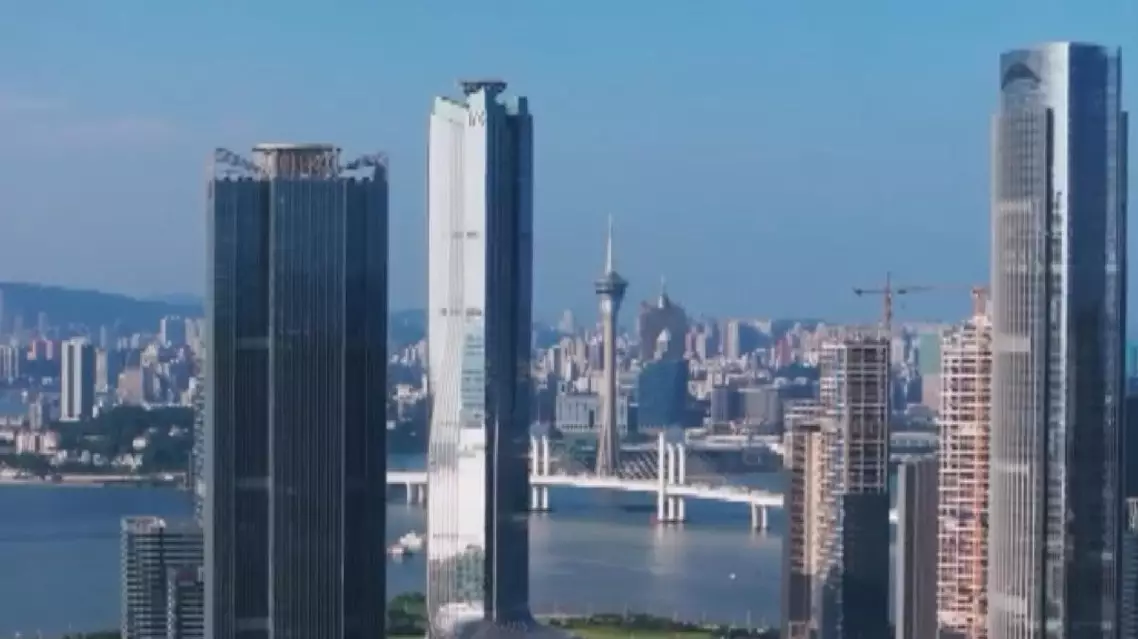
The Guangdong-Macao in-depth cooperation zone in Hengqin, Zhuhai City offers a solution. With an area of 106 square kilometer, it is expected to become a strong growth engine in the Greater Bay Area and provides a platform for Macao to achieve a more diversified economy.
"Hengqin and Macao's development are intrinsically linked. For example, research and development can be split between the two regions, with some activities taking place in Macao and the resulting industries established in Hengqin. This synergistic approach supports the development of Hengqin's residential areas while fostering economic diversification in Macao. This can overcome the limitations due to Macao's restricted physical space," said Cheong Chok Man.
Macao pushes global talents recruitment to drive economic diversification