The Macao Union Hospital, as one of the newest and most advanced healthcare complex in the Macao Special Administrative Region (SAR), is using its state-of-the-art facilities to advancing the region's healthcare services, with a bold vision to establish an international healthcare center and drive comprehensive regional development.
In the second part of the documentary "25 Years of Lotus Bond," produced by the China Media Group (CMG), residents and professionals share their expectations for the Macao Union Hospital, the first large-scale comprehensive public medical institution established by the Government of Macao SAR
As one of the best hospitals in the Guangdong–Hong Kong–Macao Greater Bay Area, Macao Union Hospital possesses around half of Macao's hospital beds and operation room, as well as the first nuclear medicine center, oncology center, and transplant center in the region.
"Patients are coming to our hospital for possibly two reasons. Firstly, for the doctors and the culture of Union Hospital. Secondly, Macao Union Hospital has the best equipment and resources in the Hong Kong-Macao region," said Shen Jie, doctor in the Radiotherapy Department of Macao Union Hospital.
The central government also implemented policies to facilitate the development of Macao Union Hospital.
"The new hospital applied to be a Marketing Authorization Holder, which is equal to a special permission, allowing the hospital to function as a drug import and export agency. And that would greatly benefit patients with complex diseases, rare diseases, and tumors," said Zhang Shuyang, director of Beijing Union Hospital.
"This is a great benefit for promoting the overall medical service level of Macao, and the development of Macao's medical, tourism, and big-health industry," said Lo Iek Long, Head of Macao Health Bureau.
Corresponding with the regional development policy, the central government also granted special permission for medical visas to Macao.
"To support the '1+4' industrial layouts of Macao and promote its appropriate economic diversification, the country also implemented preferential policies that benefit local people and businesses, and introduced medical visas and entry permits to Macao to attract high-tier customers from mainland and surrounding countries and regions to come to Macao for medical services as well as tourism. At its primary stage of construction, Macao Union Hospital has designed to build an international medical service department and healthcare center with first-tier facilities and concepts," said Zhang.
Beyond medicine and healthcare, Macao also expects the hospital to function as a booster for all related sectors, especially tourism.
"How can we better utilize the Union Hospital? It can provide services not only to our Macao residents, but also to many of our tourists. The concept of 'tourism plus' can be 'tourism plus N,' which is to say, any different sectors we are looking forward to developing can resonate with tourism," said Maria Helena de Senna Fernandes, head of the Macao Government Tourism Office.
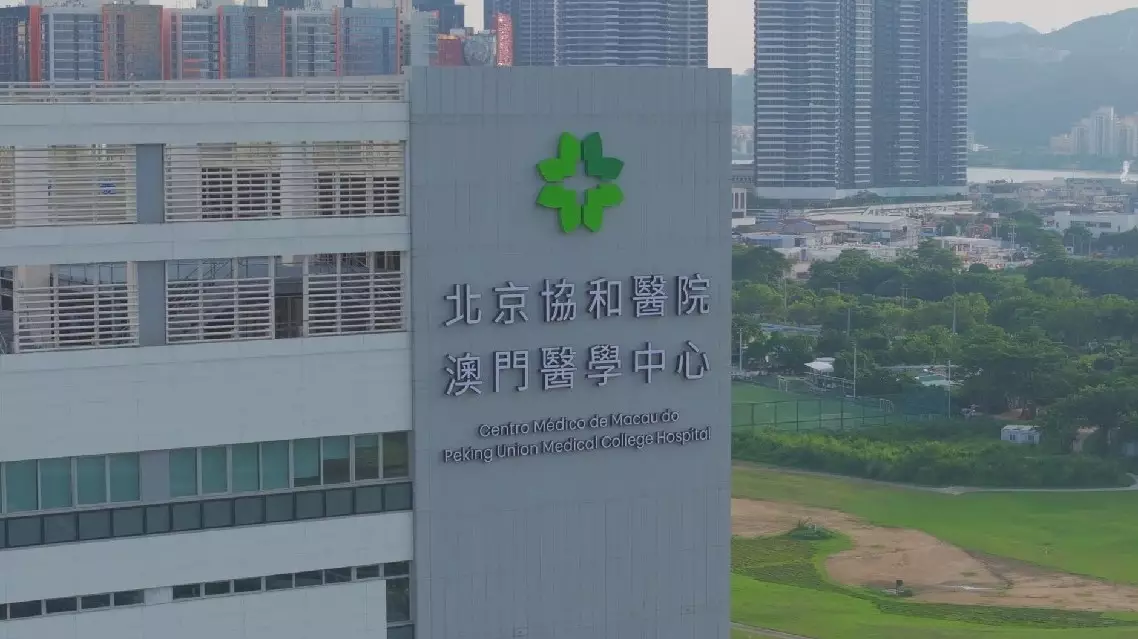
Macao Union Hospital boosts healthcare and regional development